



French Rosewood Side Table
A french rosewood side table brings warmth and rich grain to a room, offering a surface that carries the weight of nineteenth-century craft.
French Rosewood Side Table
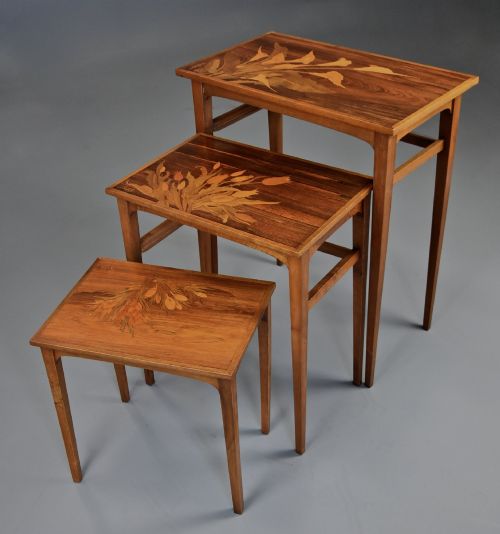
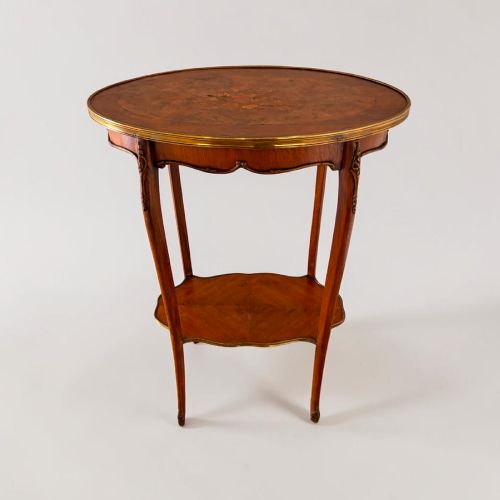
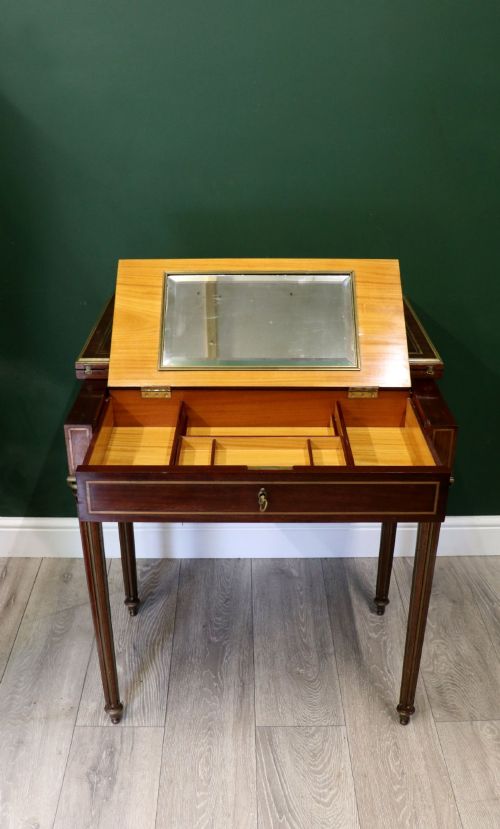
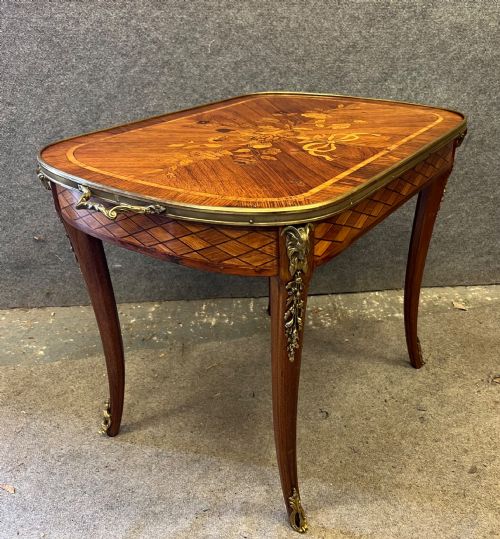
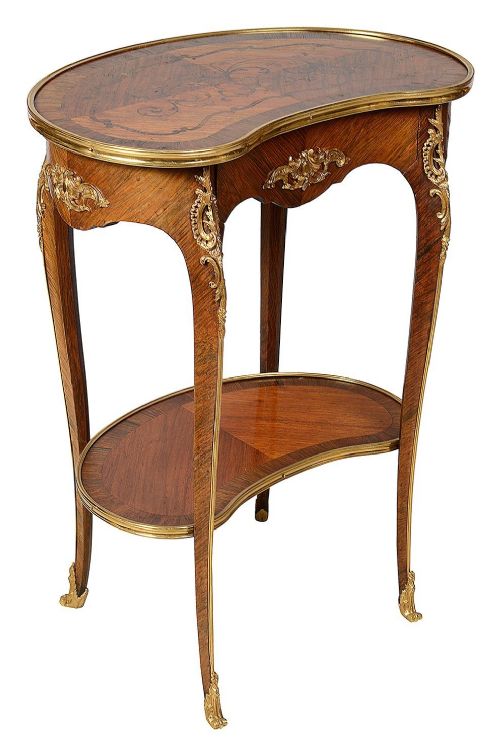
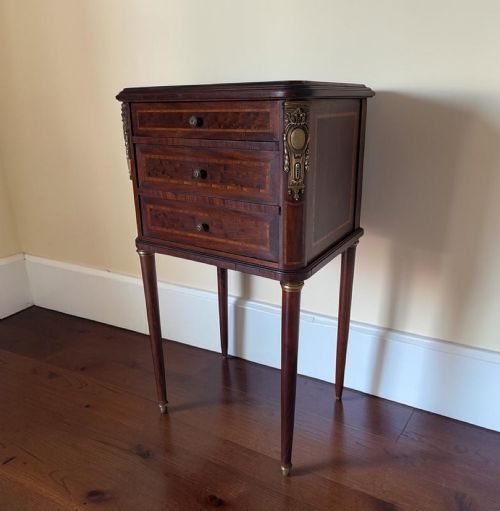
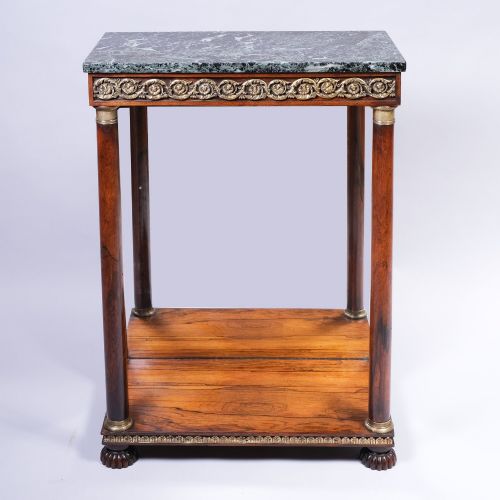
A french rosewood side table spans diverse forms from the nineteenth and early twentieth centuries, including occasional tables, centre tables, and bedside cabinets. These pieces often feature marquetry work and revival styles.
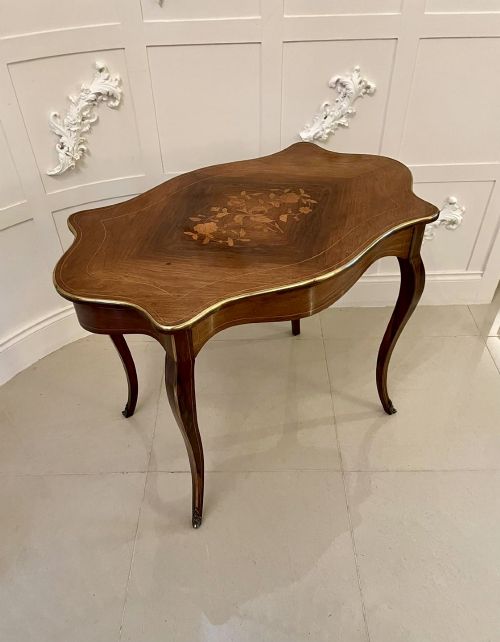
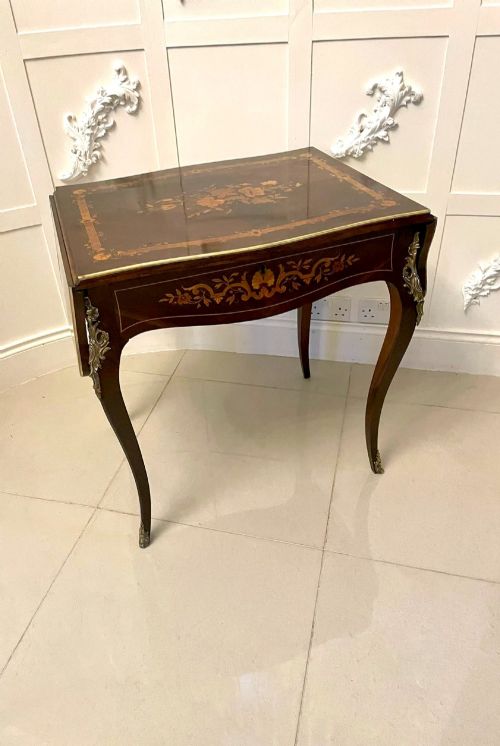
The selection here includes freestanding centre tables, drop-leaf occasional pieces, and compact bedside tables. Many examples incorporate Louis XV and Louis XVI revival aesthetics, reflecting historical taste across different decades.
How they were made
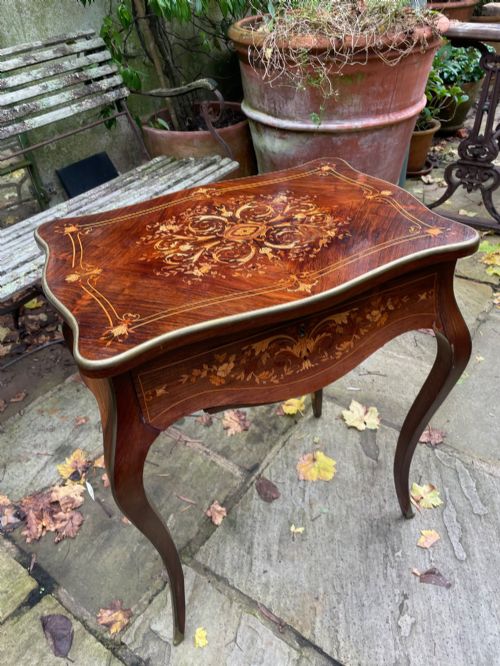
Constructed primarily from rosewood, these tables frequently incorporate contrasting timbers such as satinwood, kingwood, and walnut for detailed marquetry and parquetry patterns. Artisans used these varied woods to create intricate floral and geometric motifs across the surface.
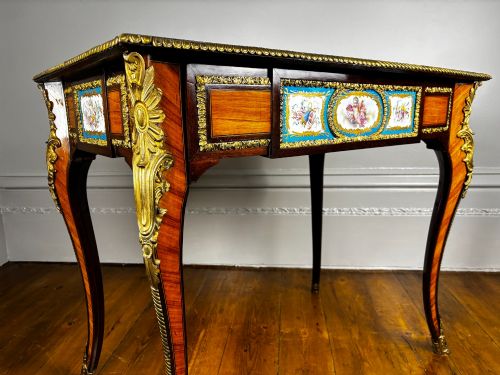
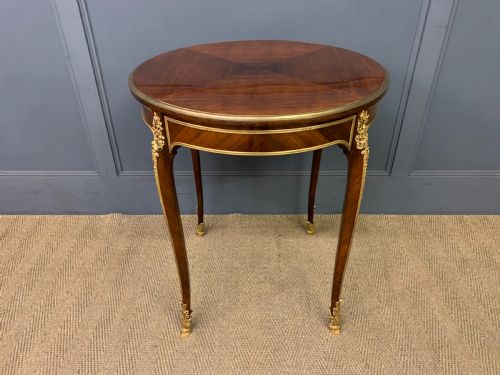
Many examples are fitted with cast brass and ormolu mounts, which frame the edges and decorate the legs. These metal elements require precise casting and chasing to fit the contours of the wooden carcasses.
French Rosewood Side Table Retail Price Guide 2026
Typical asking prices for french rosewood side table among the pieces listed under this phrase on Sellingantiques today, from the lower quarter to the upper quarter. They describe what is for sale here now, not the wider market.
Some work tables cleverly double as sewing stations and dressing tables, accommodating multiple pastimes within a single compact rosewood frame.
What varies in quality
The refinement of the marquetry inlay distinguishes finer tables from simpler utilitarian pieces. Crisp cutting of the individual wood veneers and the complexity of the floral or geometric designs indicate the skill of the workshop.
The execution of the ormolu and brass mounts also marks the distinction between standard production and exhibition quality work. Sharply chased bronze mounts demonstrate greater investment of artisan labour than simpler stamped brass fittings.
Émile Gallé·Francois Linke·Edwards & Roberts
The French Rosewood Side Table Glossary
- Marquetry
- Decorative veneer work arranged in pictorial or floral patterns on the surface of the wood. Craftsmen cut contrasting timbers to fit tightly together within the design.
- Ormolu
- Gilt-bronze mounts applied to furniture for decorative effect. The metal is cast, chased, and gilded with gold.
- Parquetry
- Geometric wood inlay forming patterns such as cubes or herringbones. It uses small blocks of timber laid onto a surface.
- Etagere
- A set of open shelves supported on small pillars for display. These tiered pieces often appear in revival styles.
- Cartonnuer
- A cabinet or desk top fitted with compartments for holding papers and documents. These fitted sections are often integrated into writing tables.
French Rosewood Side Table: Frequently Asked Questions
Where should I place a French rosewood side table?
These tables fit well beside seating in a sitting room or as a bedside surface in a bedroom.
Their finished backs on many centre table variants also allow them to stand freestanding in the middle of a room.
How do I care for rosewood furniture?
Keep the wood away from direct sunlight and heat sources to prevent the rosewood from drying out and the veneer from lifting.
Dust gently with a dry cloth and avoid harsh chemical polishes that can damage the French polish surface.
What is the difference between a side table and a centre table?
A side table usually stands against a wall, whereas a centre table is finished on all sides to be viewed from any angle in a room.
Centre tables often feature more elaborate marquetry work across the entire top surface.
How can I identify a Louis XV revival piece?
Louis XV revival pieces typically display cabriole legs, asymmetrical curves, and floral marquetry motifs inspired by eighteenth-century French design.
These characteristics are often paired with ormolu mounts highlighting the curved lines.