

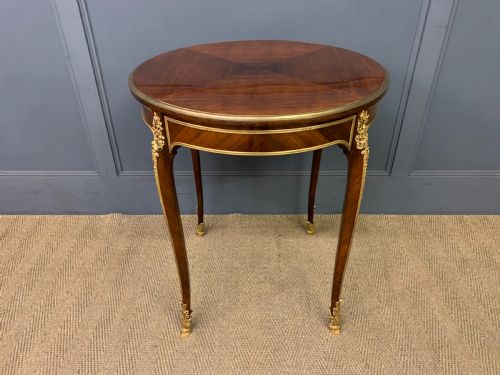
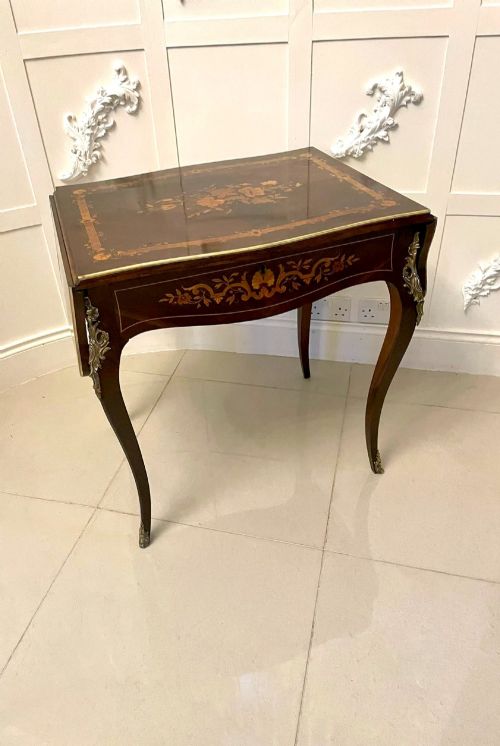


French Rosewood Lamp Table
These French rosewood lamp tables are compact decorative surfaces brought over from continental workshops during the nineteenth and early twentieth centuries.
French Rosewood Lamp Table
A french rosewood lamp table is a versatile occasional piece designed to sit beside seating or beds while displaying small objects. When you search this phrase, you encounter forms ranging from low coffee surfaces to tall bedside cabinets and freestanding centre pieces.
The pieces listed on this page span several decades from the mid-nineteenth century through the Edwardian era and into the Art Deco period. Common designations include side tables, drop-leaf occasional tables, and two-tier designs intended for domestic use in reception rooms and bedrooms.
Most examples originate from French workshops spanning the Napoleon III, Louis XV revival, and later stylistic revivals. They function primarily as decorative furniture that brings figured timbers and metal mounts into domestic spaces.
Materials and construction
Makers built these tables using dense rosewood as the primary timber, often enriched with contrasting veneers such as kingwood, mahogany, satinwood, and fruitwood. Marquetry inlays formed floral or geometric patterns across the table tops, utilising the natural grain variations of each wood species.
Metal enrichment formed a major part of the construction, with cast or chased ormolu and polished brass mounts applied to corners, legs, and aprons. These metallic elements protected vulnerable edges while adding visual weight to the lighter wooden frames.
French Rosewood Lamp Table Retail Price Guide 2026
Typical asking prices for french rosewood lamp table among the pieces listed under this phrase on Sellingantiques today, from the lower quarter to the upper quarter. They describe what is for sale here now, not the wider market.
Assessing quality in rosewood furniture
The distinction between standard production and superior work lies in the crispness of the marquetry cutting and the depth of the timber grain. Finer tables display tightly fitted veneer sections without gaps, whereas simpler items rely on painted or stamped decoration.
Hardware execution also separates workshop tiers. Heavy, finely chased ormolu mounts screwed securely from behind indicate higher craftsmanship than stamped brass pinned directly to the surface.
Haentgos Freres Paris·Majorelle
The French Rosewood Lamp Table Glossary
- Marquetry
- A decorative technique where small pieces of veneer are assembled into pictorial or geometric patterns. Craftsmen glue these wooden segments onto the carcase to create ornamental table tops.
- Ormolu
- Gilded bronze used for decorative mounts and furniture feet. The technique involves applying a gold amalgam to bronze before heating.
- Kingwood
- A dense, heavy Brazilian timber featuring distinct dark violet-brown stripes. Cabinetmakers utilised it alongside rosewood for contrasting borders.
- Napoleon III
- A nineteenth-century French revival style drawing inspiration from Louis XIV, Louis XV, and Louis XVI aesthetics. It frequently incorporates dark woods, elaborate marquetry, and rich ormolu mounts.
- Occasional table
- A small, movable piece of furniture designed for specific, intermittent domestic uses. These items include lamp tables, coffee tables, and small side stands.
French Rosewood Lamp Table: Frequently Asked Questions
How do I spot a Napoleon III table?
Napoleon III pieces usually display dark rosewood surfaces combined with rich ormolu mounts and intricate floral marquetry. They reflect nineteenth-century revivals of earlier royal French styles.
Look for heavy brass or gilt bronze hardware and curved cabriole legs typical of the mid-nineteenth century French aesthetic.
Were these always used for lamps?
These tables served many domestic functions before electric lighting became common. They held candles, reading material, and decorative ornaments.
Over time, collectors adapted them to hold modern bedside or table lamps due to their convenient proportions.
Can I use these as bedside tables?
Many surviving examples function perfectly as bedside surfaces or small cabinets. The inventory includes dedicated bedside versions with enclosed storage alongside open occasional tables.
Their compact footprints make them suitable for modern bedrooms needing small surface areas.