



French Rococo Vitrine Cabinet
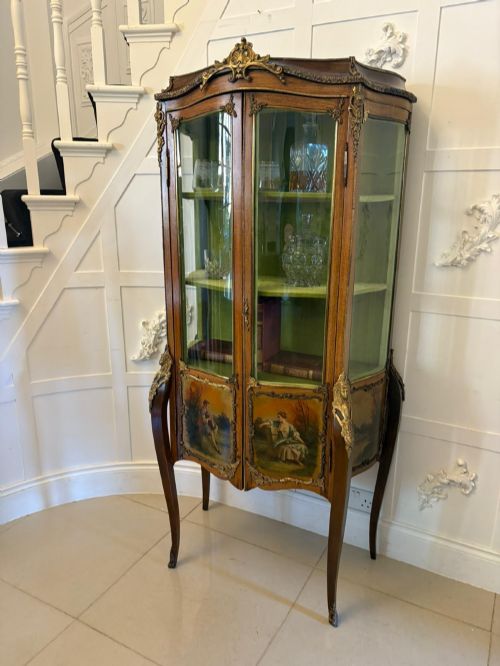
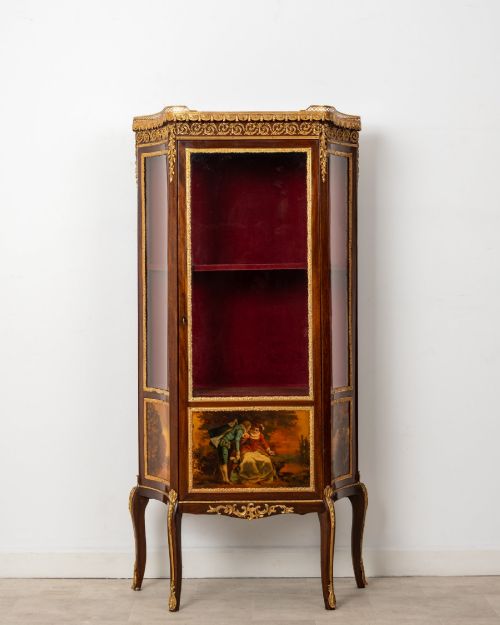
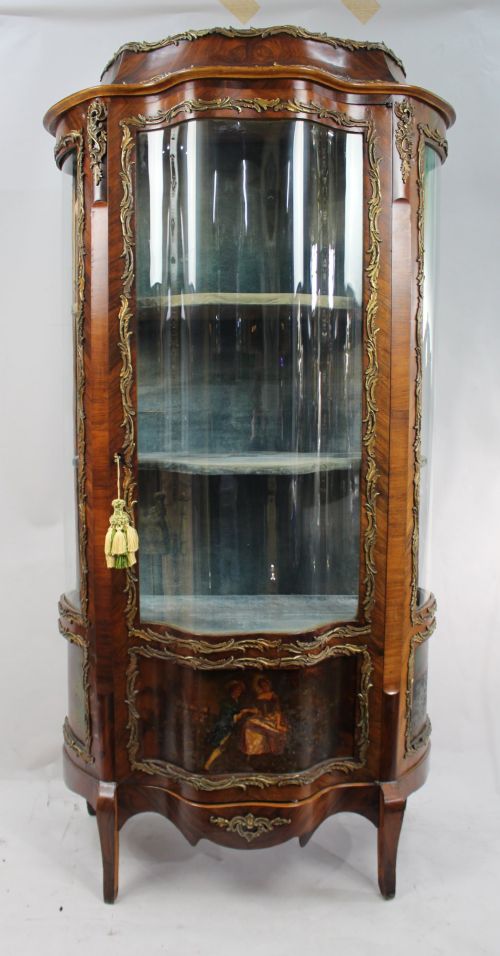
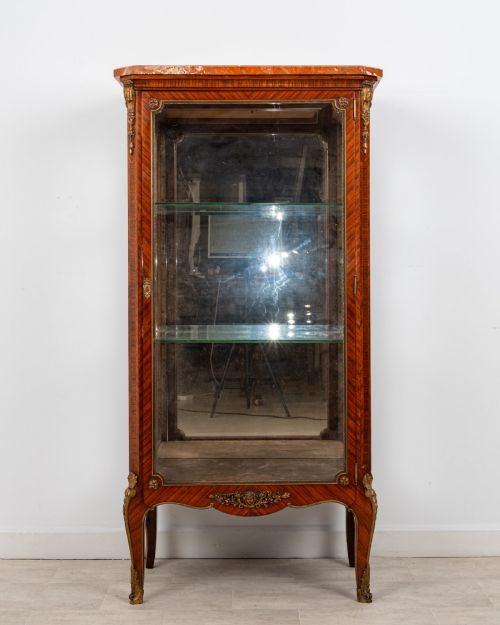
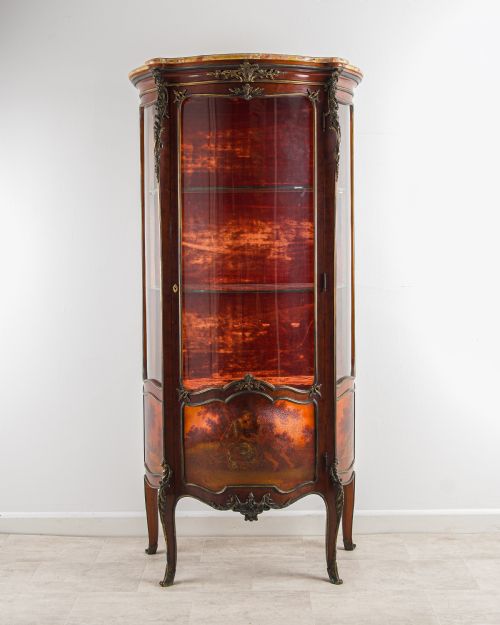
A french rococo vitrine cabinet brings curved glass and gilt bronze together to showcase porcelain and small objects.
French Rococo Vitrine Cabinet
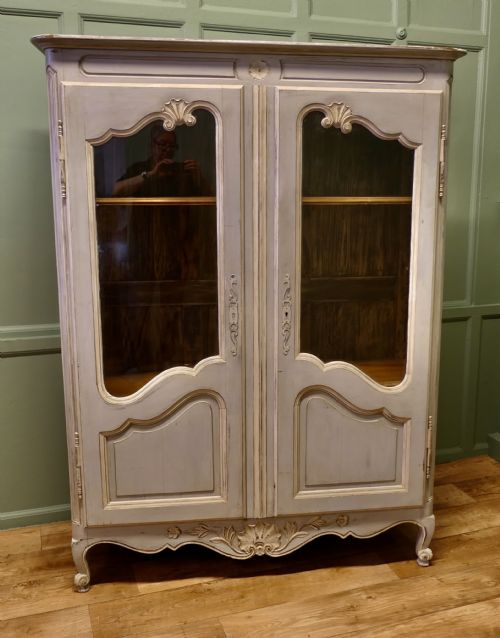
When you search for a french rococo vitrine cabinet, you encounter glazed display furniture designed to hold precious objects and porcelain in the nineteenth century.
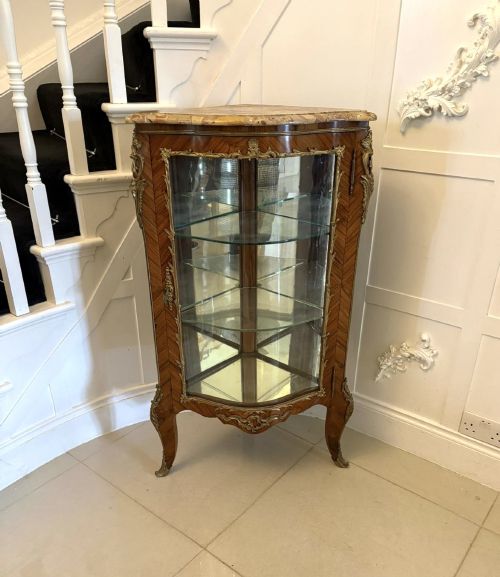
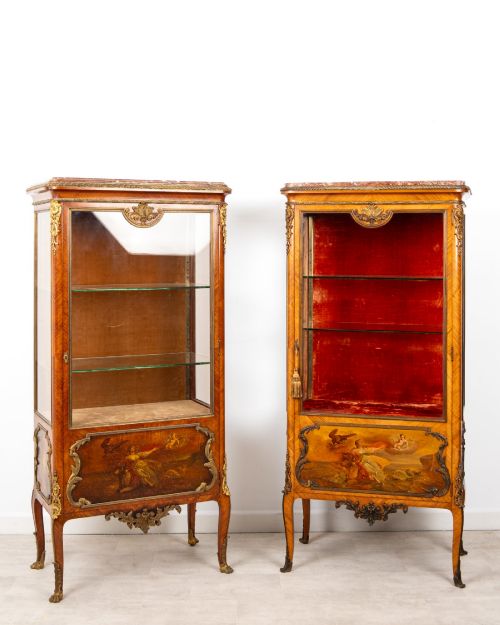
The pieces appearing on this page span the Victorian era up to the early twentieth century, taking the form of serpentine fronted display cabinets, corner units, and bijouterie tables.
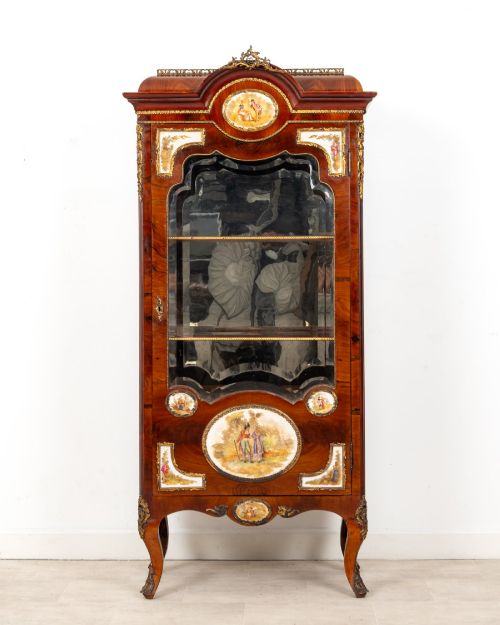
Makers drew heavily on Louis XV style vocabulary, uniting curved glass sides with painted panels and decorative mounts.
Materials and Construction
Cabinet makers built carcasses from kingwood, mahogany, walnut, and occasional giltwood, often applying intricate parquetry and marquetry inlay.
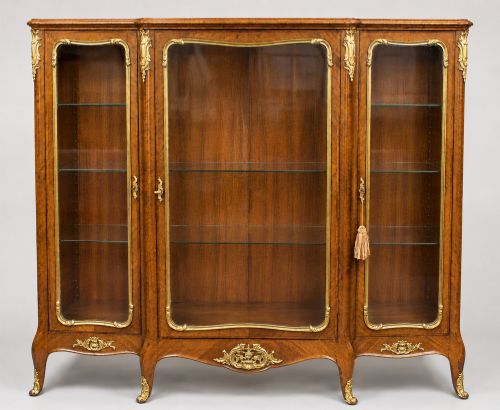
Glazed doors and side panels permitted light to enter the interior shelves, while cast ormolu and gilt bronze mounts highlighted the flowing serpentine contours.
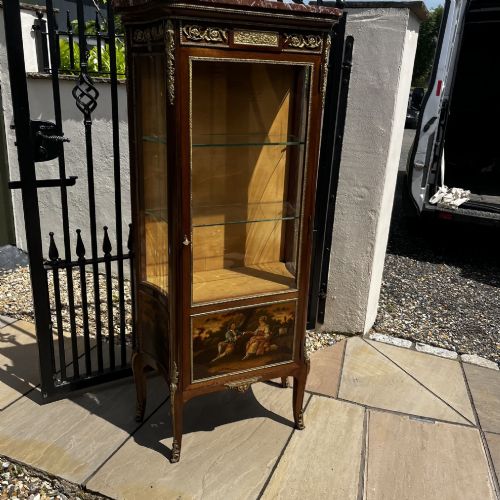
Lower panels frequently display Vernis Martin painted scenes, employing specialised translucent varnishes developed in eighteenth-century France.
Listings feature nineteen-century pieces employing kingwood, mahogany, and walnut alongside glazed panels and marble tops.
Assessing Quality and Execution
The standard of a piece rests in the crispness of the gilt bronze mounts and the precision with which the ormolu follows the cabinet contours.
Finer examples display hand-painted Vernis Martin panels executed with artistic depth, rather than mass-produced transfers or simple painted decoration.
Timber selection and the symmetry of the kingwood or mahogany grain determine the standing of the cabinet among revival pieces.
François Linke·Gouffel
The French Rococo Vitrine Cabinet Glossary
- Vitrine
- A glass-fronted cabinet designed specifically for displaying porcelain, curiosities, and small decorative objects.
- Ormolu
- Gilt bronze mounts applied to furniture edges and corners to accent the design, popular in nineteenth-century revival pieces.
- Vernis Martin
- A simulated Japanese lacquer technique utilising clear varnish layers over painted decoration, named after the Martin brothers.
- Serpentine
- A furniture front or top curving outward in the centre and inward at the sides, characteristic of rococo revival pieces.
- Marquetry
- Decorative veneer patterns assembled from various woods to form pictorial or geometric designs on the cabinet surface.
French Rococo Vitrine Cabinet: Frequently Asked Questions
What were french rococo vitrine cabinets used for?
These cabinets served in nineteenth-century drawing rooms to display delicate porcelain figures, miniatures, and imported collectables.
The glass panels and mirrored interiors allowed light to reflect off the treasured items from multiple angles.
How do I identify the period of a vitrine?
Most surviving examples originate from the nineteenth century, aligning with the Victorian passion for French Louis XV revival design.
Examine the timber backing, the construction of the door frames, and the quality of the bronze casting to gauge the decade.
Where should I place a corner vitrine?
Corner cabinets fit directly into intersecting walls, utilising space that standard rectangular display furniture leaves empty.
They work effectively in reception rooms to break up straight lines and draw the eye toward decorative ornaments.
What is the difference between Vernis Martin and painted panels?
Vernis Martin involves multi-layered translucent varnish applied over hand-painted scenes to create a luminous, aged depth.
Standard painted panels lack this specific resin process and present a more direct, opaque surface finish.