
French Rococo Style Chair
A french rococo style chair brings exuberant, asymmetrical curves and carved ornamentation into a room, offering both historic drama and comfortable seating.
French Rococo Style Chair
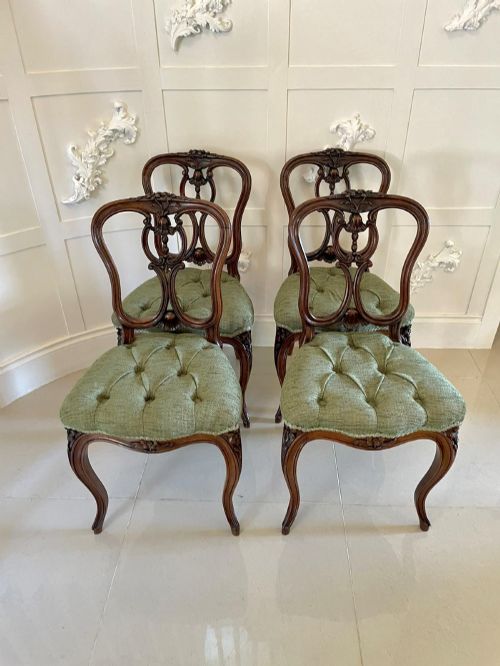
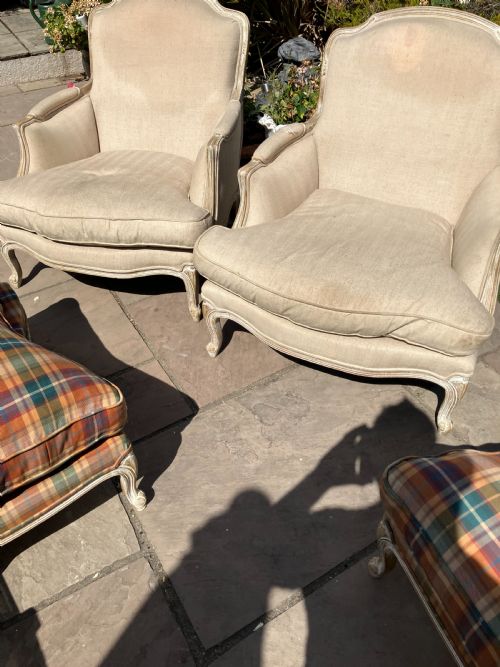
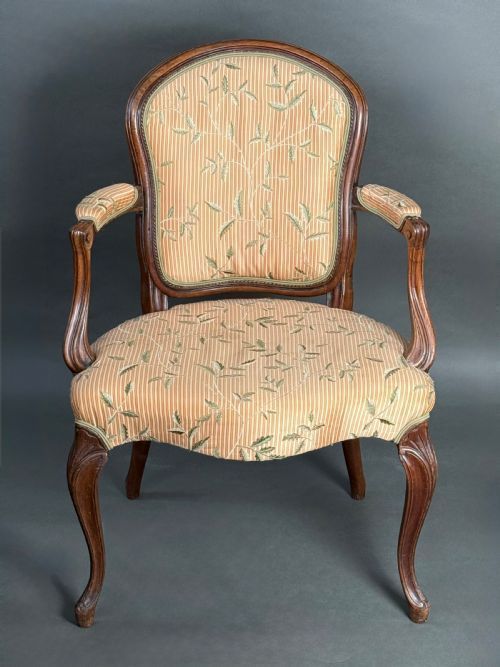
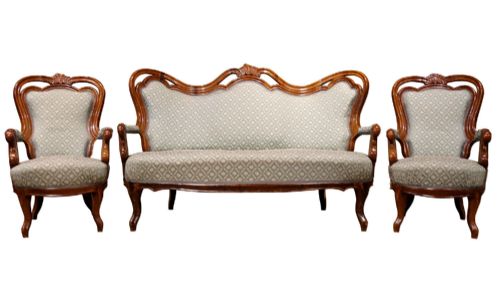
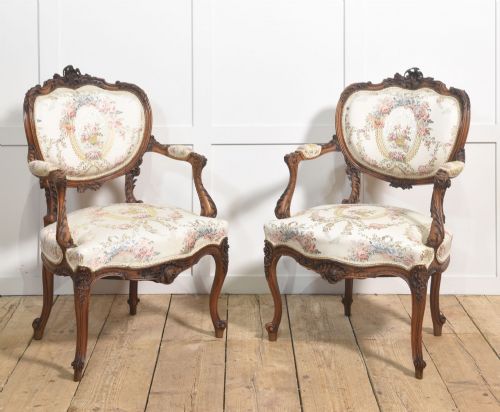
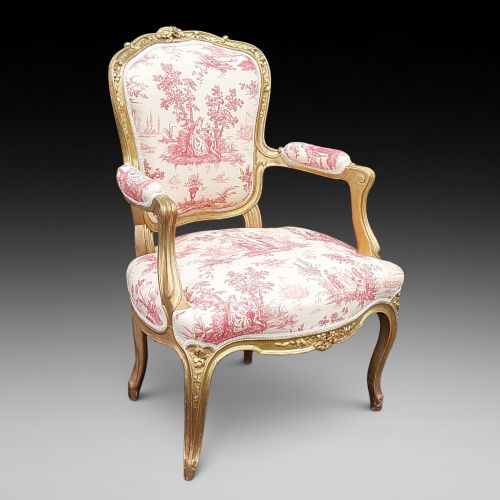
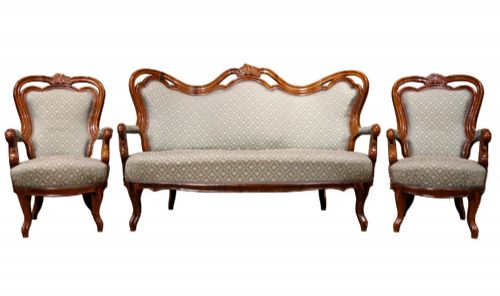
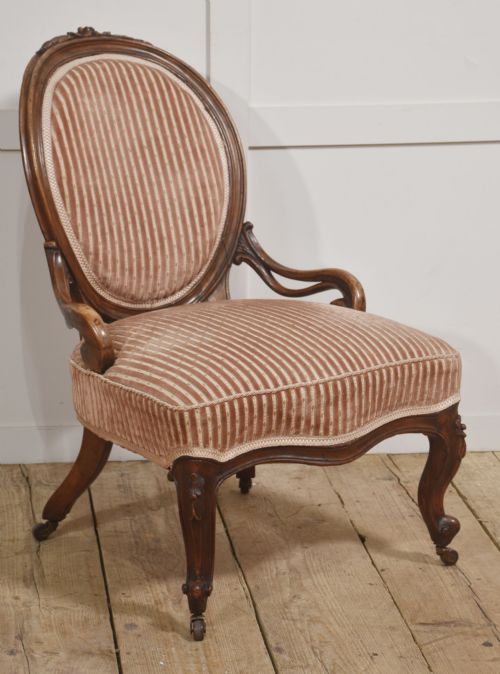
A french rococo style chair draws directly on the flowing lines and decorative vocabulary of mid-eighteenth-century design, though the examples found here largely date from later revival periods spanning the nineteenth and early twentieth centuries. Buyers encounter various seating forms under this heading, ranging from open armchairs and closed bergères to matching salon suites and occasional side chairs.
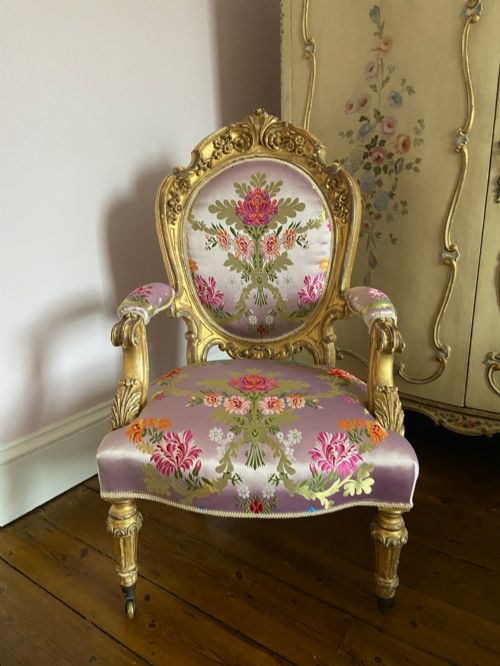
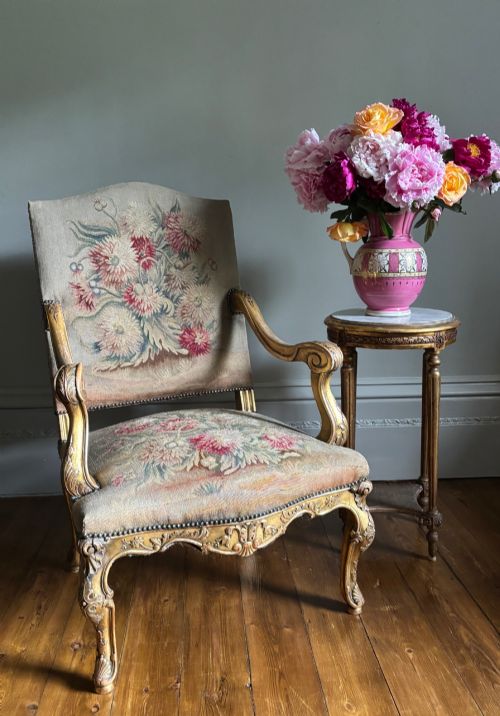
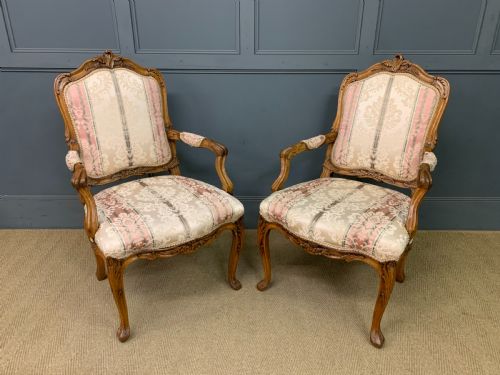
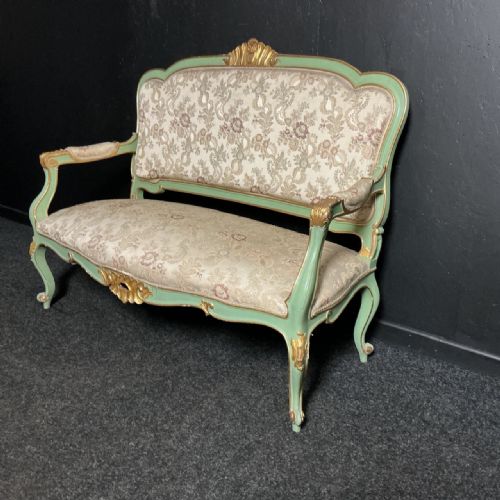
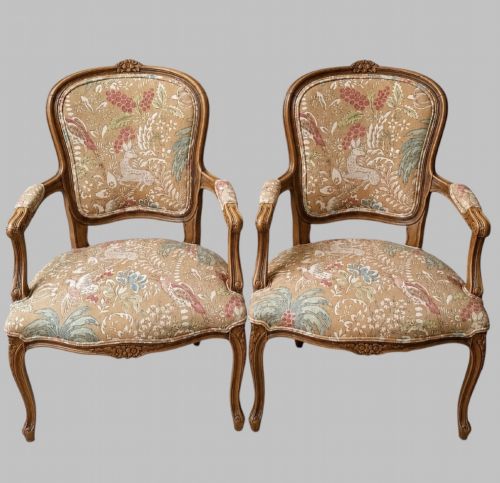
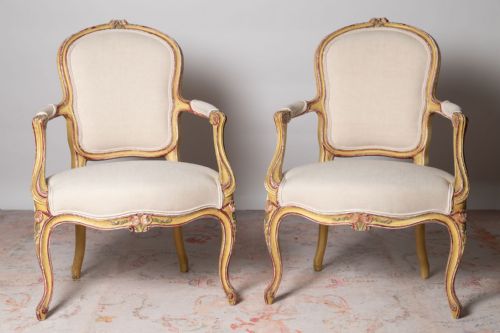
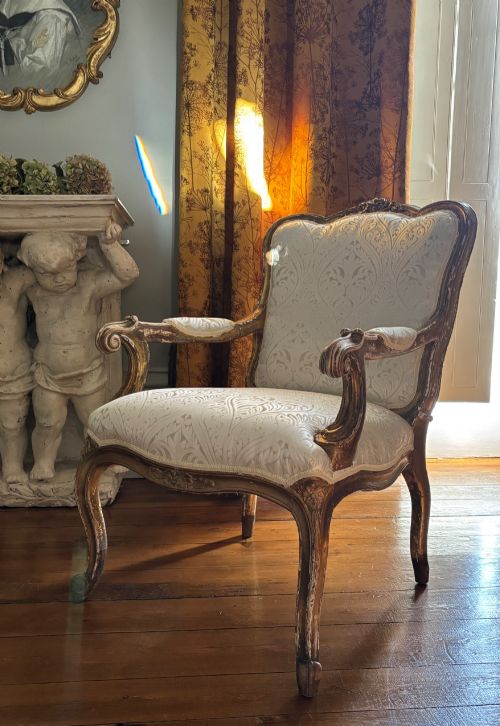
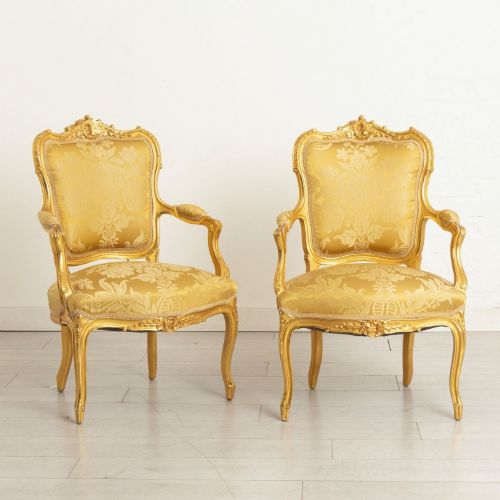
The aesthetic is defined by serpentine frames, C-scrolls, floral carving, and cabriole legs that terminate in scroll or pad feet. Walnut and giltwood serve as the primary structural materials, frequently paired with contemporary or period silk, velvet, and patterned upholstery fabric.
Materials and construction methods
Makers shaped these frames from solid walnut or carved wood intended for gilding, utilising traditional joinery to support the complex, curving silhouettes. Manual woodcarving brings out the characteristic foliage and shell motifs along the crest rails, aprons, and knees of the cabriole legs.
Upholstery relies on traditional stuffing techniques applied to open armchairs and side chairs, securing silk, velvet, or printed textiles with decorative brass tacks or gimp braid. Giltwood surfaces combine carved wooden substrates with layers of gesso and gold leaf to achieve a reflective, opulent finish.
Some chairs come upholstered in silk featuring parrots, offering an unexpected splash of exotic wildlife to formal French seating.
Factors of distinction
The depth, crispness, and hand-carved detail of the wooden ornamentation dictate the upper tiers of quality, separating finely sculpted walnut and giltwood from simpler, machine-routed alternatives. Proportion and balance in the cabriole legs and serpentine rails also signal superior craftsmanship.
The integrity of the original frame joinery and the quality of the textile selection, such as heavy silk or patterned velvet, further elevate a piece. Cohesion within pairs or larger salon suites adds significant merit compared to single, isolated seating items.
The French Rococo Style Chair Glossary
- Fauteuil
- An open-armed upholstered armchair with exposed wooden framing, typical of French seating design. These chairs combine carved decorative elements with padded armrests and seats.
- Cabriole leg
- A curved furniture leg that bends outward in a convex swell and then tapers inward to a concave foot. This form mimics animal legs and defines rococo revival seating.
- Giltwood
- Wood that has been coated with gold leaf or a gold-coloured metallic finish over a prepared gesso ground. It provides the brilliant surface seen on many formal salon chairs.
French Rococo Style Chair: Frequently Asked Questions
How do I identify a true period piece from a revival?
Revival seating from the nineteenth and twentieth centuries often uses softer walnut or machine-assisted joinery alongside nineteenth-century hardware styles. Examining the timber patination, hand-carved depth, and construction pegs helps clarify the actual era of manufacture.
Period markers such as tool marks on the wood or older upholstering foundations provide further clues regarding whether the item originates from the eighteenth century or later revival workshops.
Where should I place a giltwood armchair at home?
These decorative chairs suit formal drawing rooms, bedrooms as boudoir seating, or as standalone statement pieces in hallways. Their reflective gilt surfaces and carved silhouettes catch natural light effectively.
Pairing an open armchair with a small occasional table creates a distinct focal point without overwhelming smaller living spaces.
How should I care for delicate silk and velvet upholstery?
Protect antique textiles from direct sunlight to prevent fading and degradation of natural silk fibres over time. Regular gentle vacuuming using a soft brush attachment removes surface dust safely.
Professional upholstery cleaning is recommended for any deeper maintenance to avoid damaging historic fabric structures or underlying stuffing materials.
What structural differences exist between salon chairs and dining chairs?
Salon chairs generally feature lower, wider proportions designed for relaxed conversation and lounging, frequently with open arms or upholstered sides. Dining chairs stand taller and more upright to suit table use.
Frame construction on salon pieces often emphasises decorative carving and exposed wood, whereas dining versions prioritize sturdy, repetitive frames built for daily seating.