





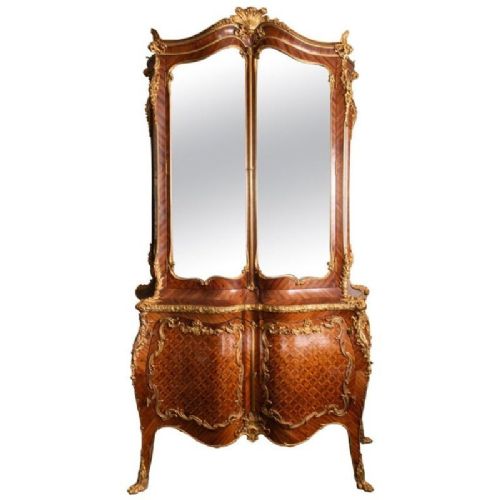


French Rococo Revival Vitrine
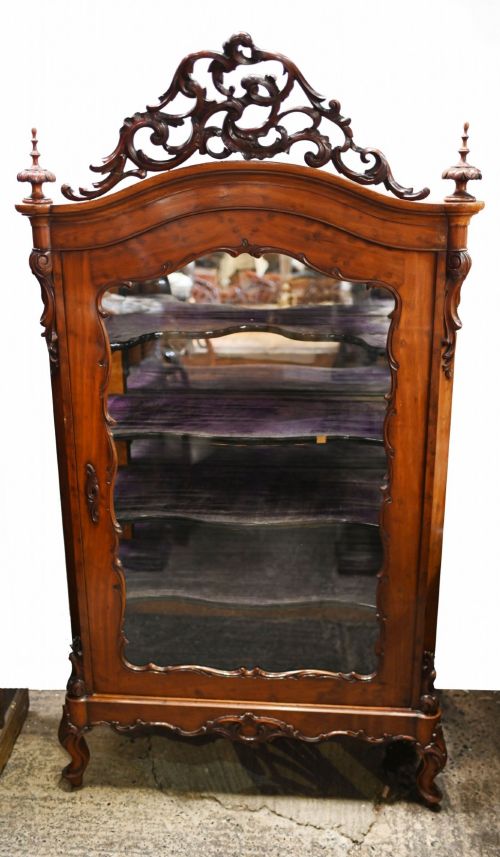
A french rococo revival vitrine brings sweeping curves and glazed display space into a room, designed to showcase precious collections.
French Rococo Revival Vitrine
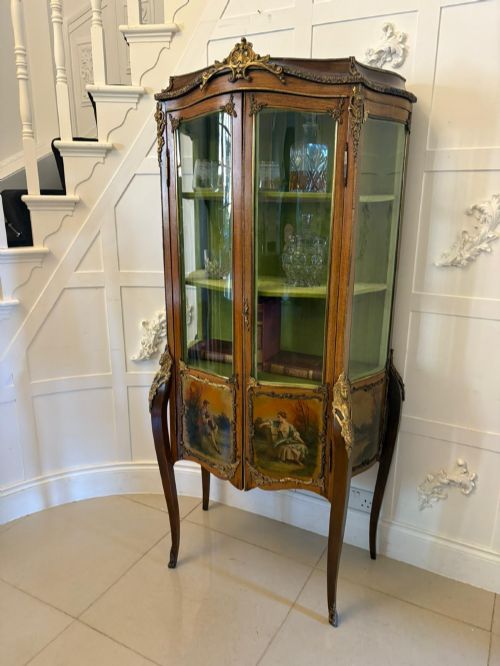
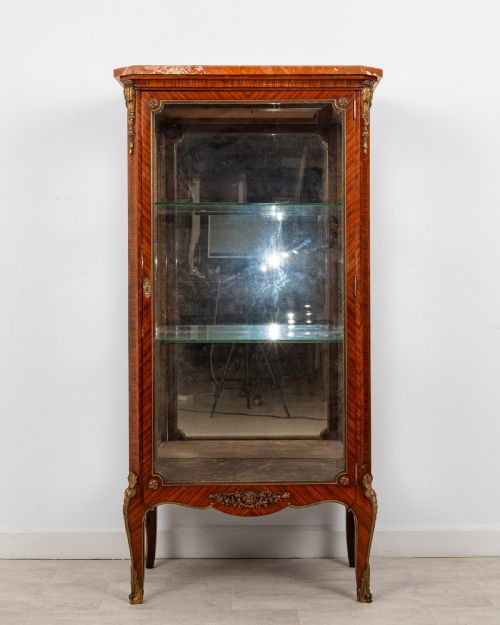
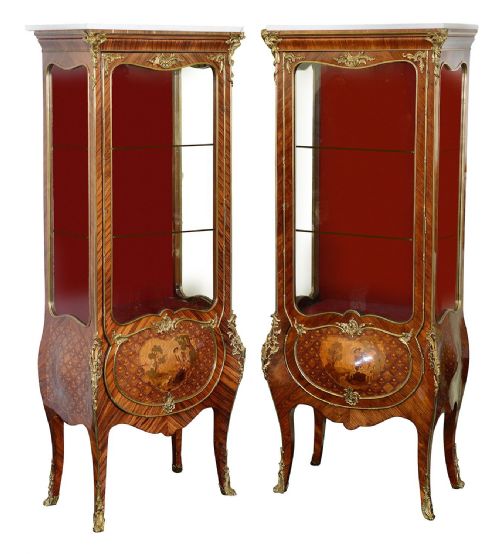
A french rococo revival vitrine is a glazed display cabinet rooted in the ornate aesthetic of nineteenth century cabinet making. These pieces take the form of serpentine display cabinets, bombé vitrines, and bijouterie tables designed to showcase fine objects.
The pieces appearing on this page span the nineteenth century into the early twentieth century, incorporating Victorian, Edwardian, and Louis XV or Louis XVI revival styles. Buyers encounter grand freestanding cabinets alongside lower glazed tables built for smaller items.
Makers and workshops of the period utilised intricate forms with glass sides and shaped fronts to maximise light across displayed items. Most examples rely on continental European craftsmanship, drawing heavily on eighteenth century French design vocabulary.
How They Were Made
Craftsmen built the carcasses of these cabinets using timber foundations such as kingwood, rosewood, and mahogany, often arranged in detailed parquetry or marquetry patterns. Vernis Martin lacquer and painted panels frequently decorated the lower sections, mimicking eighteenth century Japanese and Chinese export lacquer work.
Ormolu and gilt bronze mounts were cast and chased to edge the glass panels, frame doors, and accentuate the swelling contours of serpentine and bombé forms. Marble tops completed many of the larger cabinets, providing a heavy, durable surface above the timber frame.
French Rococo Revival Vitrine Retail Price Guide 2026
Typical asking prices for french rococo revival vitrine among the pieces listed under this phrase on Sellingantiques today, from the lower quarter to the upper quarter. They describe what is for sale here now, not the wider market.
Listings feature pieces spanning from the mid-nineteenth century through the Edwardian period and into the nineteen twenties.
What Varies in Quality
The refinement of the cast ormolu mounts separates standard production pieces from exceptional ones, with superior examples exhibiting crisp chasing and deep gilding. Hand-painted Vernis Martin panels show distinct gradations in artistic skill, from basic decorative motifs to complex figurative scenes.
Timber selection and the precision of the parquetry or marquetry dictate the baseline quality of the cabinet carcase. Heavier stone tops, such as shaped marble, and the integration of curved glass panes reflect the ambition and cost of the original manufacture.
François Linke·Gouffel
The French Rococo Revival Vitrine Glossary
- Ormolu
- Gilded bronze mounts applied to furniture. This technique uses a mercury amalgamation process to adhere gold to a bronze base.
- Vernis Martin
- Simulated lacquer developed in France during the eighteenth century. It uses multiple layers of varnish to achieve a translucent, polished finish over painted scenes.
- Bombe
- A swelling, outward-curving profile found on the front and sides of furniture. This curved shape requires advanced timber bending and shaping techniques.
- Bijouterie table
- A glass-topped display table designed for jewellery and small trinkets. These tables often feature hinged lids and velvet-lined interiors.
- Parquetry
- Geometric patterns formed by small pieces of wood veneer fitted together. It creates a tiled surface across the cabinet doors or top.
French Rococo Revival Vitrine: Frequently Asked Questions
What is a french rococo revival vitrine?
A french rococo revival vitrine is a nineteenth century display cabinet characterised by curved glass panels, ornate ormolu mounts, and timber veneers like kingwood. These pieces draw inspiration from earlier French court styles.
Cabinet makers produced them to display porcelain, silver, and other valuables in domestic drawing rooms. They combine structural timber frames with extensive glazing to allow light onto the items inside.
How were these cabinets used originally?
Wealthy households utilised vitrines and bijouterie tables to exhibit curated collections of small decorative objects, family mementoes, and precious trinkets. The enclosed glass protected delicate items from dust while keeping them visible to visitors.
Lower tables with glazed tops served specifically for jewellery and medals, allowing guests to inspect items closely from a standing position. Upright cabinets held larger porcelain figures and glassware across interior shelves.
Where should I place a vitrine in my home?
A vitrine requires a stable location away from direct sunlight, which can fade interior fabrics, painted panels, and wood veneers over time. Placing the cabinet against an interior wall protects the glass and heavy marble tops from accidental bumps.
Because these pieces feature glazed sides, positioning them near a window or an active light source helps illuminate the objects displayed inside. Ensure the floor is level so the doors and glass panels hang correctly without straining the hinges.
How do I tell a nineteenth century piece from a later revival?
Nineteenth century examples typically exhibit heavier timber construction, hand-chased ormolu mounts, and traditional cabinet making joinery inside the carcase. The materials and finishes reflect the specific revival movements active between eighteen sixty and nineteen hundred.
Later interpretations from the twentieth century often use simplified construction methods or machine-cast mounts that lack the depth of earlier work. Examining the interior linings, screw types, and timber ageing helps clarify the period of manufacture.