



French Revival Chest
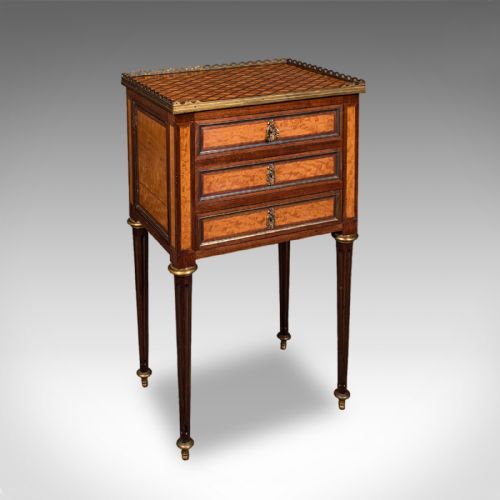
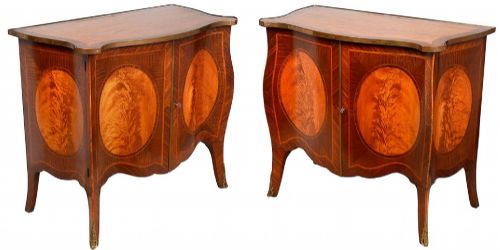
A french revival chest brings Continental grandeur into a room, offering serpentine curves and polished marble tops that catch the light.
French Revival Chest
A french revival chest draws on the opulent designs of earlier royal courts, taking the form of commodes, bedside tables, and chests of drawers. These pieces reflect the tastes of the nineteenth and early twentieth centuries, adapting classical Parisian forms for domestic use.
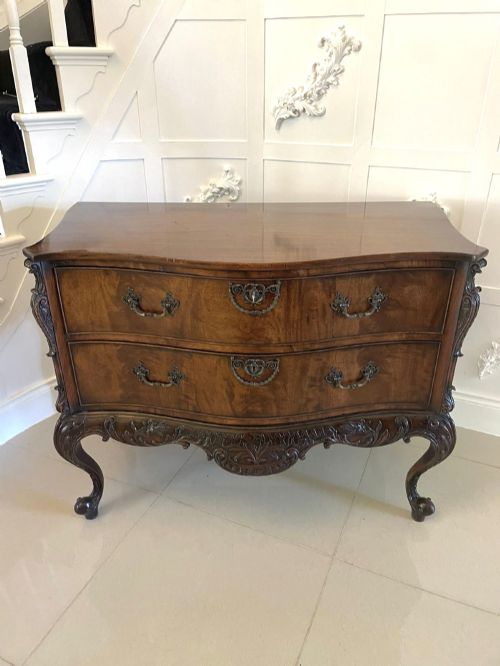
The evidence shows that these items frequently appear as commodes and bedside chests, often featuring the sweeping lines associated with Louis Quinze and Louis Seize revivals. Buyers encounter everything from compact nightstands to substantial multiloop commodes designed for formal rooms.
Originating largely from the nineteenth century through to the nineteen-twenties, these pieces span Victorian interpretations and Continental exports. Walnut, mahogany, and exotic timbers form the structural foundation of these varied storage items.
Materials and Construction
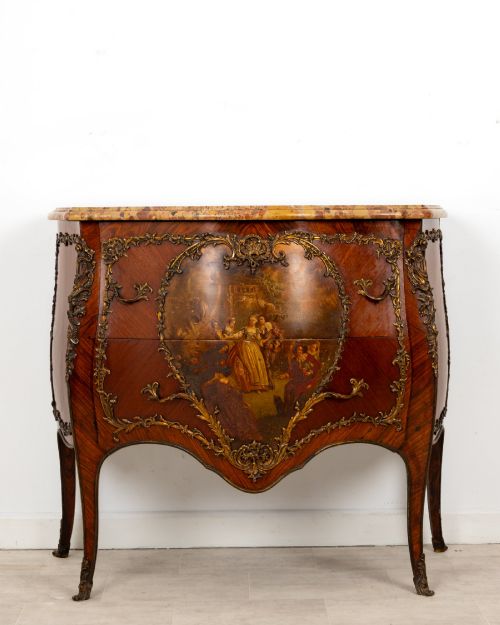
Cabinetmakers utilised dense timbers such as kingwood, walnut, and mahogany as the structural carcase, often arranging veneers in intricate marquetry or parquetry patterns. Surfaces were frequently crowned with heavy marble slabs, providing a cool, resilient top to the wooden framework.
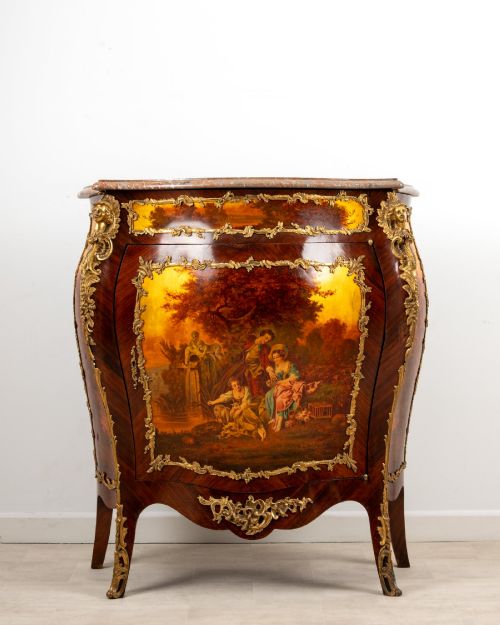
Ornate metalwork defines these items, with gilt bronze and ormolu mounts cast and chased to highlight corners, handles, and aprons. Lacquer work and Vernis Martin techniques added painted pastoral scenes or decorative panels to the curved sides of bombé cabinets.
French Revival Chest Retail Price Guide 2026
Typical asking prices for french revival chest among the pieces listed under this phrase on Sellingantiques today, from the lower quarter to the upper quarter. They describe what is for sale here now, not the wider market.
Several pieces conceal their contents behind curved bombé doors, hiding ordinary socks behind opulent rococo mounts.
Assessing Craftsmanship
The refinement of the cast bronze mounts separates standard production from finer work, as sharper chiselling and heavier gilding indicate greater workshop investment. Inferior examples rely on mass-produced mounts with softer detail and minimal hand-finishing.
Timber selection and veneer alignment dictate the visual harmony of the piece, particularly where grain patterns meet symmetrically across serpentine fronts. Superior commodes display precise marquetry cutting and tight joints that withstand seasonal timber movement.
The French Revival Chest Glossary
- Commode
- A low chest of drawers or cabinet, originating in France and typically featuring decorative mounts or marquetry. These items often stand on cabriole legs and serve as both storage and display surfaces.
- Ormolu
- Gilded bronze applied as decorative mounts to furniture frames and corners. The technique involves a mercury amalgam applied to bronze, heated to bond the gold layer.
- Marquetry
- The art of applying small pieces of veneer to a structure to form decorative patterns or pictures. Craftsmen cut contrasting woods together to achieve tight fits.
- Vernis Martin
- A type of simulated Japanese lacquer developed in France, known for its translucent varnished finish over painted scenes. It appeared frequently on eighteenth-century revival cabinets and commodes.
- Serpentine
- A furniture shape characterised by a double-curved front that bulges outward in the centre and recesses at the sides. This contour requires skilled woodworking to shape the solid timber or veneer.
French Revival Chest: Frequently Asked Questions
How do I care for marble tops?
Wipe marble surfaces regularly with a soft, damp cloth using mild soap, avoiding acidic cleaners that etch the polished stone. Keep liquids away from unsealed edges to prevent staining.
Apply a neutral stone wax periodically to maintain the sheen and protect against minor surface moisture.
What defines the Louis Quinze style?
Louis Quinze revival furniture relies on asymmetrical curves, cabriole legs, and naturalistic scrollwork without straight architectural lines. The aesthetic embraces fluid shapes derived from mid-eighteenth-century French design.
Mounts typically feature floral motifs and organic scrolling that wrap smoothly around corners.
Are these chests suitable for daily use?
Sturdy timber carcases and robust drawer construction make these pieces practical for everyday storage of clothing and personal items. Modern placement requires attention to humidity levels to protect older veneers and polished finishes.
Drawer runners benefit from occasional waxing to ensure smooth operation without damaging original interiors.