



French Portrait of Woman
A french portrait of woman captures character through canvas, bronze, porcelain and paper across centuries of French artistic heritage.
French Portrait of Woman
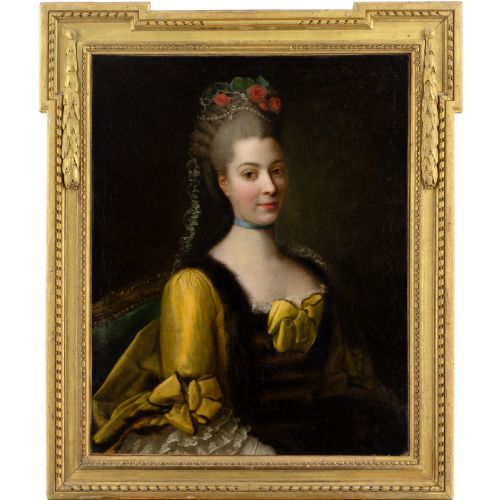
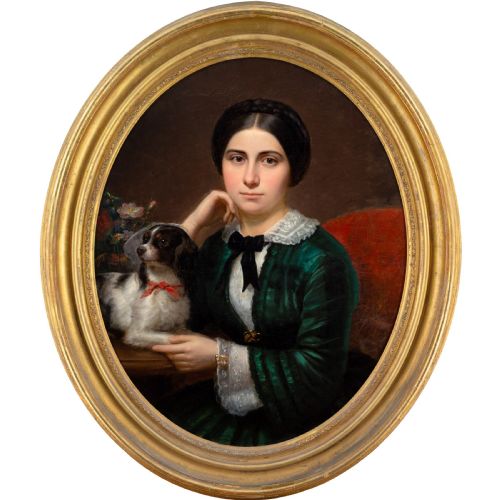
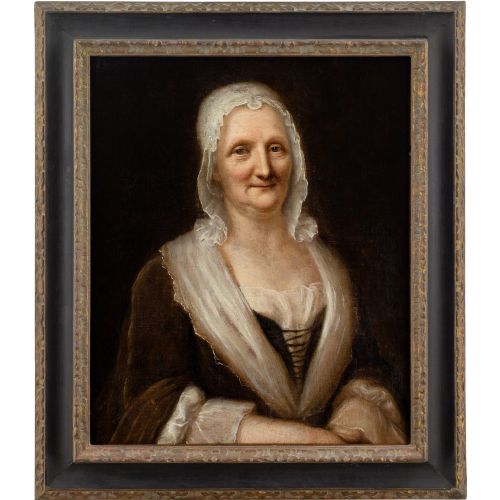
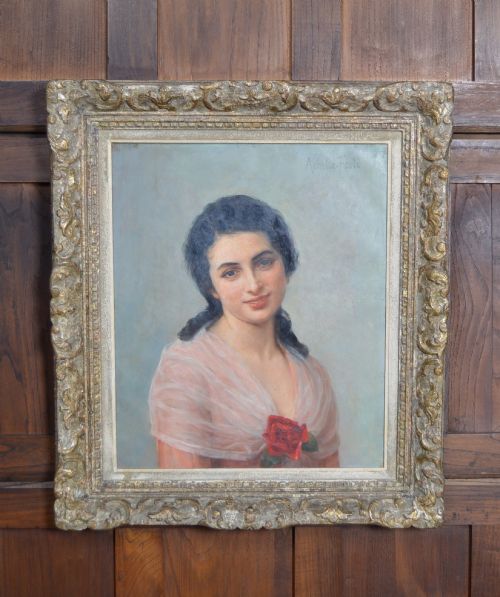
When you search for a french portrait of woman, you encounter oil paintings, bronze sculptures, delicate portrait miniatures and works on paper spanning from the eighteenth century into the twentieth. These pieces capture sitters ranging from noblewomen and elegant ladies in yellow dresses to young girls with dogs, rural figures and avant-garde subjects.
The selection on this page draws heavily on nineteenth-century academic and realist traditions, alongside earlier eighteenth-century French school works and later twentieth-century avant-garde interpretations. You will find canvases executed in oil alongside chalk drawings, pastel paintings, terracotta and alabaster busts, and painted porcelain plaques.
How they were made
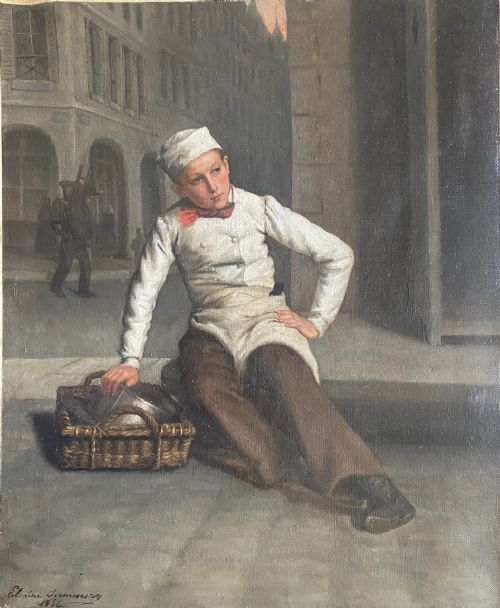
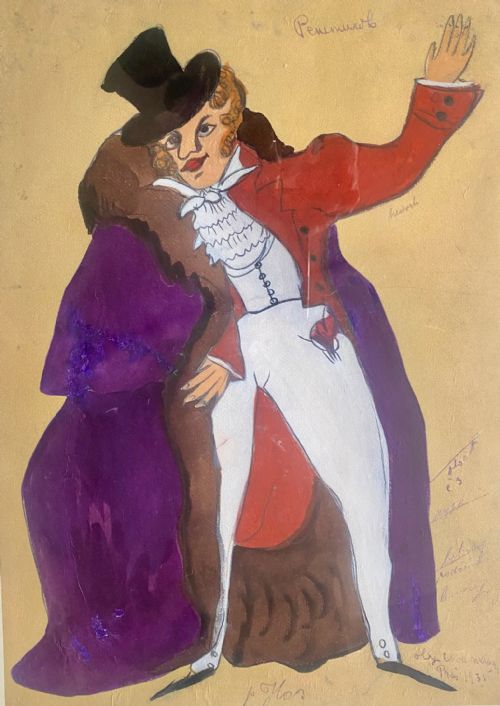
Painters relied primarily on oil paint applied to canvas, wood panel or paper support, building depth through layered glazes and opaque pigments. Works on paper utilised chalk, graphite, gouache and lithography to achieve softer tonal gradations.
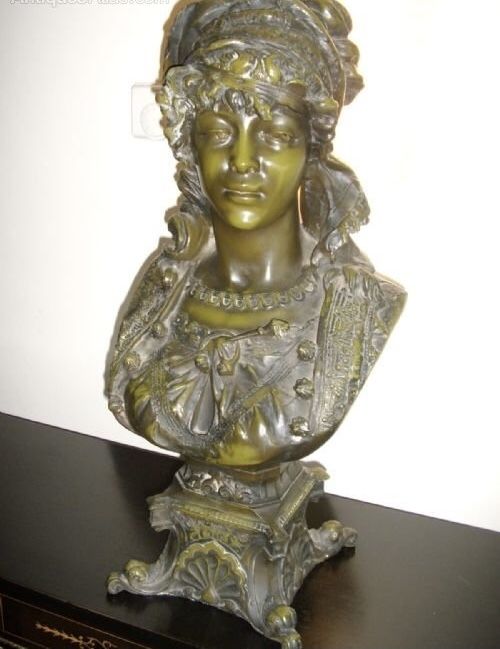
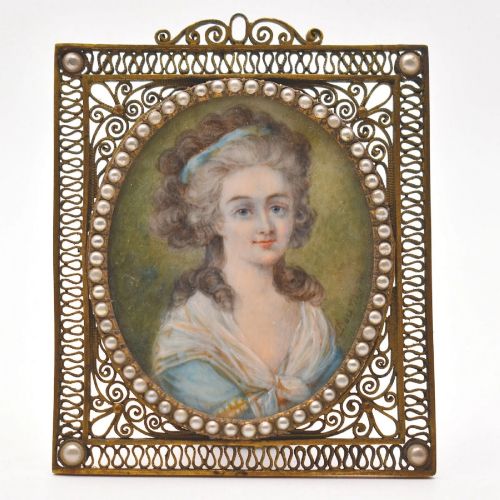
Sculptural works in bronze, terracotta, alabaster and cast metal involved modelling, carving or foundry casting, often complemented by hand-finished chasing and patination. Miniature portraits incorporated specialised techniques on copper, enamel, seed pearl frames and Limoges porcelain.
Listings include works spanning the eighteenth, nineteenth, and twentieth centuries, executed in oil, bronze, chalk, and porcelain.
What varies in quality
The distinction between ordinary and exceptional works rests on the artist's ability to render the sitter's anatomy, expression and psychological depth with conviction. Finer oil paintings and drawings display assured brushwork and subtle handling of light across fabric and skin.
Achille-Fould·Henry Wissen Senior·Olga Choumansky·Dumont·Jean-Marc Nattier·Yo Mayer·Marcel Duchamp·Pierre Louis Joseph De Coninck·Mariette Lydis·Georges Van Der Straeten·Eugene Laurent·Pierre-Louis Bouchard·Greuze·Cecil CP Lawson·Pierre Mignard
The French Portrait of Woman Glossary
- French School
- A designation for anonymous works created within the sphere of French artistic traditions and academies. It groups together pieces sharing stylistic traits of a period without a confirmed individual master.
- Portrait Miniature
- A small-scale painted likeness, frequently executed on vellum, copper, enamel or ivory. These intimate objects often featured elaborate frames set with seed pearls or precious metals.
- Patina
- The surface sheen or coloration developed on bronze and metal sculptures over time through oxidation and handling. A well-preserved patina enhances the depth and tactile quality of the cast.
- Salon
- An official art exhibition held periodically in Paris under government patronage. Showing at the Salon marked an artist of professional standing during the nineteenth century.
- Neoclassical
- A style drawing inspiration from the art and culture of classical antiquity. It emphasises restrained composition, smooth surfaces and noble simplicity in sculpture and painting.
French Portrait of Woman: Frequently Asked Questions
How do I date an antique French portrait?
Dating relies on costume, hair styling, framing techniques and any visible signatures or inscriptions left by the artist. Canvas types, stretchers and medium composition also provide reliable chronological markers.
Comparing the stylistic approach, such as academic realism versus avant-garde abstraction, helps narrow the decade of creation.
What is the difference between an oil painting and a portrait miniature?
Oil paintings on canvas or wood panels are executed on a larger scale with fluid brushwork suited for wall display. Portrait miniatures are intimate, highly detailed works created on small surfaces like copper or porcelain.
Miniatures were designed to be carried, worn as jewellery, or kept in protective cases rather than hung on a wall.
How should I display a bronze sculpture at home?
Bronze sculptures require stable placement on a sturdy surface away from direct, harsh sunlight and excessive humidity. Adequate clearance allows you to appreciate the contours and patination from multiple angles.
Dusting gently with a dry, soft cloth preserves the metal surface without disturbing the original finish.
What does French School mean on a painting label?
The term indicates that the artwork originated within French artistic circles during a specific era but lacks a documented signature. These pieces reflect the dominant teaching methods and aesthetic standards of French academies.
Such works offer insight into the broader visual culture of the period rather than the output of a single recognised master.