



French Porcelain Urn Lights
French porcelain urn lights combine classical ceramic body forms with metal mounts, bringing decorative presence and functional illumination to a room.
French Porcelain Urn Lights
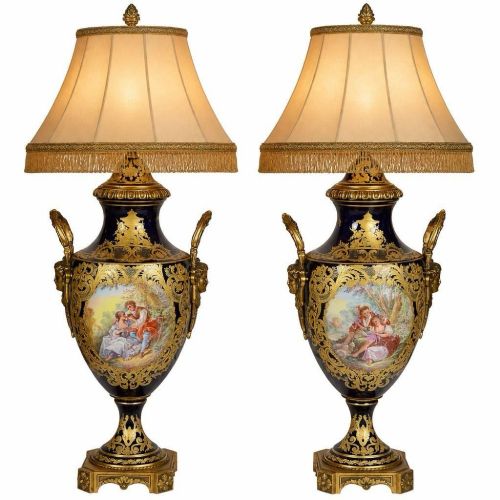
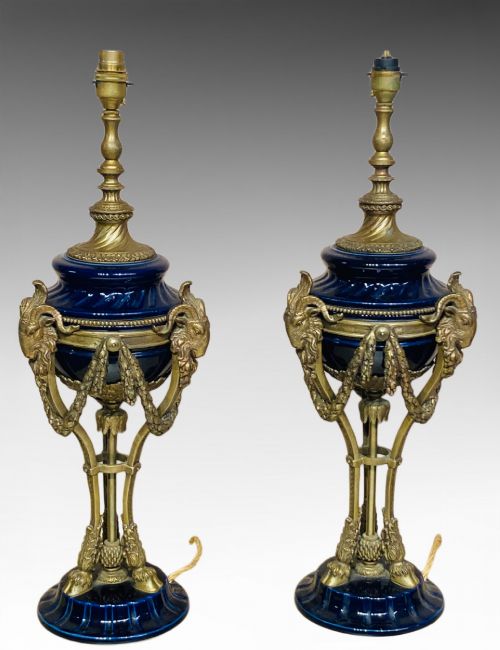
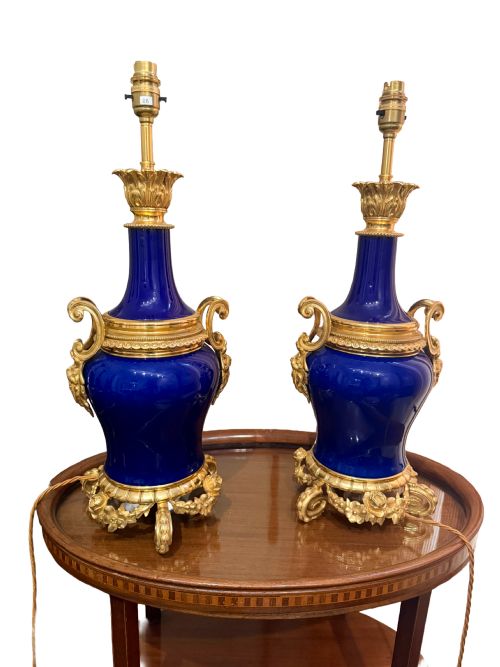
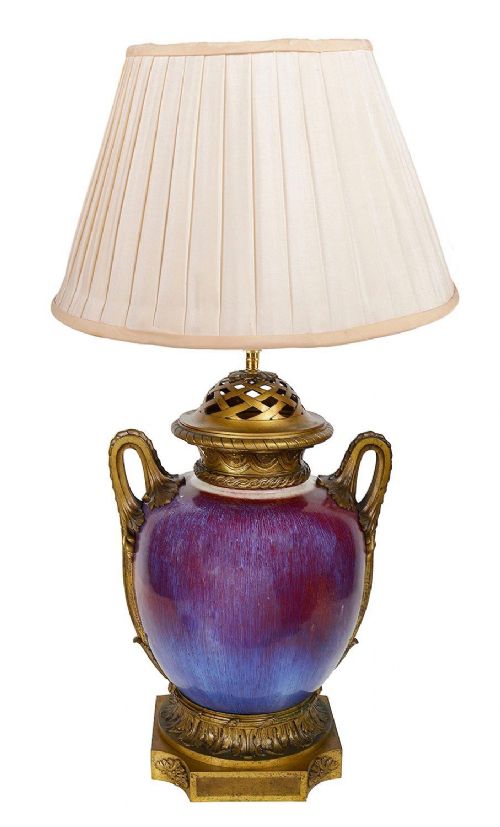
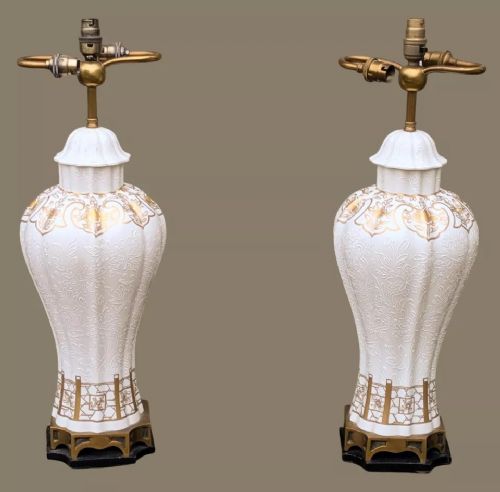
These items take the form of lidded vases, amphorae, and jars mounted as lighting, often appearing as matched pairs spanning the nineteenth century.
The aesthetic draws heavily on French neoclassical, rococo revival, and Napoleon III styles, alongside influences from Chinese export porcelain.
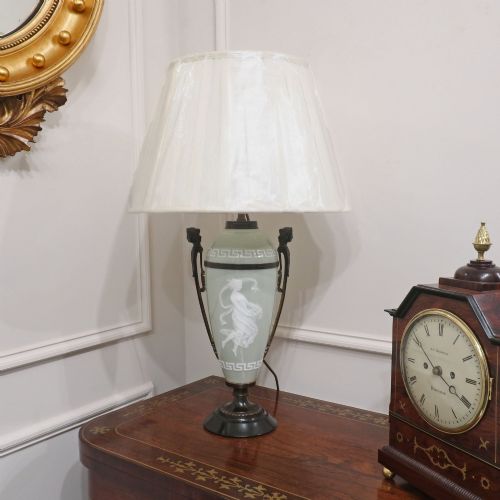
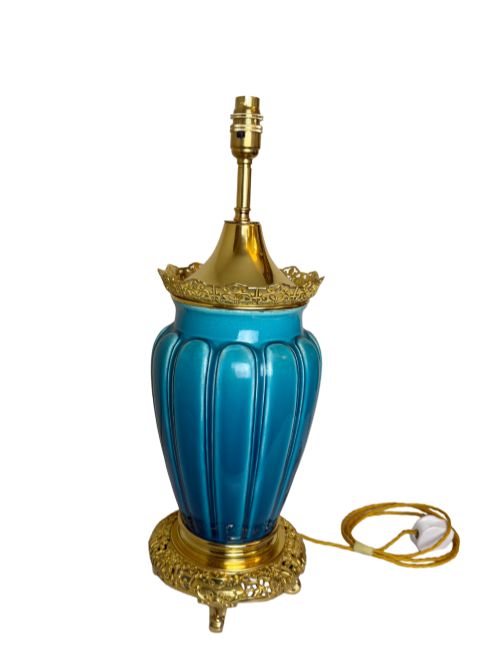
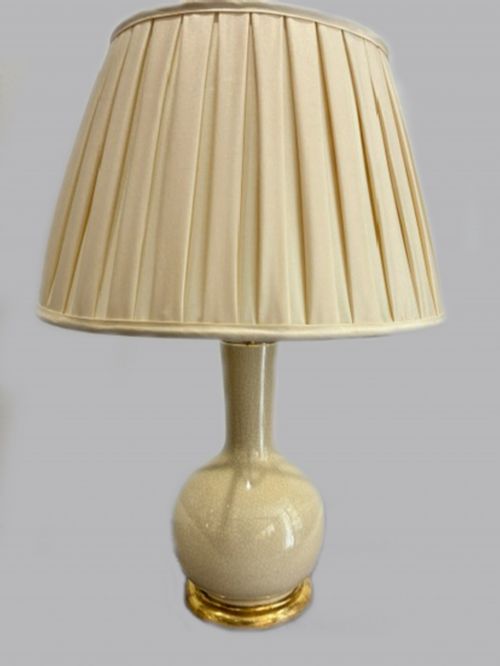
Most examples function as table lamps, incorporating bodies of blue, white, turquoise, or crackle ware ceramics paired with metal fittings.
Materials and construction
Bodies utilise porcelain, faience, and ceramic, frequently decorated with hand-painted motifs, cobalt glazes, and pate sur pate techniques.
Mounts and bases are cast in gilt bronze, ormolu, and brass, securing the ceramic vessels and providing structural support for electrical or oil components.
Quality variations
The refinement of the ceramic body and the precision of the hand-painted details define the upper tier of these pieces.
Mounts cast in chased ormolu or heavy gilt bronze display sharper definition and greater weight than simpler brass fittings.
Samson Porcelain·Sevres
The French Porcelain Urn Lights Glossary
- Ormolu
- Gilt bronze mounted onto furniture and decorative objects. This technique involves applying a gold amalgam to a bronze base.
- Pate sur pate
- A method of porcelain decoration where liquid clay is built up in layers to create a low relief cameo effect.
- Bleu celeste
- A pale turquoise blue glaze colour often associated with Sèvres porcelain. It appears frequently on nineteenth-century French pieces.
- Sang de boeuf
- A deep red copper-based ceramic glaze translating from French as ox blood. This finish originates from Chinese traditions.
- Faience
- Tin-glazed earthenware produced across Europe. It provides an opaque white surface suitable for painted ornamentation.
French Porcelain Urn Lights: Frequently Asked Questions
What periods do these lamps date from?
The selection spans principally from the eighteenth through to the early twentieth century. Nineteenth-century examples are particularly common.
Victorian and later twentieth-century iterations also appear among the offerings.
How were these urns originally used?
Many began as decorative lidded vases, urns, or ginger jars before later conversion into lighting.
Some examples originated as oil lamps during the nineteenth century before receiving electrical wiring.
How do you identify a Sevres style lamp?
These pieces typically feature rich cobalt or turquoise glazes complemented by elaborate gilt bronze or ormolu mounts.
Hand-painted panels and classical French decorative motifs further characterise this grouping.
Where do these lamps fit in a room?
Their substantial size and decorative metalwork suit placement on sideboards, console tables, or large desks.
Matched pairs function effectively when placed symmetrically on either side of a room feature.