




French Pastoral Artwork
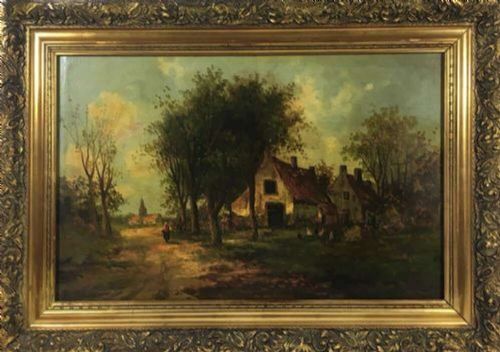
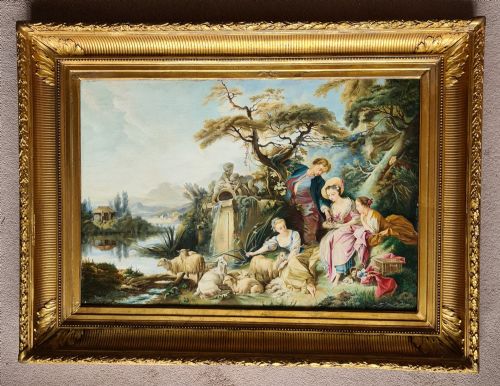
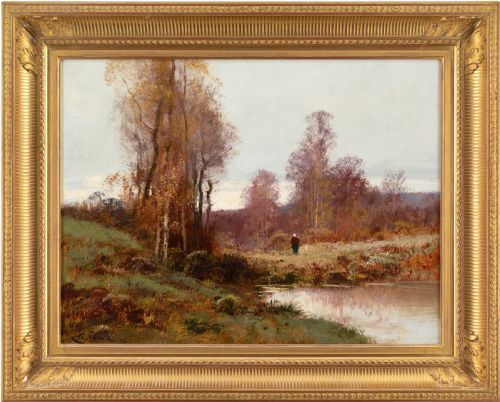
French pastoral artwork captures idyllic rural scenes and rustic idylls, offering a glimpse into traditional countryside life through historic paintings and prints.
French Pastoral Artwork
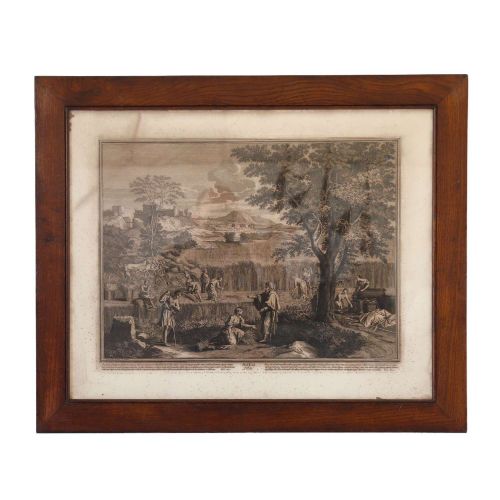
French pastoral artwork centres on rural views, farmyard landscapes, farming shepherds, and quiet river scenes derived from centuries of French artistic traditions. Buyers exploring this category encounter oil paintings on canvas, miniature paintings, and mixed-media wall art spanning the seventeenth century through to the early twentieth century.
The selections on this page frequently include works executed in the Barbizon style, romantic compositions, and pieces referencing earlier Rococo or Baroque masters. Landscapes depicting cattle grazing, haystacks, and rolling hills dominate the visual record, alongside decorative panels and engravings.
Dated examples stretch from seventeenth-century interpretations up to art deco period canvases from the 1930s. The majority of pieces lean toward nineteenth-century production, reflecting the enduring popularity of rural subjects among French painters.
Materials and construction methods
Canvas serves as the primary support for these works, carrying layers of oil paint applied to capture the varied textures of fields, rivers, and foliage. Pigments are handled with differing levels of impasto, depending on whether the artist pursued a smooth classical finish or the looser brushwork associated with the Barbizon school.
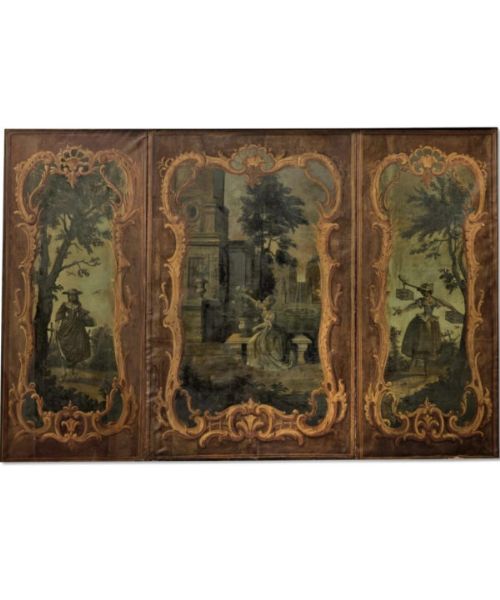
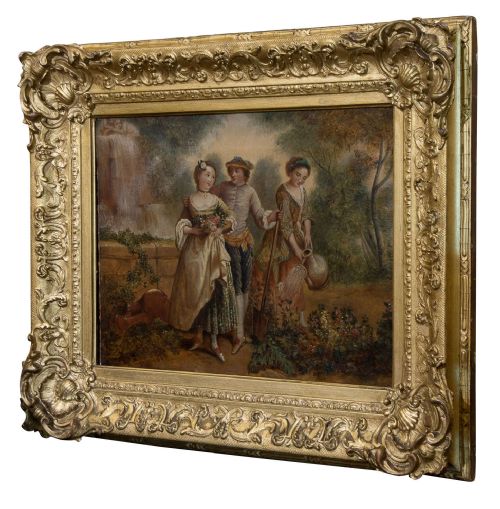
Many historical paintings remain housed within their original or period frames constructed from wood and embellished with gesso and gold leaf. Mixed-media pieces and engravings incorporate paper elements, while larger decorative formats occasionally utilise wallpaper panels or multi-panel triptych structures.
French Pastoral Artwork Retail Price Guide 2026
Typical asking prices for french pastoral artwork among the pieces listed under this phrase on Sellingantiques today, from the lower quarter to the upper quarter. They describe what is for sale here now, not the wider market.
Animals frequently share the canvas with humans, from wandering cattle and nesting birds to the eponymous chicks.
Assessing quality in pastoral pieces
Quality rests heavily upon the dexterity of the brushwork and the artist's ability to command natural light within a rural composition. Superior works demonstrate depth in atmospheric perspective, particularly in how skies, water, and distant hills are rendered to create spatial illusion.
The integrity of the canvas surface and the preservation of the original paint layers distinguish finer examples from heavily restored ones. Additionally, the quality and period appropriateness of the surrounding gilt wood or gesso frame contribute significantly to the overall standing of an artwork.
Francois Boucher·Charles Clair·Charles Zacharie Landelle·Jean-baptiste Joseph Pater·C. Lainé·Eugene Battaille·Henri Joseph Harpignies
The French Pastoral Artwork Glossary
- Barbizon School
- A nineteenth-century French art movement focused on realistic landscape painting, direct observation of nature, and rustic rural scenes. Artists of this circle worked outdoors to capture changing light and weather.
- Grisaille
- A painting executed entirely in shades of grey or neutral monochrome, often used to create the illusion of sculptural relief. This technique appears on decorative panels and triptychs.
- Gesso
- A plaster-like mixture applied to wooden frames or panels as a smooth base for gilding and paint. It provides the foundation for ornate gold leaf decoration.
- Rococo
- An eighteenth-century style characterised by ornate detail, light pastel colours, and playful, decorative themes. In pastoral art, it often manifests in idealised, theatrical views of country life.
- Triptych
- A picture or carving divided into three hinged or stationary panels. These artworks display related rural scenes across the central panel and its accompanying wings.
French Pastoral Artwork: Frequently Asked Questions
What defines a pastoral painting?
A pastoral painting depicts rural life, landscapes, shepherds, and agricultural scenes with an emphasis on calm, idyllic countryside settings.
These works romanticise nature and agricultural labour, drawing inspiration from classical literature and French artistic traditions.
Where were these artworks displayed?
Historically, these paintings hung in country houses, salons, and formal drawing rooms as decorative wall art.
Larger canvases and triptychs served as architectural focal points, while miniature paintings offered intimate viewing experiences.
How should I care for an oil painting on canvas?
Keep antique canvases away from direct sunlight, high humidity, and rapid temperature fluctuations to prevent paint cracking and canvas warping.
Dust the surface gently with a soft, dry brush and avoid using chemical cleaners on the paint or gilt frames.