




French Painted Metal Lamp
These French painted metal lamp examples bring painted tin, brass and porcelain into interiors through nineteenth and twentieth century forms.
French Painted Metal Lamp
A french painted metal lamp spans bouillotte desk lamps, standard lamps and chandeliers originating across the nineteenth and twentieth centuries. Buyers seeking this phrase typically encounter toleware, gilt metal and hand-painted porcelain bodies paired with brass fittings.
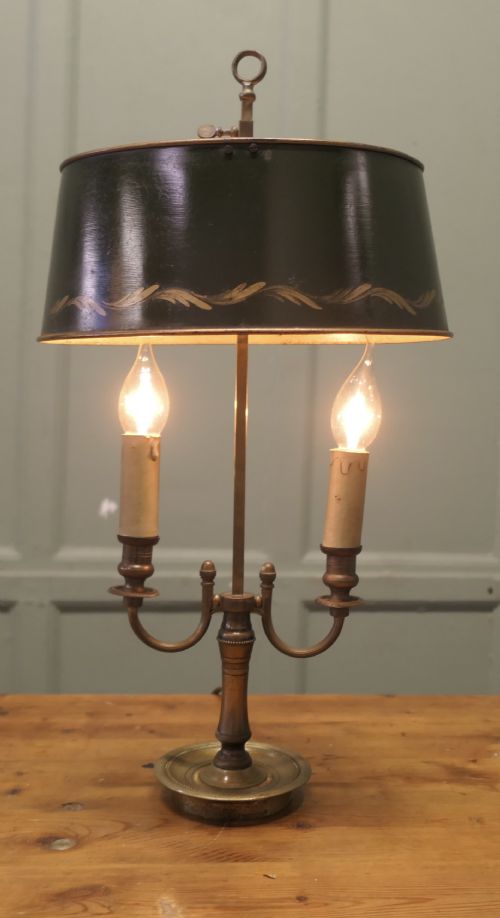
The selection ranges from Victorian twin bouillotte desk lamps to large Art Nouveau table lamps and multi-branch chandeliers. Pieces frequently feature painted tin or tole-peinte in green and polychrome finishes alongside classical or naturalistic motifs.
Materials and construction
Construction relies on shaped metal, spun brass, and tinplate known as toleware, which takes hand-painted pigments and gilt highlights. Ormolu mounts and cast spelter frequently anchor the bases of heavier table and desk designs.
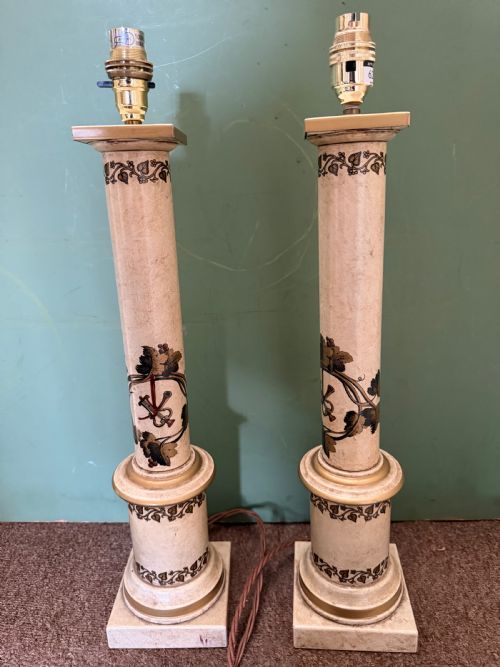
Ceramic and porcelain elements, including Sevres-style vases and floral plates, are incorporated into lamp bodies alongside adjustable brass candle arms and metal shades.
Some nineteenth-century bouillotte lamps retain adjustable shades designed to shield card players' eyes from the glare of burning candles.
Evaluating quality and finish
Quality rests in the crispness of the hand-painted details upon the toleware and porcelain, as well as the weight and casting quality of the brass and ormolu mounts. Finer examples retain their original painted surfaces and gilding without excessive overpainting.
The integrity of the structural joinery between metal columns, ceramic bodies and weighted bases distinguishes standard production items from finer studio or signed pieces.
L & F Moreau
The French Painted Metal Lamp Glossary
- Toleware
- Painted or lacquered sheet metalware originating in Europe, commonly used for lamp shades and bodies. It provides a durable surface for decorative hand-painting.
- Bouillotte
- A type of adjustable desk lamp featuring a central column, candle arms and a characteristic metal shade. The shade moves up and down on a central rod.
- Ormolu
- Gilded bronze or brass used for decorative mounts and fittings on nineteenth-century lamps. It adds metallic lustre to ceramic and painted metal bodies.
- Spelter
- A zinc alloy used as a substitute for bronze in cast figures and lamp bases. It takes patination and paint finishes well.
- Polychrome
- Decorated in multiple colours, frequently seen on hand-painted floral motifs across toleware and porcelain lamp bodies.
French Painted Metal Lamp: Frequently Asked Questions
What is a bouillotte lamp?
A bouillotte lamp is a traditional desk or table light featuring a central column, multiple candle arms and an adjustable painted metal shade. The shade slides up and down to control the direction of the light.
Originally designed for card games played on French gaming tables, these pieces now serve as functional desk or reading lights in domestic interiors.
How do I identify toleware?
Toleware refers to sheet metal, usually iron or tin, that has been lacquered and hand-painted with decorative motifs. It often appears in shades of green, red or black with gilt detailing.
Examining the surface reveals the brushwork and wear patterns characteristic of painted tinplate rather than solid ceramic or cast bronze.
Where should I place a French chandelier?
French painted metal and toleware chandeliers suit dining rooms, hallways or bedrooms where ambient overhead lighting is required. Their multi-branch forms provide wide illumination.
Ensure the ceiling height accommodates the drop of the chandelier and the wiring meets modern electrical safety standards before installation.
How are these lamps dated?
Dating relies on stylistic markers such as neoclassical columns, Victorian proportions, Art Nouveau organic curves, and the specific composition of the brass and painted metal. Nineteenth and early twentieth-century pieces often display hand-finished details distinct from later reproductions.
Constructive evidence like hand-cut screw threads, soldered joints and the ageing of the underlying metal help confirm the period.