
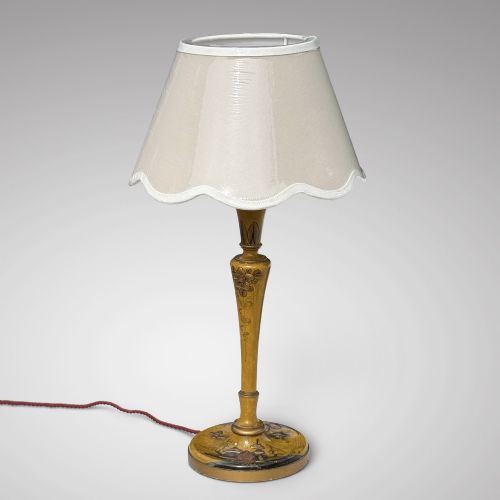



Painted Column Table Lamp
A painted column table lamp brings height and hand-finished pattern to a room, drawing the eye with upright form and decorative detail.
Painted Column Table Lamp
A painted column table lamp combines vertical architectural form with surface decoration, appearing across periods from the nineteenth century into the twentieth century. These pieces bridge the gap between functional lighting and decorative art, often taking the shape of classical columns or turned wood and metal shafts.
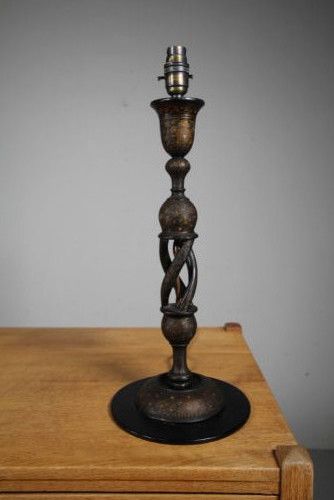
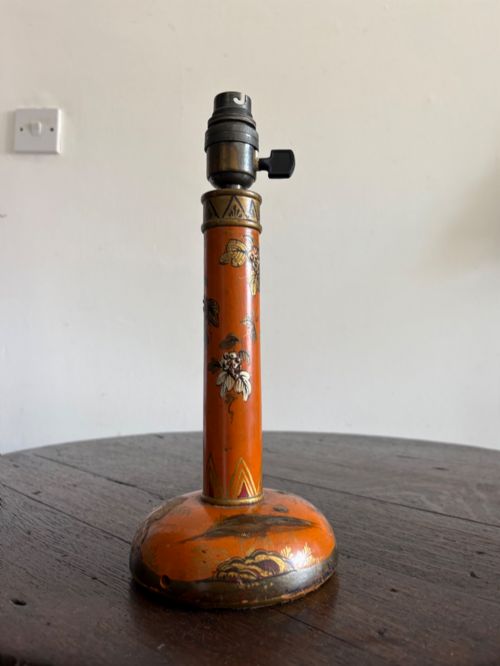
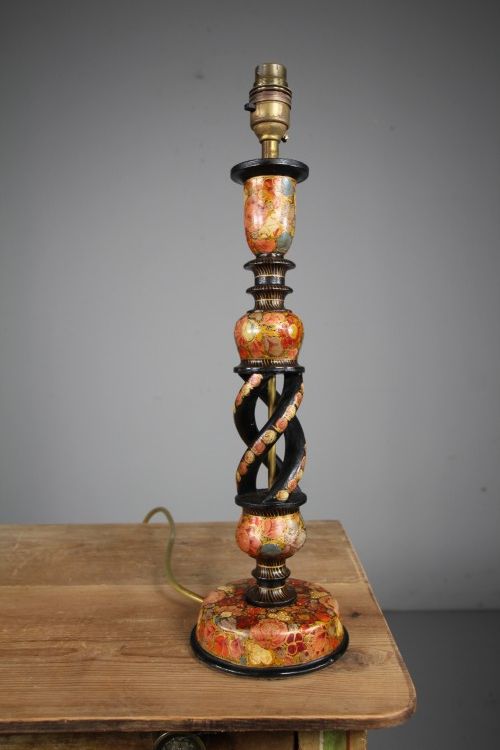
The most common examples encountered on this page include converted oil lamps, Chinoiserie lacquer designs, and Kashmiri twist lamps. Buyers find both single lamps and matched pairs, ranging from tall floor-standing table versions to compact desk pieces.
Origins stretch from English workshops to French tole-peinte pieces and Anglo-Indian Kashmiri imports. Each piece reflects the interior taste of its decade, whether that means Victorian brass with coloured glass or vibrant 1920s lacquer.
Materials and construction methods
Makers utilised brass, wood, ceramic, and glass as the core structural elements for these shafts and bases. Metal components provided stability, whilst wood and pottery offered surfaces suited to detailed hand painting.
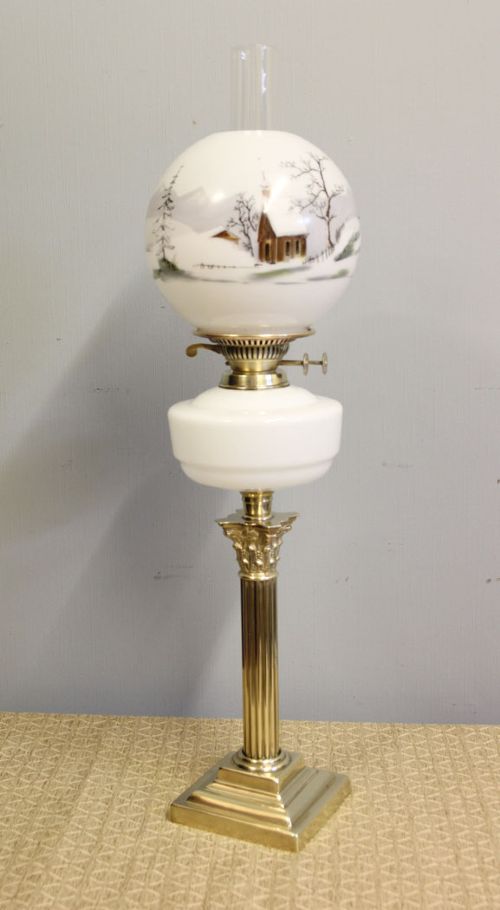
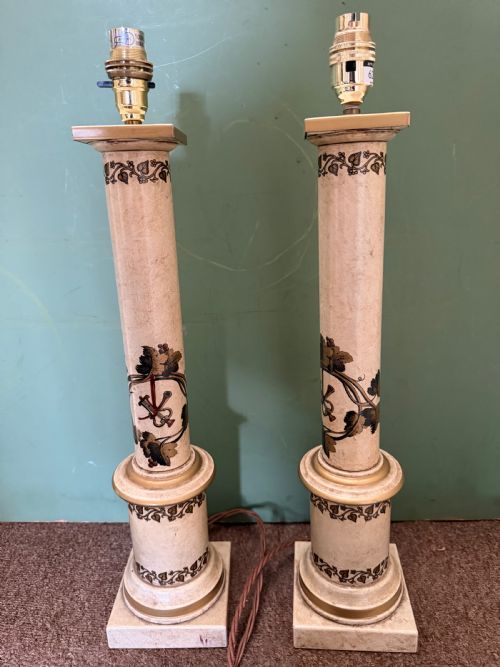
Surface decoration relied on paint, lacquer, and applied pigments, often sealed to protect the finish over decades of use. Craftsmen built up layers of colour, sometimes incorporating motifs such as winter scenes, Mandarin orange tones, or intricate Chinoiserie patterns.
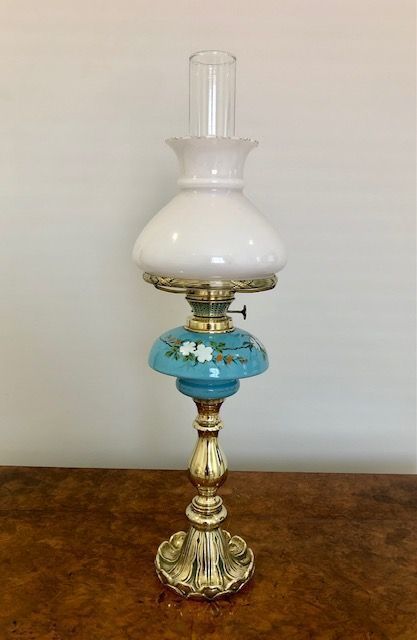
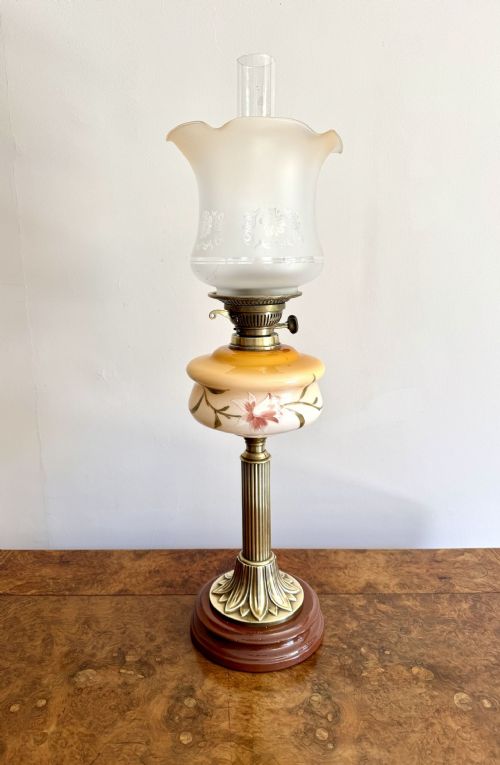
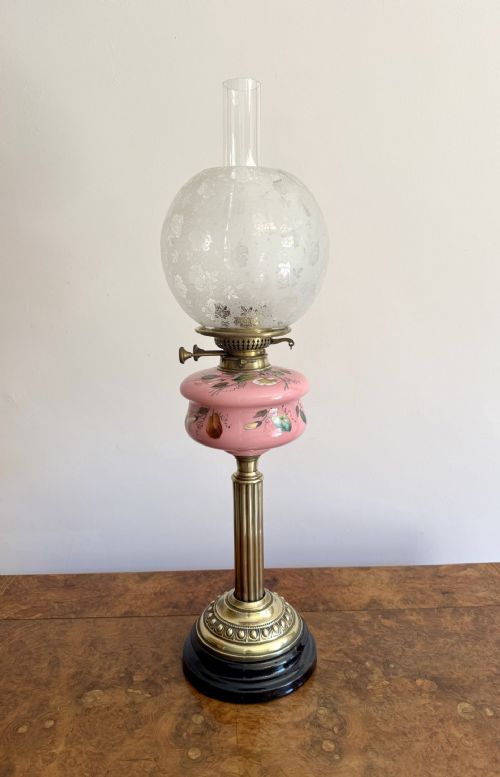
Wiring and electrical components represent later adaptations, as many surviving columns began life as nineteenth-century oil or paraffin lamps before conversion. Original burners and fonts frequently sit alongside modern fittings to allow safe domestic use.
Listings feature periods spanning from the Victorian era through the 1930s, utilising materials including brass, glass, lacquer, and wood.
Distinctions in craftsmanship and survival
The standard of hand painting dictates much of the distinction between ordinary and superior pieces. Finer examples display precise brushwork, depth in the lacquer layers, and well-preserved surface detail without excessive touch-ups.
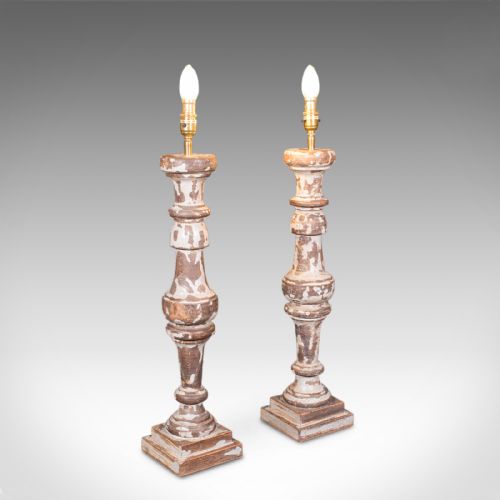
The integrity of the underlying column structure and material combination also marks out better examples. Heavy brass bases, crisp Corinthian capitals, and solid turned wood retain their stability far better than lightweight or warped substitutes.
Completeness plays a role in how a piece is judged, particularly where original glass fonts, matching shades, or intact pairs survive together. Matching pairs remain harder to find than single lamps, representing a higher tier of original manufacture.
The Painted Column Table Lamp Glossary
- Corinthian column
- A classical architectural order featuring an ornate capital decorated with acanthus leaves, frequently utilised on nineteenth-century metal lamp bases.
- Tole-peinte
- Painted sheet metal, typically associated with French decorative work and often finished in deep colours with hand-applied floral or scenic motifs.
- Chinoiserie
- European artistic style reflecting Chinese motifs and techniques, commonly expressed through lacquerwork and painted gold details on dark or vibrant grounds.
- Duplex burner
- A double-wick mechanism found on Victorian oil lamps, designed to produce a brighter flame before conversion to electricity.
- Font
- The reservoir section of an oil lamp that sits atop the column, frequently rendered in coloured glass such as cranberry or pink.
Painted Column Table Lamp: Frequently Asked Questions
How do I date a painted column lamp?
Dating relies on examining the materials, construction methods, and any surviving burner mechanisms or wiring channels. Victorian pieces often feature heavy brass castings and glass fonts, whilst 1920s examples lean towards lacquer and twist-turned wood.
Stylistic clues also help narrow the decade. Chinoiserie finishes and Kashmiri work typically point towards the early twentieth century, whereas Neoclassical brass columns often align with late Victorian production.
Can these lamps be used safely today?
Most antique lamps require professional rewiring to meet modern electrical standards, particularly those converted from oil burners. Many pieces on the market have already undergone rewiring for contemporary use.
Buyers should inspect the cord and plug or consult a qualified electrician before plugging in older fixtures. The structural column itself remains robust, but internal fittings benefit from expert verification.
Were these always electric lamps?
A large proportion of these pieces started life as oil or paraffin lamps during the nineteenth century. Makers adapted the vertical column format to hold fuel reservoirs and burners.
As domestic electricity spread through the early twentieth century, many of these columns were fitted with lamp holders and cords. Original oil components are frequently retained for aesthetic value alongside modern wiring.
How do I care for a painted surface?
Painted and lacquered surfaces require gentle dusting with a soft, dry cloth to prevent scratching the finish. Avoid liquid cleaners, chemical polishes, or abrasive cloths that can lift delicate paint or lacquer.
Keeping the lamp away from direct sunlight preserves the original pigments and prevents fading over time. Brass elements can be cleaned sparingly if preferred, but the painted column itself is best left undisturbed.