

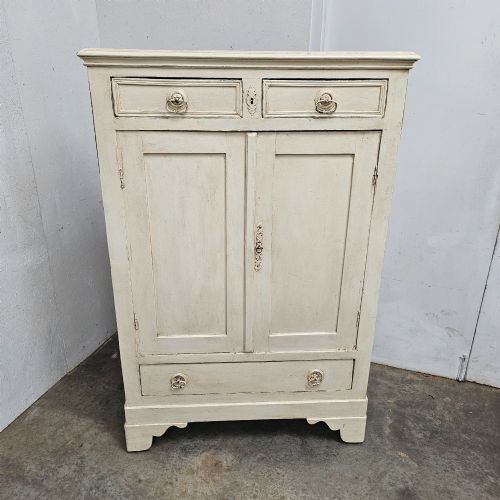


French Painted Linen Press
A French painted linen press brings provincial character and generous storage to a room, combining painted timber with the generous proportions of 18th and 19th-century cabinetmaking.
French Painted Linen Press
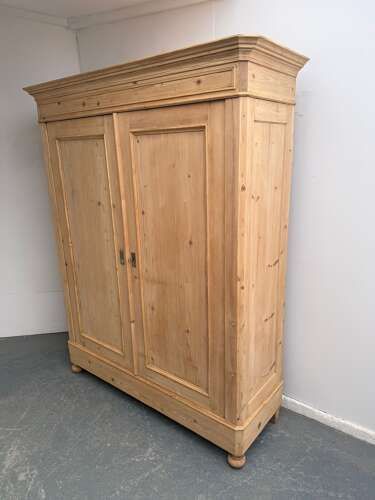
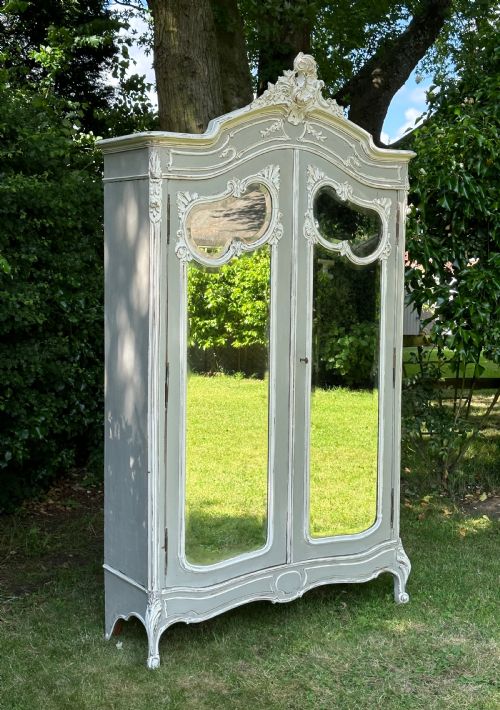
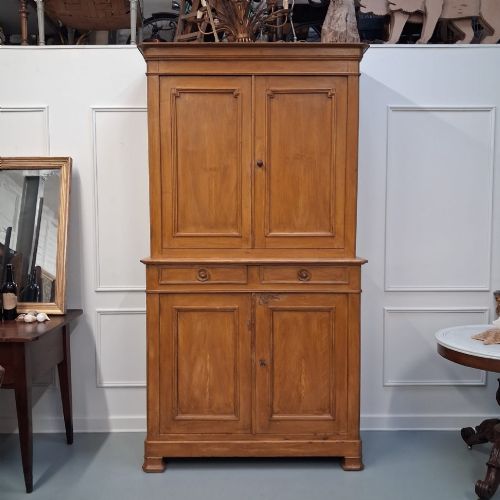
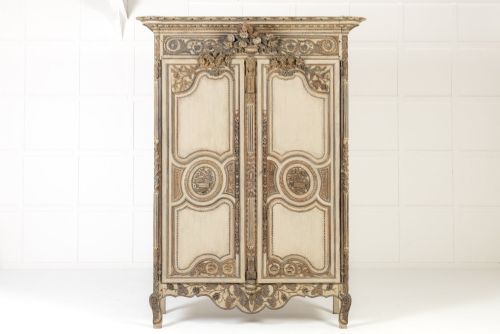
When searching for a French painted linen press, buyers encounter large storage pieces originating mainly from the 18th and 19th centuries. These substantial items serve multiple functions in domestic spaces, appearing across the evidence as armoires, wardrobes, linen cupboards, and buffets.
The pieces on this page lean heavily towards country and provincial aesthetics, featuring styles such as French Provincial, French Country, and Rustic Country alongside Dutch and English regional forms. Most examples combine high storage capacity with painted wooden surfaces characteristic of European country houses.
Buyers are most likely to meet pieces constructed from pine, oak, and general painted timber, frequently displaying historic paint finishes. Forms range from single-door cupboards to grand double-door armoires and two-body buffets designed for stacking household linens and garments.
How they were made
Construction relies primarily on solid woods such as pine, oak, and walnut, assembled using traditional joinery appropriate for large household furniture. Panels are fitted into heavy frames to accommodate the seasonal movement of timber.
Surface finishes involve layers of paint applied to timber, often surviving in original or historic states alongside bare or waxed wood elements. Metal components like brass and iron provide functional hardware and decorative detailing on doors and drawers.
French Painted Linen Press Retail Price Guide 2026
Typical asking prices for french painted linen press among the pieces listed under this phrase on Sellingantiques today, from the lower quarter to the upper quarter. They describe what is for sale here now, not the wider market.
One Edwardian press arrived wearing a coat of downpipe grey paint, proving that even historic linen cupboards appreciate a modern neutral.
What varies in quality
Quality differences emerge in the proportion and architectural balance of the cabinet, particularly in the moulding of cornices and the construction of panelled doors. Finer examples maintain structural integrity across large doors without excessive warping.
The integrity of the painted surface distinguishes pieces, with original or early layered paint finishes holding greater interest than modern overpainting. The weight and quality of brass or iron hardware further separate standard workshop production from finer country house commissions.
The French Painted Linen Press Glossary
- Linen press
- A tall cupboard traditionally used for storing folded clothes and household linens on internal shelves. These pieces often pre-date standard modern wardrobes.
- Armoire
- A large freestanding cupboard or wardrobe, usually enclosed by two doors. In European contexts, these items provided the primary bedroom storage before fitted closets.
- Buffet à deux corps
- A large two-part cupboard featuring a smaller upper section stacked upon a deeper base. This form provides extensive display and storage capacity.
- Provincial
- A style originating from regional areas rather than capital cities, reflecting local cabinetmaking traditions and materials. These pieces often display simpler, robust construction.
- Cornice
- The decorative moulding that crowns the top of a cabinet or armoire. It visually caps the piece and defines its architectural style.
French Painted Linen Press: Frequently Asked Questions
What is a French painted linen press?
A French painted linen press is a large wooden storage cabinet designed for domestic organisation, finished in paint and originating from provincial regions. These pieces span the 18th and 19th centuries and serve as wardrobes or linen cupboards.
They combine practical shelving and hanging space with the decorative appeal of historic painted wood surfaces. Regional variations include armoires, buffets, and compactums.
How were these cupboards used?
Historically, these large cupboards housed household linens, folded garments, and textiles before modern closets became standard. Their deep shelves and internal space accommodated heavy woven blankets and family linen stores.
Today, buyers utilise them in bedrooms and hallways for versatile clothing and household storage. Their substantial scale makes them a dominant storage feature in a room.
What woods were used?
Makers utilised accessible regional timbers such as pine, oak, and walnut for the primary structure of these presses. These woods provided the necessary strength to support large panelled doors and heavy cornices.
Surfaces were then painted to protect the timber and provide a decorative finish suited to country houses. Over time, these paint layers developed a distinct patina.
How do I date an antique press?
Dating relies on observing construction methods, timber types, and design characteristics such as panel moulding and hardware. Pieces from the 18th century often display hand-cut joinery and specific regional proportions.
Paint analysis and the condition of iron or brass fittings also provide clues to the age of the piece. Edwardian and later 19th-century examples show shifts toward standardised hardware and machine-sawn timbers.
How do I live with one?
Living with a large antique linen press involves accommodating its considerable height and depth within a modern room layout. Ensuring adequate wall clearance allows doors to open fully for internal access.
These pieces function effectively as focal storage points in bedrooms or living areas, contrasting with contemporary furniture. Their painted surfaces require gentle cleaning suited to historic finishes.