





French Painted Curio Cabinet
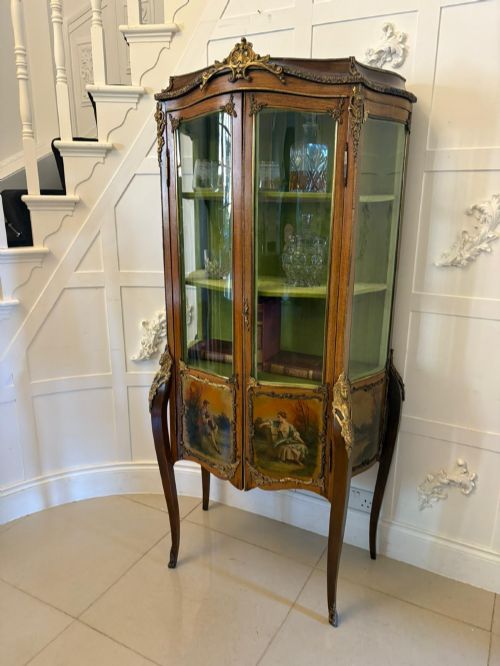
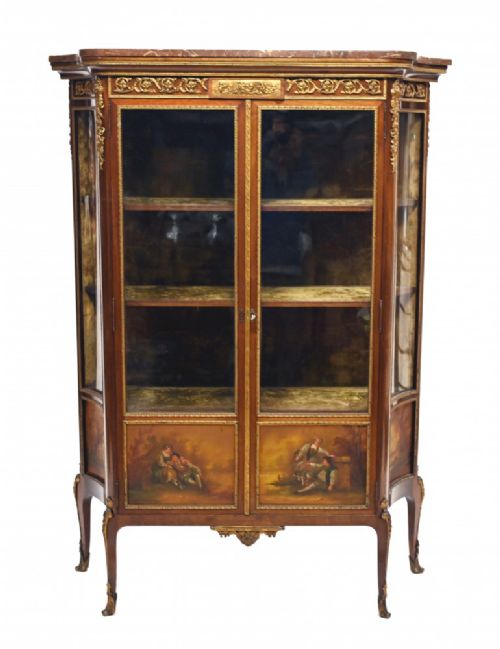
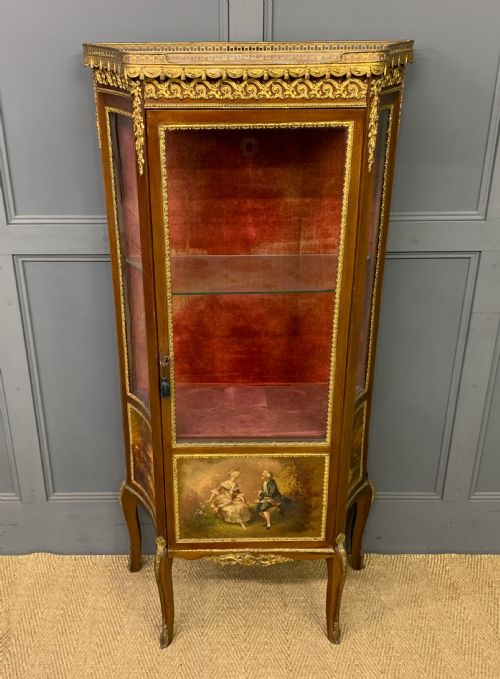
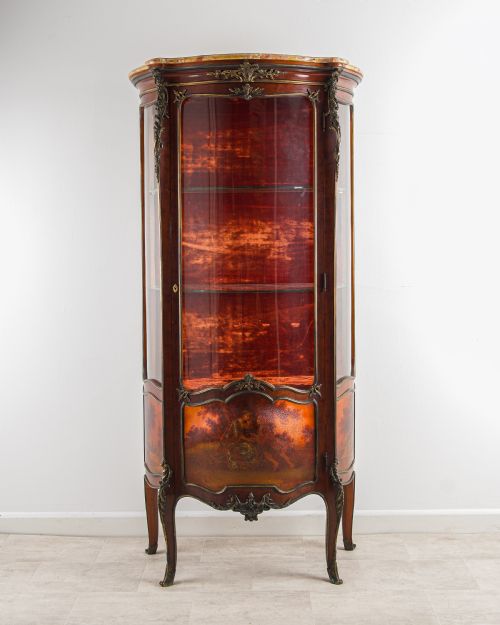
A french painted curio cabinet brings eighteenth-century romance into a room, displaying precious porcelain behind curved glass panels.
French Painted Curio Cabinet
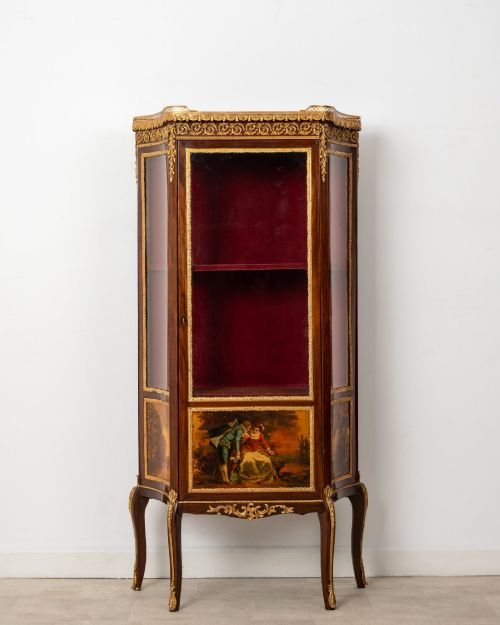
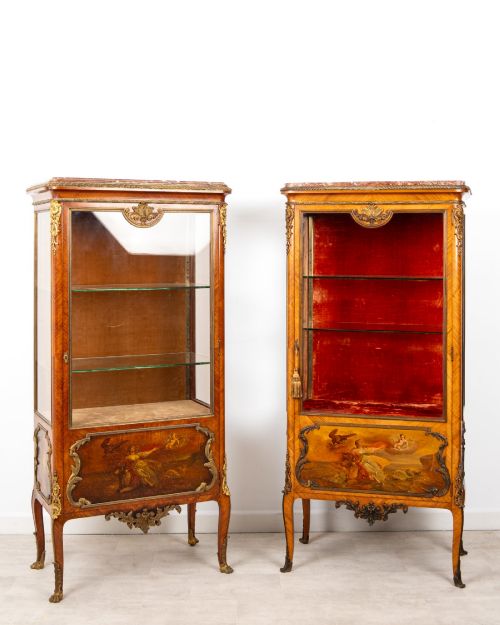
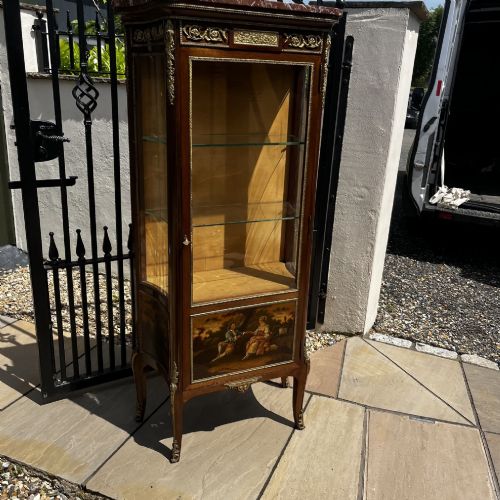
A french painted curio cabinet serves primarily to exhibit small collectables and decorative objects through glazed doors and side panels. The selections here centre on nineteenth-century creations, drawing heavily upon the revival of Louis XV and Louis XVI aesthetics.
Most examples you will encounter take the form of freestanding vitrines or wall-hanging cabinets. They frequently incorporate serpentine fronts, bomb shapes, or oval profiles designed to catch light from multiple angles.
The decorative scheme relies heavily on Vernis Martin painted panels depicting pastoral scenes or romantic figures, set into wooden carcasses. These pieces reflect the nineteenth-century appetite for opulent chateau-style furnishings.
Factors of Quality
The refinement of the hand-painted Vernis Martin panels dictates much of the visual merit, separating finely rendered figures from simplistic brushwork. Crispness and weight in the ormolu or gilt bronze mounts also signal superior craftsmanship.
Timber selection plays a major role, with figured kingwood veneers and solid mahogany frames showing greater depth than plain secondary woods. Precision in the joinery of curved glass doors and serpentine mouldings indicates workshop competence.
The presence of original marble tops with complementary profiling reveals the original ambition of the piece. Consistency in the gilding and the preservation of the varnish layers influence the overall integrity.
French Painted Curio Cabinet Retail Price Guide 2026
Typical asking prices for french painted curio cabinet among the pieces listed under this phrase on Sellingantiques today, from the lower quarter to the upper quarter. They describe what is for sale here now, not the wider market.
Current listings demonstrate a strong preference for nineteenth-century craftsmanship, featuring materials such as marble, ormolu, and kingwood across diverse vitrine forms.
François Linke
The French Painted Curio Cabinet Glossary
- Vernis Martin
- A simulated Japanese lacquer technique perfected by the Martin brothers in eighteenth-century France. This finish uses resin-based varnishes over painted decorations to create a glossy, translucent surface.
- Ormolu
- Gilded bronze used extensively for decorative mounts on furniture during the eighteenth and nineteenth centuries. The process involves applying a mercury and gold amalgam to cast bronze.
- Vitrine
- A glass-fronted cabinet designed specifically for the display of curiosities and art objects. These pieces often feature glass side panels to maximise illumination of the contents.
- Kingwood
- A dense, richly figured Brazilian timber prized for cabinet-making due to its violet-brown colour and darker banding. It was favoured by master makers for veneering high-status furniture.
- Bombe
- A swelling, outward-curving contour found on the front and sides of case furniture. This undulating form requires advanced woodworking skill to execute properly.
- Serpentine
- A shaped line featuring a double curve, convex in the centre and concave at the ends. It provides cabinets with a dynamic, flowing silhouette.
French Painted Curio Cabinet: Frequently Asked Questions
What items belong inside a french painted curio cabinet?
These cabinets were traditionally designed to house small porcelain figurines, delicate glassware, snuff boxes, and miniature portraits. The glazed panels and velvet shelves protect fragile treasures while keeping them fully visible.
Today, they serve the exact same purpose for modern collectors. Placing small antiques or curious objects inside allows you to display diverse collections safely without accumulating dust.
How do I care for Vernis Martin surfaces?
The painted and varnished panels require gentle maintenance using a soft, dry microfiber cloth. Avoid commercial furniture polishes or damp cloths, which can degrade the aged varnish over time.
Keep the cabinet away from direct sunlight and fluctuating heat sources to prevent the wood from warping and the varnish from crazing. Stable room humidity preserves both the paintwork and the gilded mounts.
Are these cabinets strictly French in origin?
While the design vocabulary is explicitly French, drawing on Louis XV and Louis XVI court styles, many of these pieces were manufactured across Europe during the nineteenth-century revival periods. British and continental workshops eagerly adopted the aesthetic.
Regardless of the exact workshop location, the construction methods, painted motifs, and ormolu mounts strictly follow French neoclassical and rococo revival traditions.
How do I distinguish a nineteenth-century revival piece?
Examine the interior construction, drawer linings, and the ageing of the varnish on the painted panels. Nineteenth-century makers utilised machine-sawn timbers alongside hand-finishing techniques typical of the Victorian and Edwardian eras.
The combination of kingwood veneers, heavy ormolu mounts, and Vernis Martin work points directly to the revival enthusiasm of the 1870s to 1900s rather than the original eighteenth-century period.