

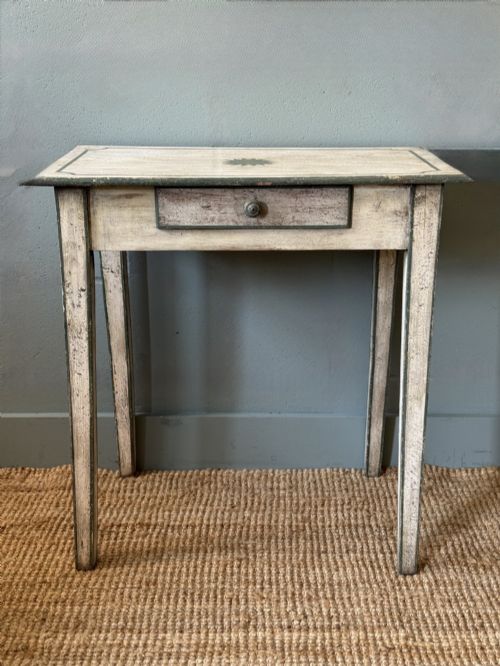
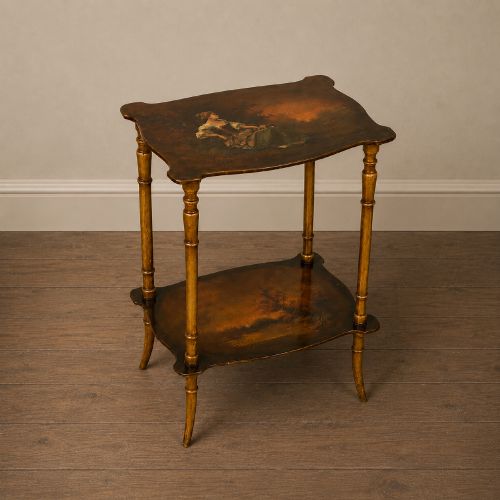
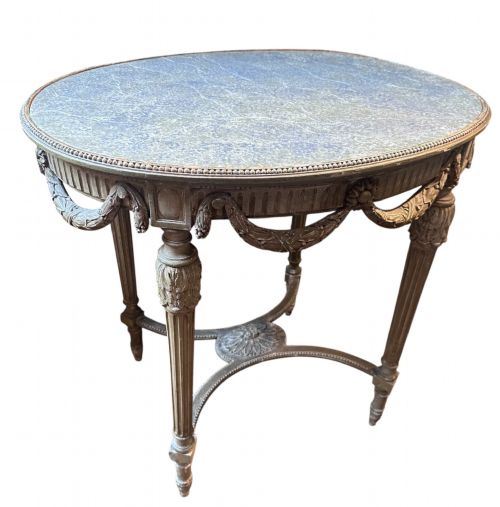


French Painted Accent Table
A French painted accent table brings continental charm and practical surface space to a room, offering understated elegance for everyday living.
French Painted Accent Table
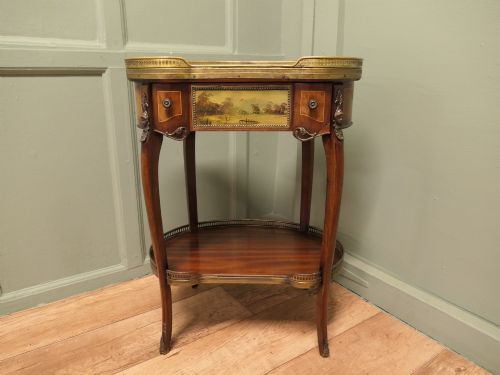
A French painted accent table serves as a versatile surface for lamps, books, or decorative objects while introducing distinct period character to an interior scheme. These pieces emerge primarily in forms such as side tables, occasional tables, and gueridons, spanning the nineteenth and early twentieth centuries.
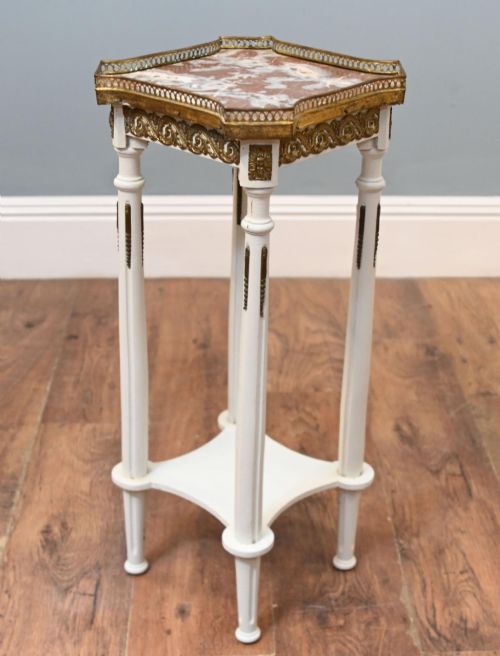
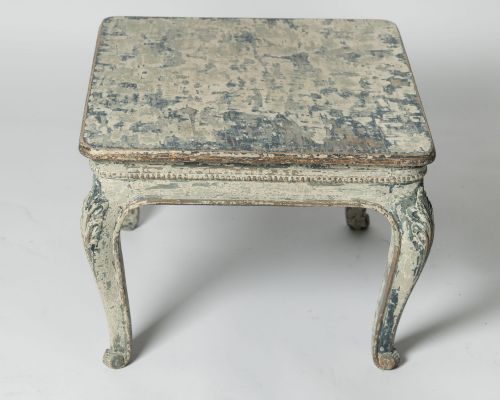
The selections available here reflect traditional continental styling, including Louis XVI and French Provincial aesthetics. Buyers frequently encounter smaller formats like lamp tables and bedside tables, often finished with painted wood and decorative gilt highlights.
Originating largely from nineteenth-century workshops and early twentieth-century interpretations, these tables demonstrate the enduring appeal of continental furniture design. Each piece combines functional utility with decorative painted surfaces that define traditional French interior decoration.
Materials and Construction Methods
Craftsmen built these tables using timber, fruitwood, and carved wood, applying layers of paint, gesso, and parcel-gilt detailing to achieve decorative surfaces. Many examples feature inset marble tops that provide both a durable surface and a visual contrast to the painted wooden frames.
Surface decoration often incorporates traditional techniques such as Vernis Martin finishes or hand-painted motifs on wood and gilt structures. Structural elements frequently include brass mounts or iron work, depending on the specific period and stylistic influence.
French Painted Accent Table Retail Price Guide 2026
Typical asking prices for french painted accent table among the pieces listed under this phrase on Sellingantiques today, from the lower quarter to the upper quarter. They describe what is for sale here now, not the wider market.
Strapp work makes an unexpected appearance among the garden tables, adding a touch of rustic utility.
Evaluating Quality and Execution
Quality in these tables rests upon the crispness of the carved wood details, the depth and execution of the painted and gilt decoration, and the integrity of the underlying timber. Superior examples exhibit harmonious proportions and refined brushwork that remain intact across the structure.
The integration of materials also defines the tier of the piece, particularly where fitted marble tops or specialised finishes like Vernis Martin are employed. Well-executed tables display consistent patination across both the painted surfaces and structural joints.
The French Painted Accent Table Glossary
- Gueridon
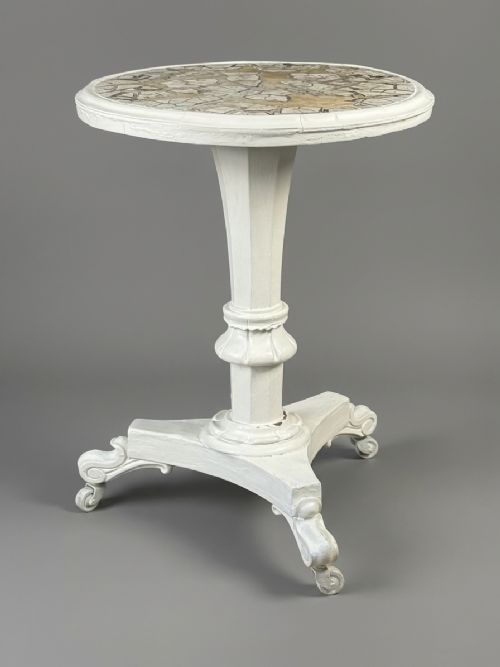
- A small round table, typically supported by a central column or pillar, originating in seventeenth-century France. These pieces function well as lamp stands or occasional tables.
- Vernis Martin
- A simulated lacquer finish developed in eighteenth-century France by the Martin brothers, known for its lustrous and translucent quality. This technique was frequently revived on later occasional furniture.
- Parcel-gilt
- Wood or gesso surfaces partially decorated with gold leaf or gold paint to highlight carved details. This treatment accentuates architectural motifs on tables and mirrors.
- Étagère
- A piece of furniture consisting of open shelves for displaying small objects or books. Two-tier variations appear frequently among side tables.
- Louis XVI Style
- A neoclassical design movement characterised by straight lines, symmetry, and classical restraint. Tables from this tradition often feature fluted legs and understated painted decoration.
French Painted Accent Table: Frequently Asked Questions
Where should I place a French painted accent table?
These tables fit comfortably beside sofas, in hallways, or as bedside surfaces where additional display space is required. Their compact proportions allow them to integrate easily into various room layouts without dominating the floor plan.
Positioning them away from direct heat sources helps preserve the painted wood and gilt finishes over time. They work effectively both as functional lamp tables and purely decorative focal points.
How do I clean a painted and marble top table?
Dust the painted wooden surfaces regularly with a soft, dry cloth to prevent accumulation. Avoid chemical polishes that might damage aged paint or gilt decoration.
Clean marble tops gently with a damp cloth and mild soap, drying the surface immediately afterwards. Acidic substances should be kept away from marble to prevent staining or etching.
What defines the Louis XVI style on these tables?
The Louis XVI style relies on straight architectural lines, rectangular geometries, and classical motifs rather than the exuberant curves of earlier rococo designs. Tables from this tradition typically feature tapered legs and restrained painted decoration.
This aesthetic offers a formal yet balanced appearance that complements both traditional and contemporary interiors.
How do I identify a gueridon table?
A gueridon is distinguished by its circular top and central support column, which often terminates in three or four feet. These tables were traditionally used to hold lights or small decorative items.
Their compact round format makes them practical for placement beside seating areas or in corners.