

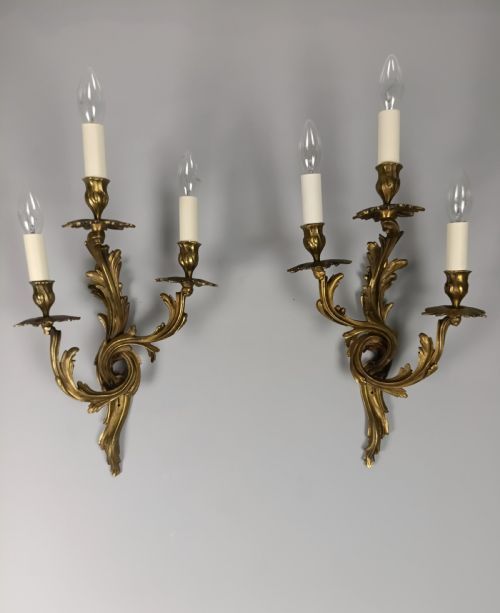


French Ornate Wall Lights
French ornate wall lights bring a dramatic decorative presence to interior walls, offering a refined illumination derived from continental design traditions.
French Ornate Wall Lights
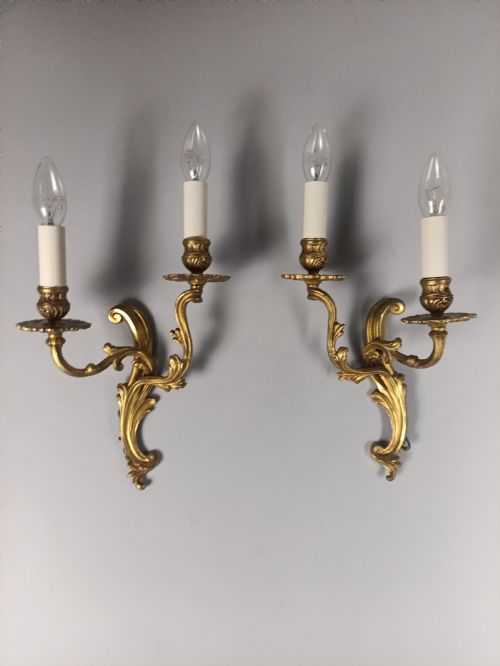
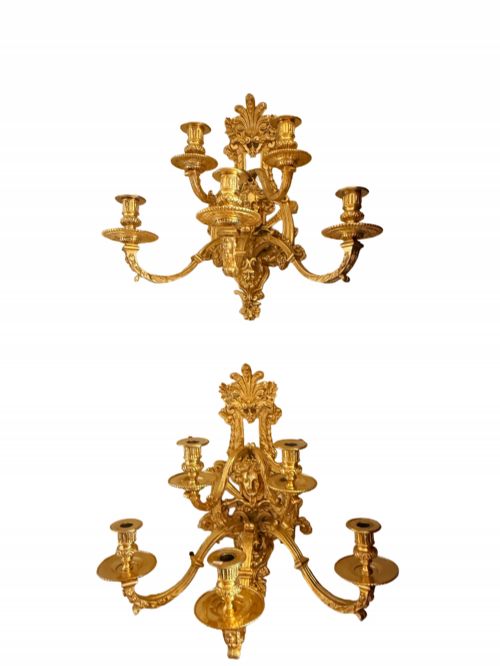
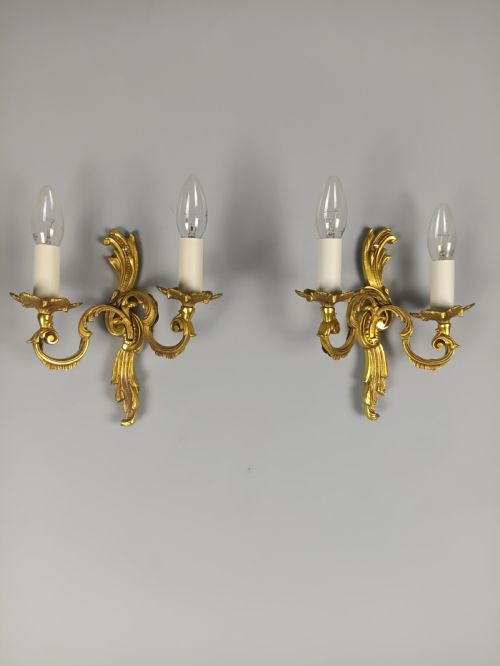
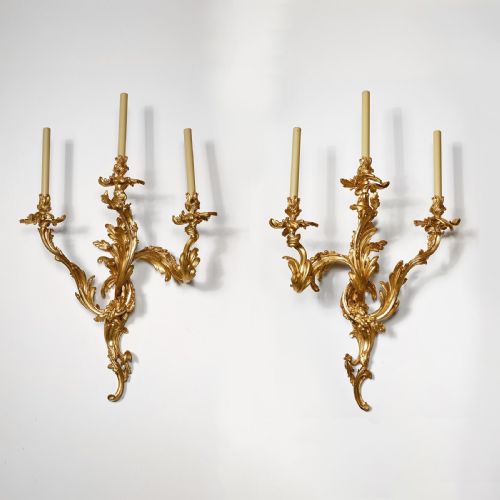
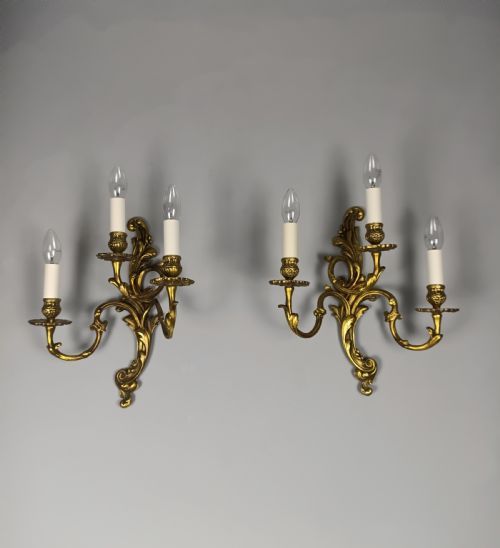
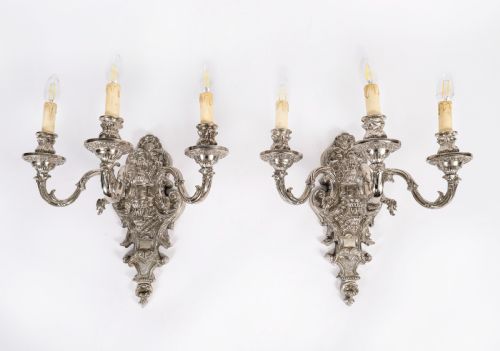
French ornate wall lights encompass decorative sconces, girandoles, and appliques designed to mount directly onto wall surfaces. When searching for french ornate wall lights, buyers encounter items ranging from two-branch pairs to large sets of four or more arms.
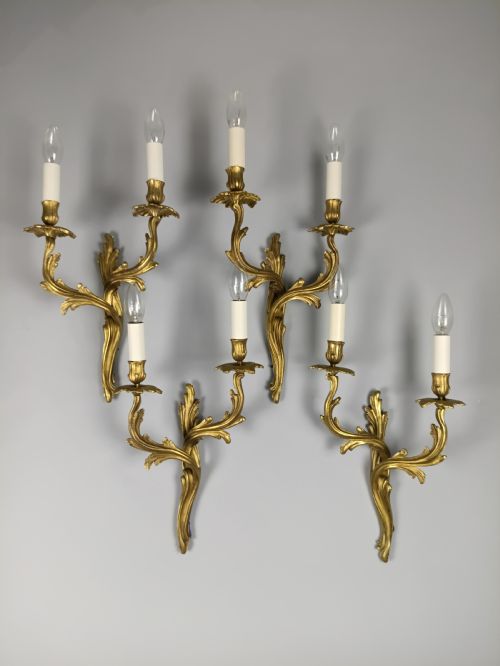
The selections span production dates from the early nineteenth century through to the 1930s. The most common survivals on this page are twin-arm and triple-arm configurations dating from the late nineteenth century and the 1930s.
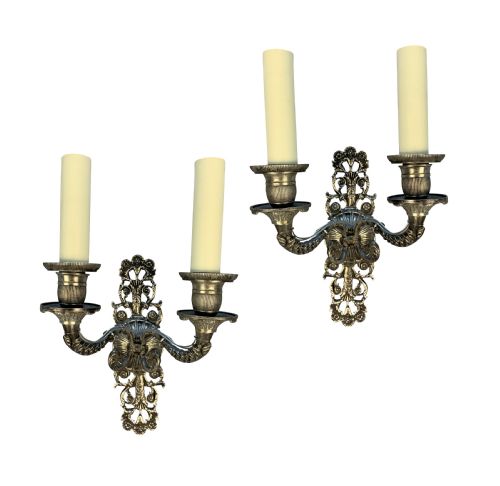
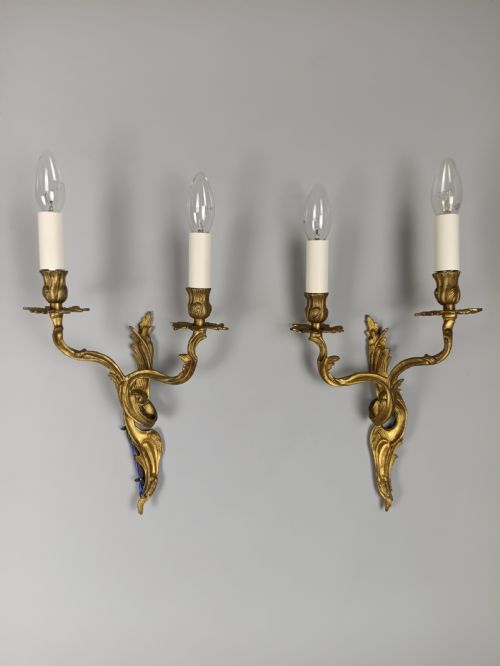
Stylistic influences heavily reflect historic design revivals, particularly French Rococo, Louis XIV, and Louis XV aesthetics. These pieces often incorporate elaborate casting work, asymmetrical scrollwork, and ribbons.
Materials and construction
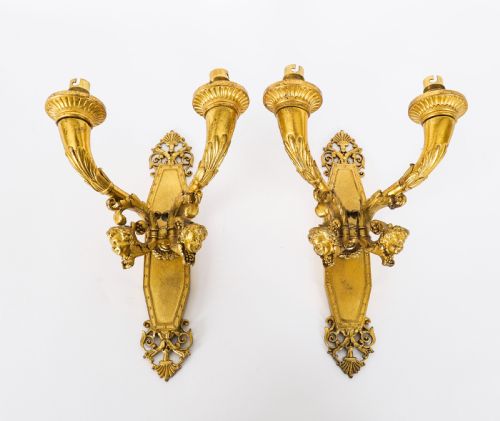
Foundry work relies on cast metals including brass, bronze, and ormolu, alongside gilded brass and silver-plated finishes. Metal components are frequently finished with a layer of fire gilt or surface gilding to enhance their reflective quality under candlelight or electric illumination.
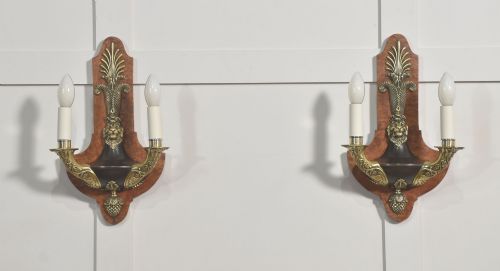
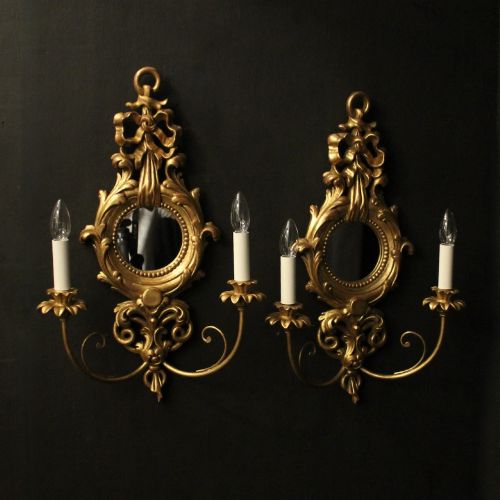
Assembly methods join individual cast branches to backplates using threaded bolts or pins. Many examples incorporate glass crystals, mirrored backplates, or burr walnut panels to augment the visual impact.
Listings feature items spanning the 19th century through the 1930s, utilising brass, bronze, ormolu, and glass.
Distinguishing quality
Quality reveals itself primarily in the crispness of the metal chasing and the depth of the casting relief. Superior examples exhibit hand-chased surface details that sharpen the acanthus leaves, scrollwork, and figural motifs after casting.
Heavier gauge metals and substantial backplates provide structural integrity, preventing the arm assemblies from sagging over time. The uniformity of the gilding layer and the integration of original crystal drops also separate standard production from exceptional pieces.
The French Ornate Wall Lights Glossary
- Appliqué
- A wall-mounted light fixture designed to direct illumination outwards into a room. These fixtures function similarly to standard wall sconces and often feature multiple candle arms.
- Girandole
- A branched wall light incorporating a mirrored backplate to multiply the available illumination. The reflective glass plate sits directly behind the candle arms.
- Ormolu
- Finely ground high-carat gold applied to a bronze base object through a mercury amalgamation process. This technique creates a durable, warm metallic finish seen on many nineteenth-century pieces.
- Rococo
- An artistic style characterised by elaborate ornamentation, curved lines, and asymmetrical scrollwork based on shell and plant motifs. This aesthetic heavily influences nineteenth-century French lighting design.
- Chasing
- The manual metalworking technique used to refine and detail cast metal surfaces with small punches and chisels. High-grade pieces display deep, sharp chasing work across all visible areas.
French Ornate Wall Lights: Frequently Asked Questions
How were these wall lights originally used?
These fixtures were mounted in principal rooms to supplement natural daylight and candle illumination. Positioned above mantelpieces or flanking mirrors, they maximised light distribution through polished metal and glass.
In grander interiors, matched sets lined corridors and reception halls to create a cohesive decorative scheme. The introduction of later rewiring allows these historic candle fixtures to function safely with modern electrical circuits.
Where should I position wall sconces?
Wall sconces perform best when mounted at eye level or slightly above to prevent direct glare from exposed lamps. Placing them on either side of a fireplace, doorway, or large mirror creates visual balance within a room.
Consider the projection of the arms relative to passing foot traffic in narrower hallways. Pairing multiple matching units along a single wall establishes a formal architectural rhythm.
How do I identify the period of a wall light?
Dating relies on examining the casting techniques, fixing screws, and stylistic markers unique to specific revival eras. Nineteenth-century pieces typically feature heavier cast bronze components with hand-finished chasing.
Twentieth-century iterations from the 1920s and 1930s often utilise stamped brass or lighter alloy castings while mimicking earlier Rococo or Empire styles. Electrical wiring methods and component threading also offer clues to manufacturing age.
Are these lights ready for modern electrical installation?
Many listed examples arrive rewired and equipped for standard electrical installation by a qualified professional. Buyers should inspect the internal lampholders and wiring age to confirm compliance with current domestic safety standards.
Fixtures lacking recent rewiring require professional conversion before mounting to mains power. The structural mounting brackets generally remain compatible with standard wall junction boxes.