




French Ornate Fireplace Screen
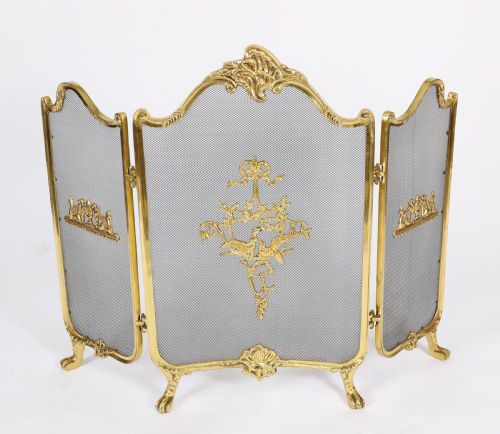
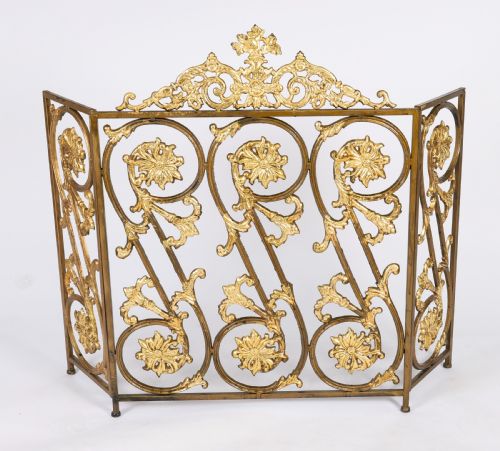
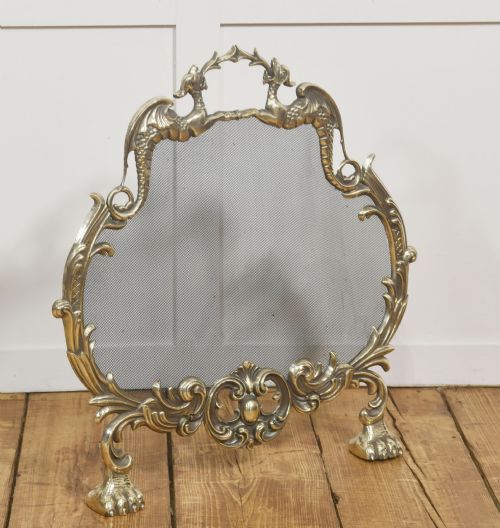
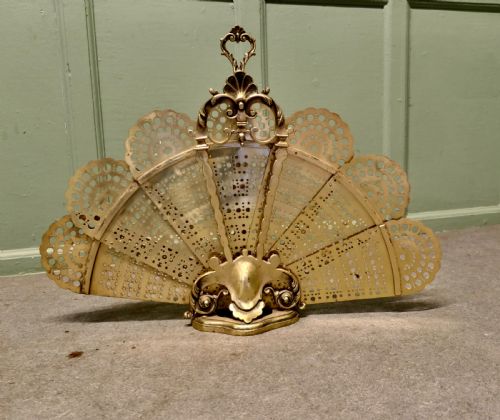
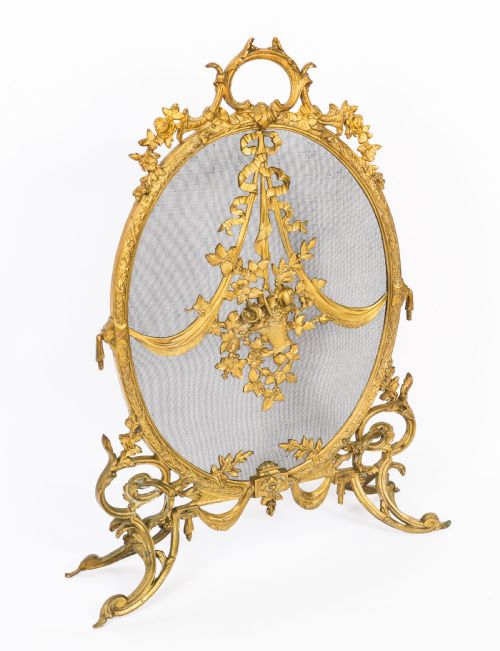
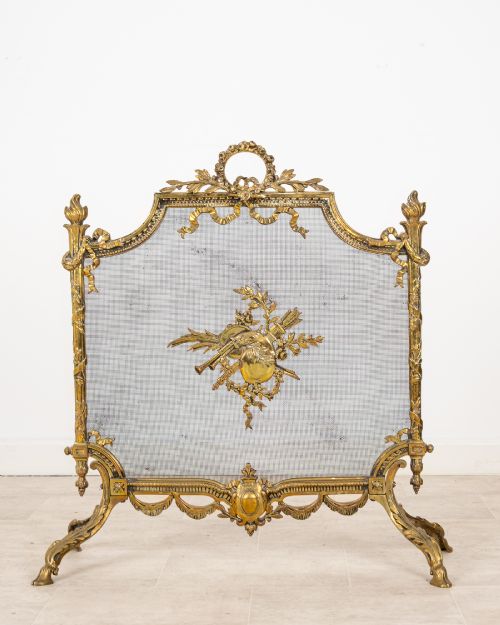
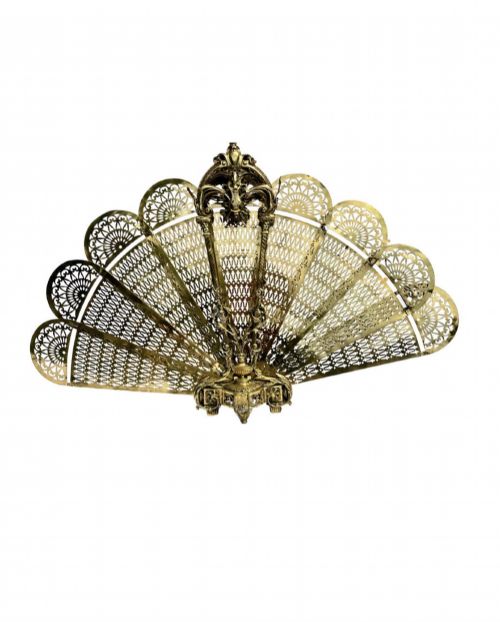
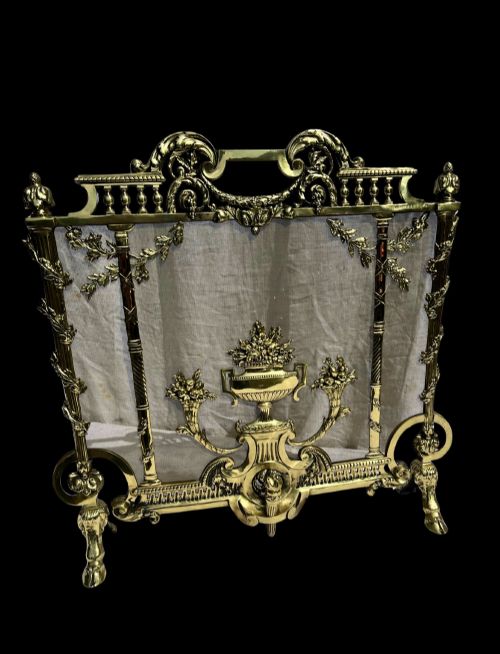
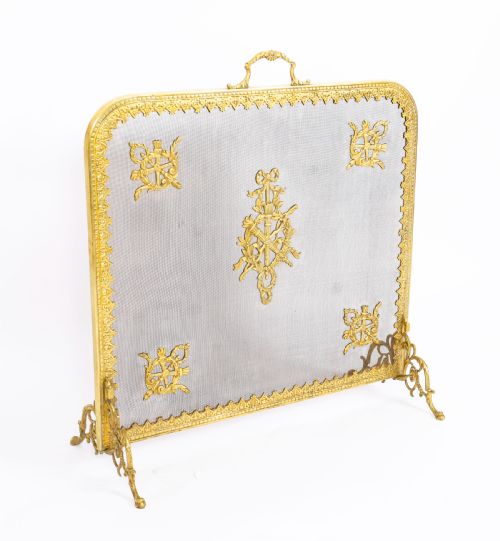
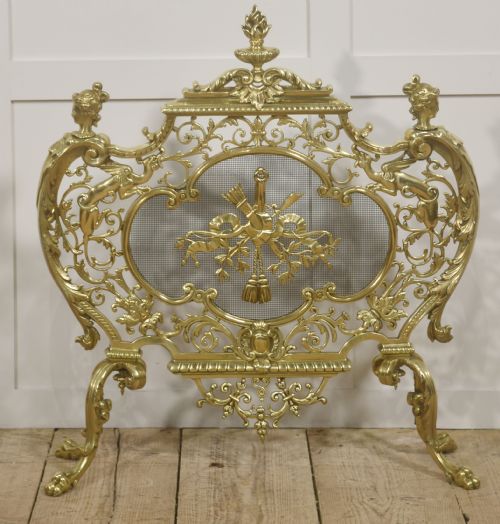
These pieces are french ornate fireplace screen guards, decorative metal barriers used to temper hearth heat and dress a room.
French Ornate Fireplace Screen
A french ornate fireplace screen is a hearth accessory designed to block stray sparks while remaining visually striking when the fire is unlit. You will most frequently meet pieces from the nineteenth century, including the Victorian era and specific revival periods.
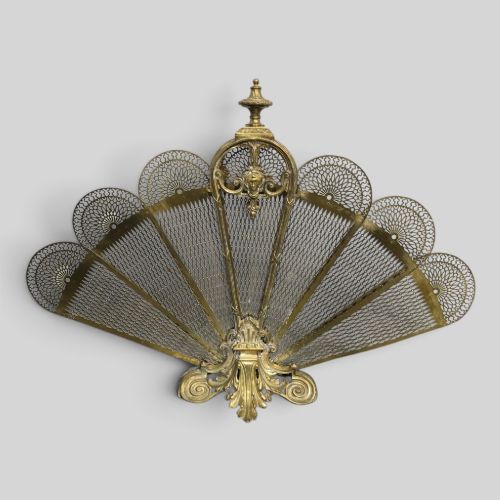
The forms span several distinct stylistic movements, notably French Rococo Revival, Louis XIV Revival, Louis XVI, and French Empire Revival. Makers utilised ornate casting and piercing to create folding panels, peacock tail guards, and static frames.
Many examples incorporate wire or metal mesh centres held within heavy cast frames. These screens serve as both functional fire guards and ornamental centrepieces for period drawing rooms.
Materials and construction
The primary metals used in these hearth guards are brass, bronze, and gilt bronze, often referred to as gilt brass when applied over a base metal. Casting allows for deep, scrolling relief work in the Rococo and Neoclassical manners.
Fine wire mesh is fitted securely within the metal frames to contain embers while maintaining transparency. Gilt finishes and polished brass surfaces are combined with chased details to achieve rich textural contrast.
Materials recorded across these listings include solid brass, gilt bronze, wire mesh, and cast metal.
Assessing quality in hearth guards
Quality rests primarily on the depth and crispness of the metal casting and the weight of the frame. Finer examples display hand-chased surface details and heavier gauge bronze rather than lighter stamped brass.
The complexity of the design, such as figural trophies, dolphins, or multi-panel folding mechanisms, distinguishes standard production from superior workshop pieces. Original gilding and integrated mesh integrity further elevate an individual guard.
The French Ornate Fireplace Screen Glossary
- Rococo Revival
- A nineteenth-century design style inspired by eighteenth-century French motifs, characterised by asymmetrical scrolls, C-scrolls, and naturalistic plant forms. It dominates the ornamentation found on these screens.
- Gilt Bronze
- Bronze metal coated with a thin layer of gold or gold-coloured alloy, frequently termed ormolu in French pieces. This finish provides a warm, reflective surface that resists tarnishing.
- Fire Guard
- A physical barrier placed in front of an open hearth to prevent sparks from escaping onto flooring. Many ornate screens double as guards through the addition of fine wire mesh.
- Peacock Screen
- A folding hearth guard composed of multiple pivoting metal blades that fan outwards like a tail. This design allows the screen to expand for use and collapse compactly when stored.
French Ornate Fireplace Screen: Frequently Asked Questions
How do I clean a brass fire screen?
Dust the metal gently with a soft dry cloth to remove surface soot and debris. Avoid harsh chemical polishes that strip away original patination or historical gilding.
For intricate pierced areas, use a soft-bristled brush to clear trapped dust. Preserving the aged surface is usually preferred over aggressive brightening.
Are these screens safe for an active fire?
Most of these pieces are fitted with robust metal mesh designed to catch sparks from a burning hearth. Ensure the frame sits stably on the hearth floor before use.
Keep in mind that antique gilt finishes can be sensitive to extreme direct heat. Regular use with very hot fires may accelerate wear on delicate surface treatments.
How do I date a nineteenth-century screen?
Examine the construction methods, screw types, and casting techniques used on the reverse of the frame. Heavier cast bronze and specific revival styles often point towards the middle or later decades of the nineteenth century.
Stylistic cues like Louis XIV or Empire revivals offer clues, though many pieces continued to be made in revival styles into the early twentieth century.
Can these screens be used without a fireplace?
These pieces function well as decorative room accents or architectural focal points in empty hearths. Their ornate frames bring texture and period character to a modern interior.
Folding peacock designs and rigid Rococo panels are frequently positioned against unlit fireplaces to fill visual space during warmer months.