
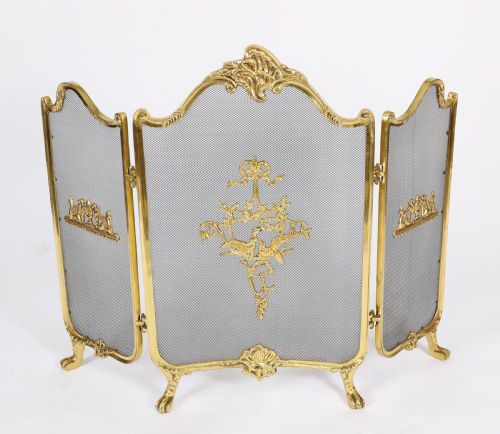
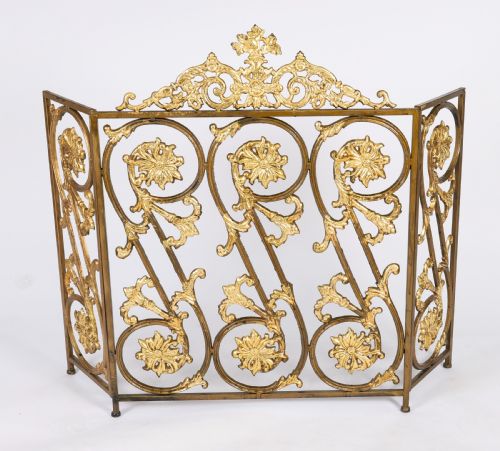
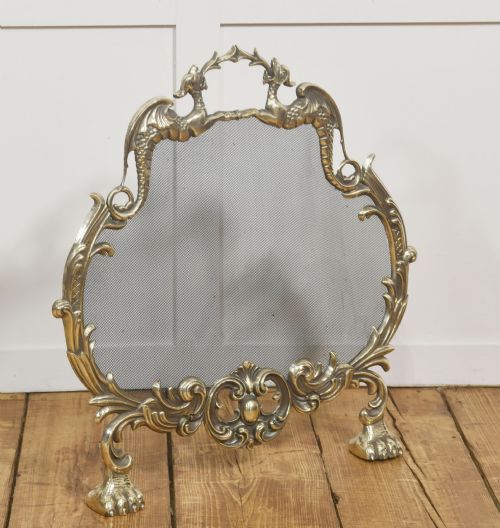
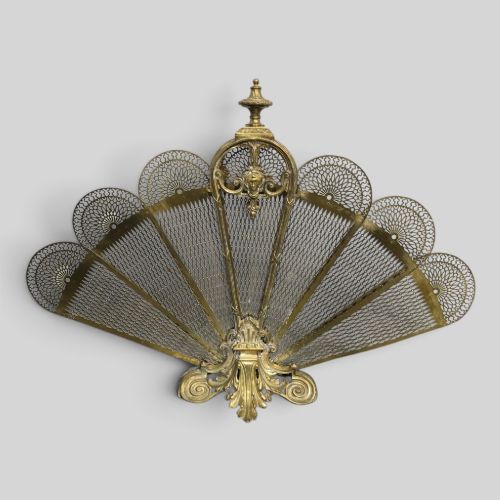


French Fireplace Spark Guard
These french fireplace spark guard pieces offer both protection and classical ornamentation, bringing nineteenth-century hearth elegance into a room.
French Fireplace Spark Guard
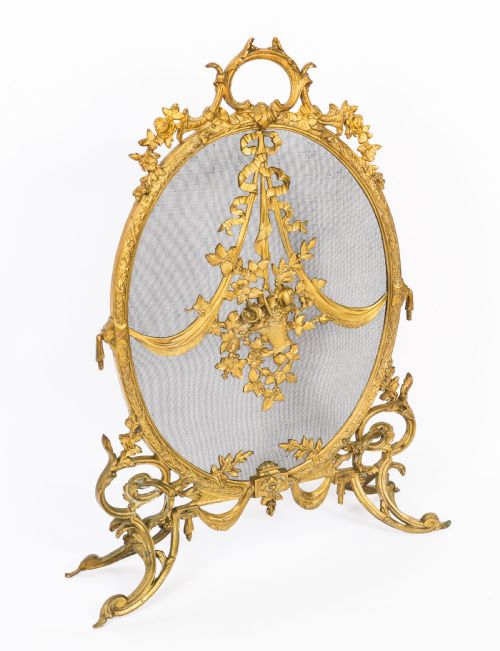
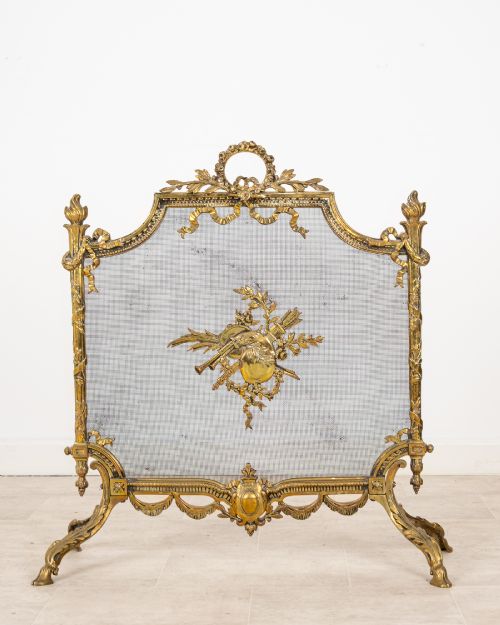
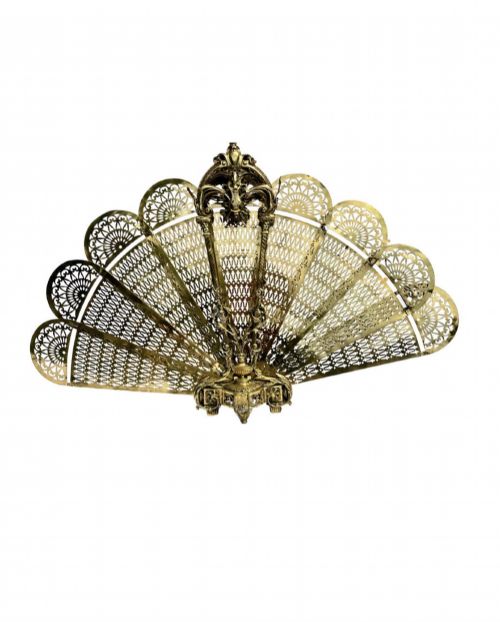
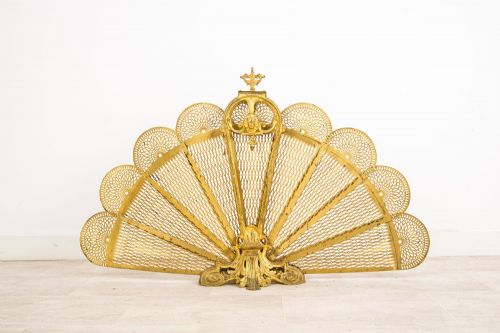
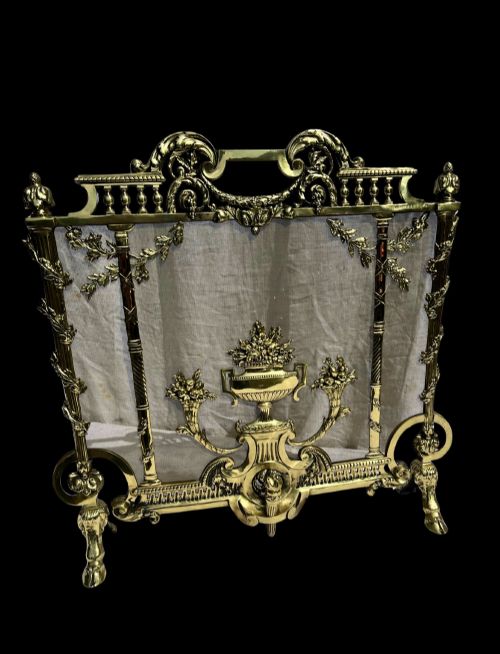
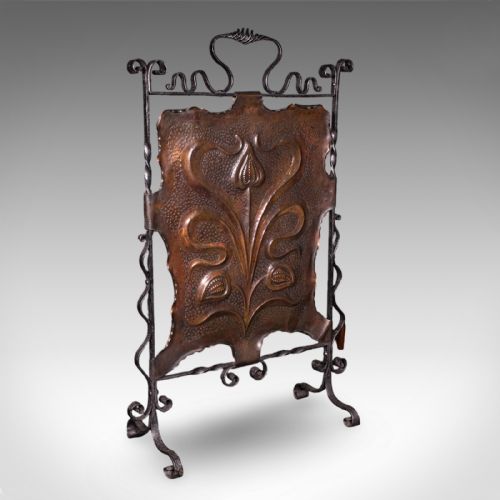
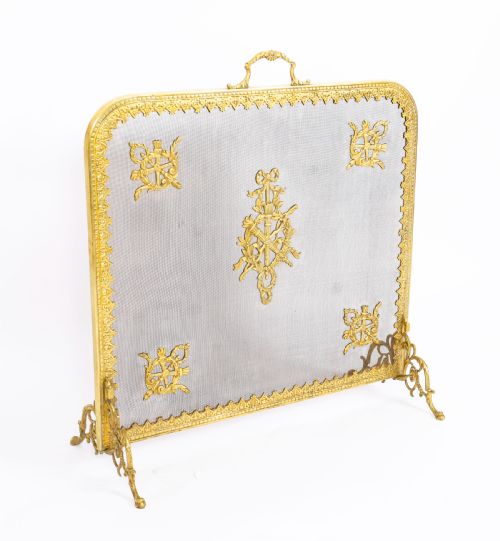
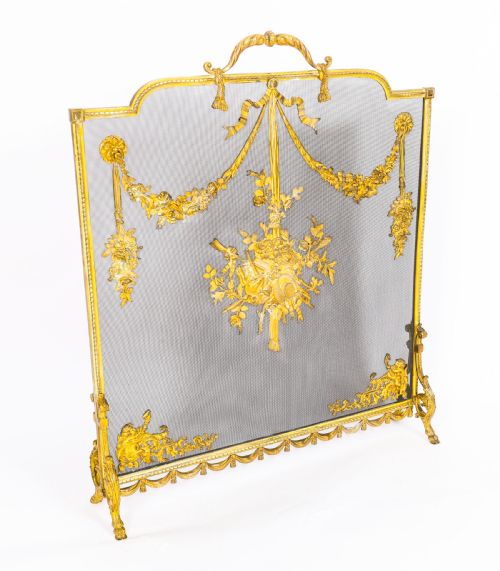
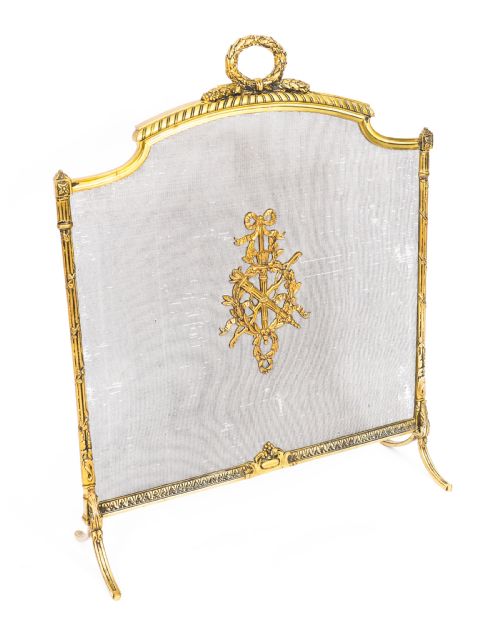
A french fireplace spark guard protects a room from stray embers while adding decorative focus to the hearth. These objects appear primarily as fire screens, fire guards, and fan screens originating from nineteenth-century France and Victorian Britain.
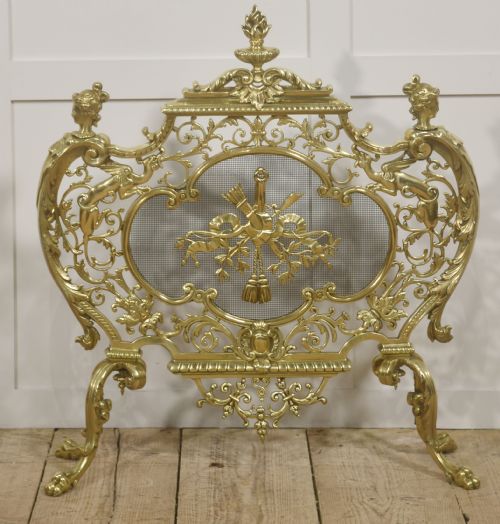
The selections here span periods from the early nineteenth century through to the early twentieth century, showing revivalist influences such as Louis XIV, Louis XVI, and Rococo styles. Brass, gilt bronze, and wire mesh form the basis of these hearth accessories.
What varies in quality
Quality depends on the crispness of the cast ornamentation and the weight of the metal utilised in the frame. Finer examples display deeply chased gilt bronze details, such as musical trophies or flaming torches, rather than simpler pressed brass.
The integrity of the mesh panel and the smoothness of any folding hinges distinguish superior work from standard production. Heavier gauges of brass and bronze provide better stability around the hearth.
The French Fireplace Spark Guard Glossary
- Fire screen
- A decorative barrier placed in front of an unlit fireplace to conceal the opening or stop sparks. These often feature glazed panels, metal mesh, or folding fan designs.
- Gilt bronze
- Metal alloy coated with a thin layer of gold, frequently used in nineteenth-century French decorative arts. It provides a rich, durable surface finish that resists tarnish.
- Rococo revival
- A nineteenth-century design movement favouring asymmetrical scrolls, floral motifs, and natural shell shapes. This style dominates many nineteenth-century hearth guards.
- Trophy
- A sculptural grouping of related symbols, such as musical instruments or classical weapons, cast in bronze or brass. These adorn the centre or top of formal fire screens.
French Fireplace Spark Guard: Frequently Asked Questions
What is a french fireplace spark guard used for?
These pieces serve a dual purpose of blocking flying embers from escaping an active hearth and masking the empty fireplace during warmer months. They stand directly on the floor in front of the opening.
Their decorative frames also add a distinct nineteenth-century aesthetic to the chimney breast, integrating metalwork with the interior scheme.
How do I clean a brass fire screen?
Dust the metal surfaces regularly with a soft, dry cloth to prevent grime accumulation. Avoid harsh chemical polishes that can strip original patination from antique brass or gilt bronze.
Take care around wire mesh panels, as aggressive rubbing can distort the delicate weave. Professional gentle cleaning is advisable for heavily tarnished gilt surfaces.
Are these spark guards safe for open fires?
Many period pieces feature sturdy metal mesh designed to catch sparks and embers effectively. However, the condition of the mesh and frame should be checked before regular use with a roaring fire.
Some highly decorative gilt bronze examples function better as aesthetic room ornaments rather than heavy-duty safety barriers.
How can I tell the period of a fire guard?
Stylistic clues such as Rococo revival scrolls or Empire classical trophies point towards nineteenth-century French manufacture. The weight of the cast brass and the construction of the mesh also offer dating indicators.
Revival dates span from the mid-nineteenth century through to the early twentieth century, reflecting ongoing interest in earlier French court aesthetics.