



French Ormolu Plinth
A french ormolu plinth marries gilded cast bronze with polished stone to elevate sculpture and horology.
French Ormolu Plinth
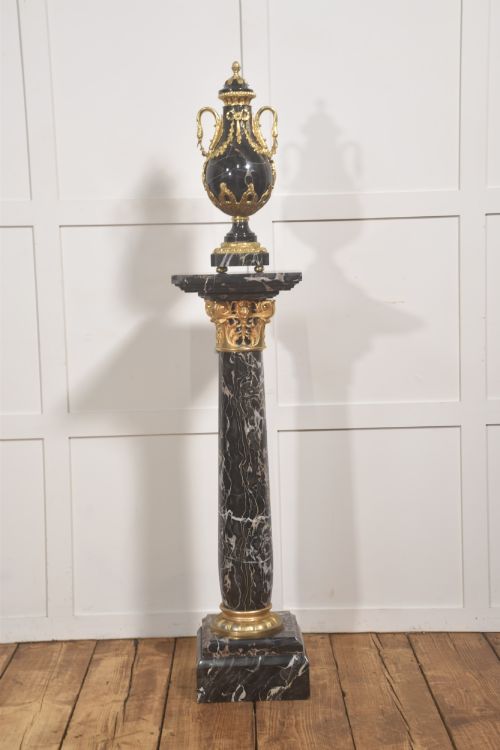
A french ormolu plinth provides a decorative foundation for clocks, bronzes, urns, and portrait busts. These supports appear in nineteenth-century forms ranging from modest candle bases to large architectural columns and rotating stands.
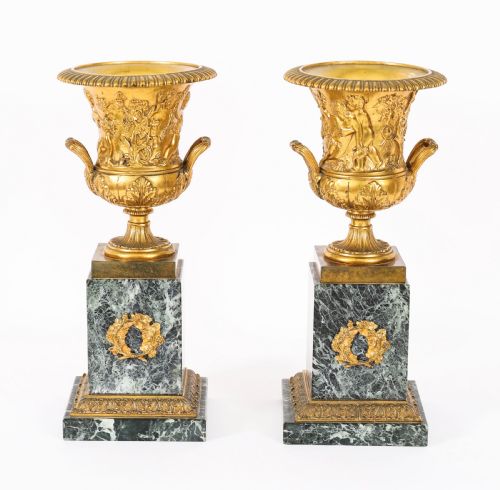
The objects combine gilded bronze mounts with solid marble or onyx bodies. Neoclassical, Empire, and Rococo Revival styles dominate the pieces available on this page, drawing upon classical architectural vocabulary.
Makers utilised green marble, white marble, and onyx alongside fire-gilt bronze mounts to construct these display pieces. The physical formats span compact table clock bases, torchere columns, and substantial pedestals.
Materials and construction methods
Foundries produced ormolu components through the mercury gilding of cast bronze, creating a durable gold surface layer on the metal mounts. Artisans then chased the cast bronze details by hand to sharpen the leaf, acanthus, and classical motifs.
Stone sections such as marble and onyx were turned on lathes or sawn into columns and plinth blocks before being polished to a smooth finish. Metal collars, feet, and capitals were subsequently fitted to secure the stone assemblies.
French Ormolu Plinth Retail Price Guide 2026
Typical asking prices for french ormolu plinth among the pieces listed under this phrase on Sellingantiques today, from the lower quarter to the upper quarter. They describe what is for sale here now, not the wider market.
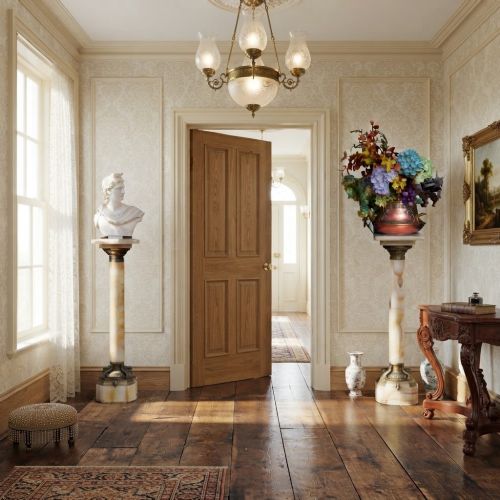
A portrait bust of Apollo linked to the Gianni Versace collection stands among the classical marble columns and gilt bronze urns.
Markers of quality
Quality rests in the crispness of the bronze chasing and the depth of the mercury gilding. Superior examples display sharp definition in leaf work and figures, whilst lesser pieces show softer, shallower casting detail.
The choice and figuring of the marble or onyx dictate the stature of the object. Solid, heavy stone columns with well-matched ormolu collars and mounts represent the upper tier of production.
The French Ormolu Plinth Glossary
- Ormolu
- Gilt bronze produced by applying an amalgam of gold and mercury to a bronze object and heating it to drive off the mercury. This technique yields a deep, lasting golden surface.
- Torchere
- A tall stand or column designed to support a light fixture, urn, or sculpture. These tall supports frequently incorporate marble shafts and bronze mounts.
- Grand Tour
- The nineteenth-century practice where travellers collected art and antiquities across Europe. Items brought back often included bronze sculptures and marble architectural fragments.
- Restauration
- A French stylistic period bridging the Empire style and later nineteenth-century revivals. Pieces from this era retain clean neoclassical lines paired with refined bronze work.
French Ormolu Plinth: Frequently Asked Questions
What held a french ormolu plinth?
These pieces were built to support decorative items such as table clocks, candelabra, bronze busts, and urns. They lifted small sculptures and timepieces to improve visibility in nineteenth-century interiors.
Larger versions functioned as pedestals and torchere columns for floor-standing ormolu-mounted decorative objects and large vases.
How do I clean an ormolu mount?
Dust bronze mounts gently with a soft, dry brush to prevent accumulation in the chased recesses. Avoid abrasive polishes that strip the historic gilt surface.
Marble and onyx sections tolerate a damp cloth followed by immediate drying, keeping moisture away from the adjacent metal joints.
Are these pieces strictly nineteenth century?
The available evidence spans the nineteenth century, including specific dates from eighteen seventy to nineteen hundred alongside Victorian and Edwardian periods. Neoclassical and Rococo Revival styles prevail across these decades.
Earlier nineteenth-century works adhere to French Empire and Restauration canons, whilst later items reflect classical revival tastes.
What stone materials are used?
Makers constructed the body of these objects using white marble, green marble, and variegated onyx. These stones provided stable, weighty cores for the decorative bronze mounts.
Matched pairs and rotating stands frequently combine these polished minerals with cast ormolu collars and feet.