
French Ormolu Mounted Table
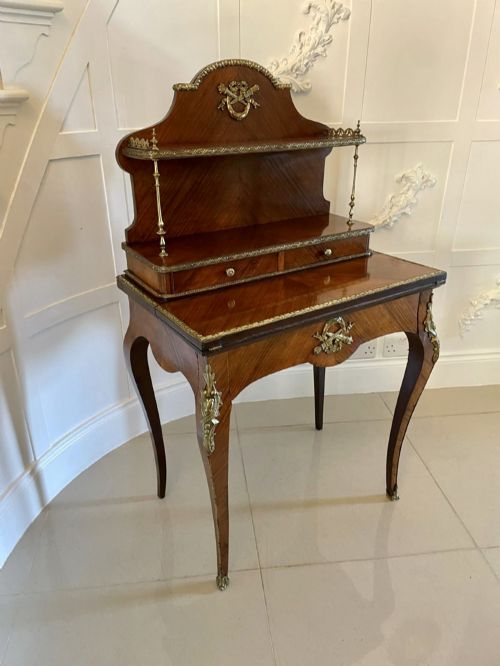
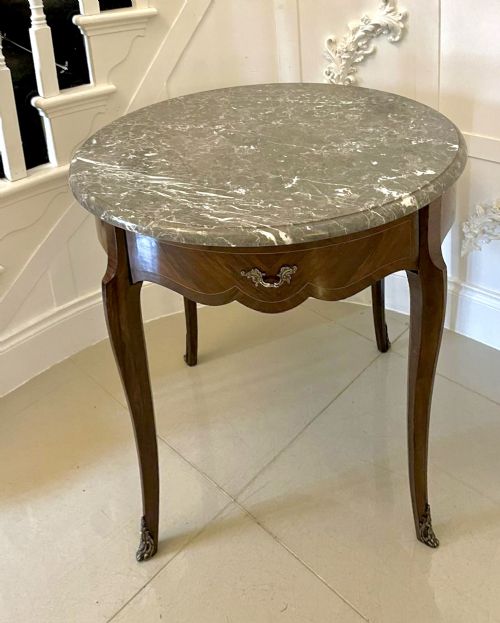
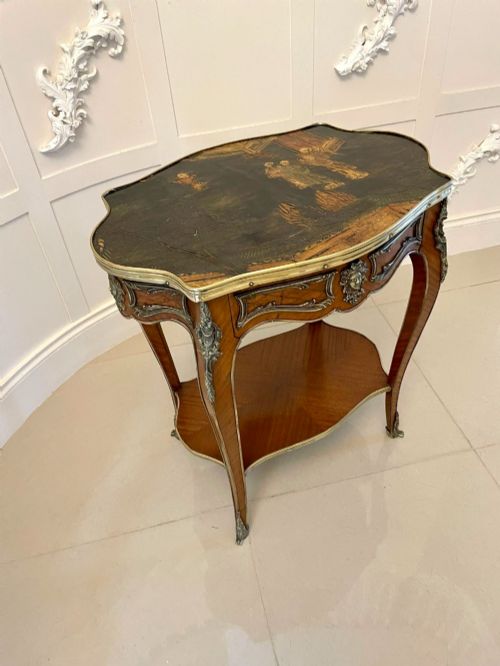
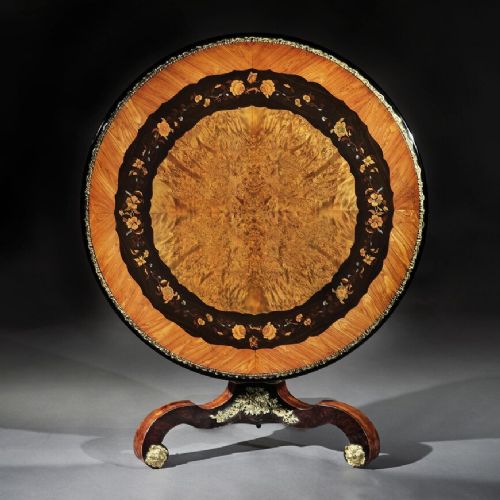
A french ormolu mounted table brings gilt bronze mounts and figured veneers together for a reception room or study.
French Ormolu Mounted Table
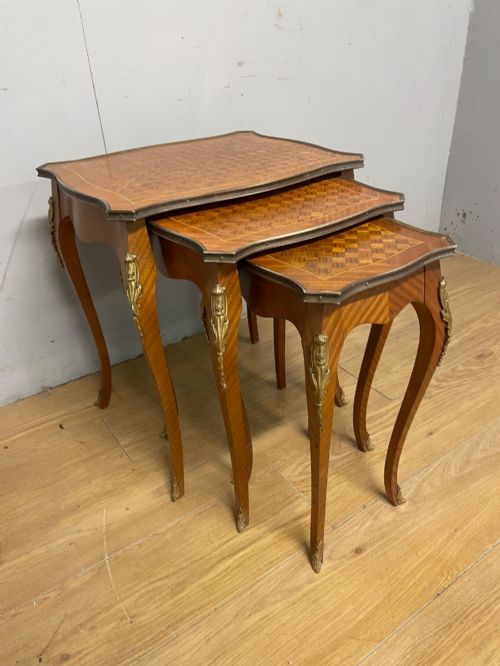
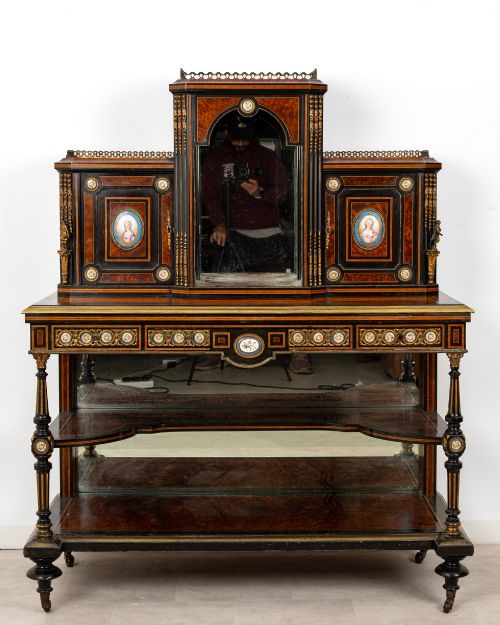
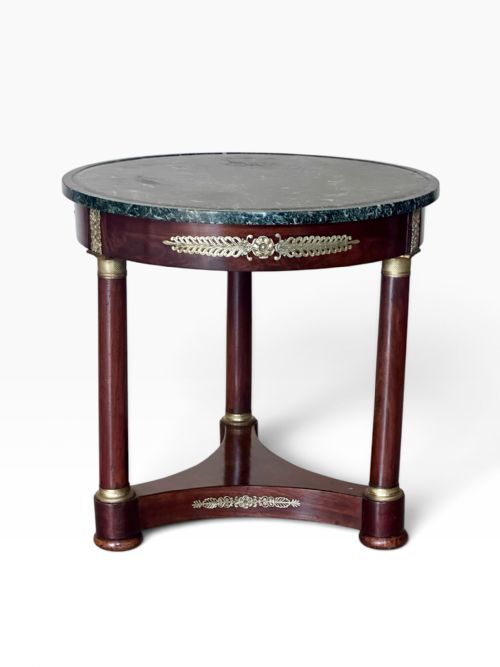
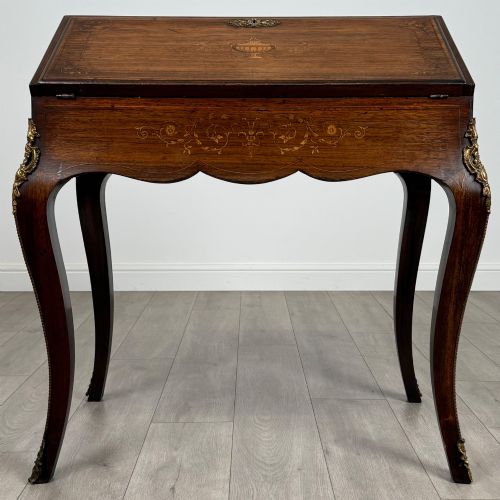
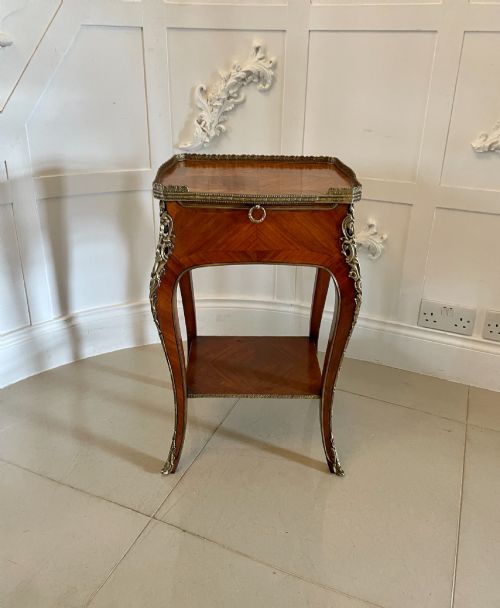
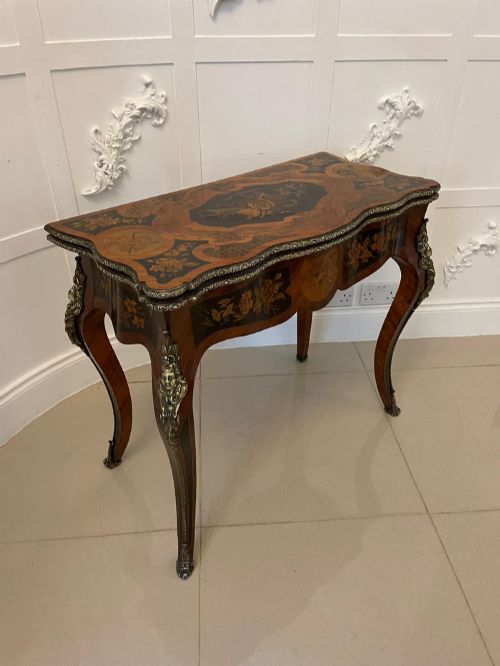
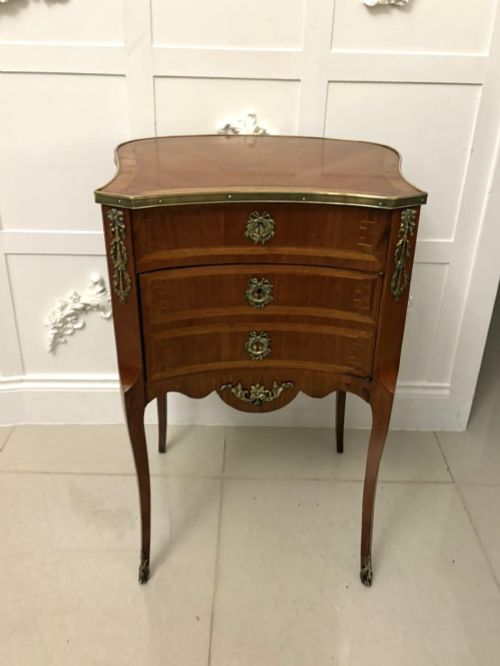
A french ormolu mounted table encompasses centre tables, writing desks, and occasional pieces originating largely from the nineteenth century. These forms reflect revivalist tastes, drawing heavily upon Louis XV and Louis XVI aesthetics.
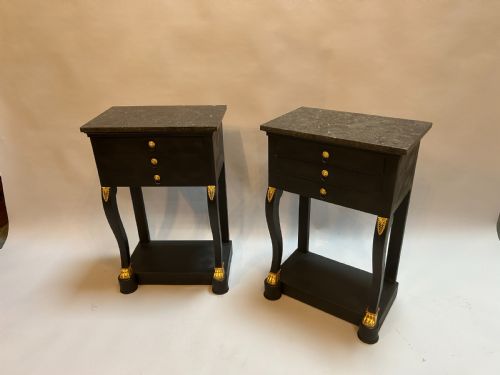
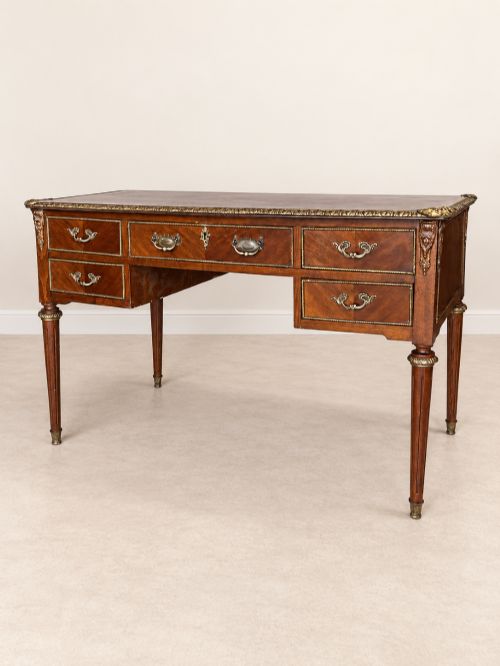
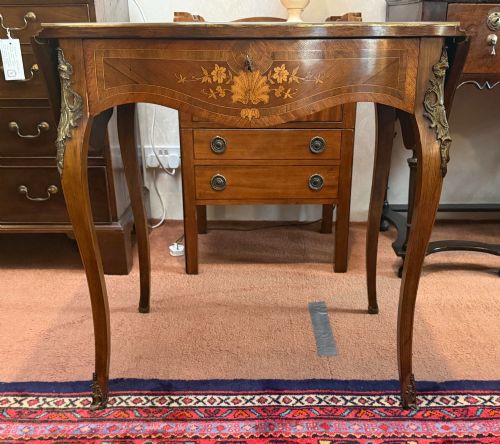
The pieces on this page appear as freestanding centre tables, compact bedside cabinets, and refined writing desks such as the bureau plat. Kingwood, rosewood, and mahogany dominate the structural timbers seen across the inventory.
Makers and retailers from London and Paris adapted these continental designs for Victorian interiors, resulting in freestanding formats finished with marquetry and parquetry.
Materials and construction methods
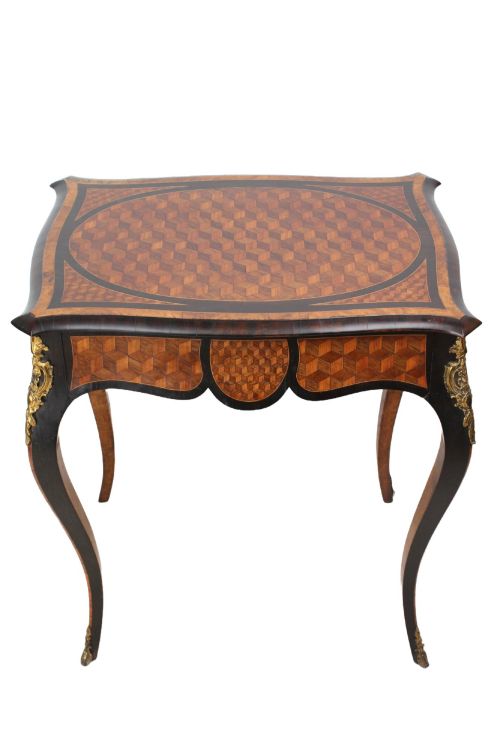
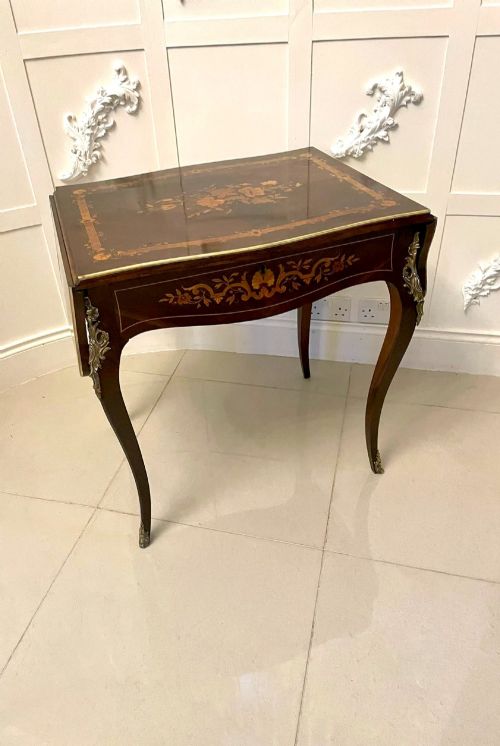
Craftsmen built these tables using foundational carcasses of oak or pine, subsequently veneered in exotic timbers including kingwood, tulipwood, and walnut. Marquetry and parquetry designs utilised contrasting grains arranged in geometric or floral patterns.
The distinct gilt bronze mounts, known as ormolu, were cast, chased, and gilded before being secured to the corners, apron mounts, and sabots. Marble tops, including white Carrara and rouge varieties, were fitted directly into the upper timber frames.
Listings feature nineteenth-century manufacturing dates spanning the 1850s through to the 1900s, constructed in kingwood, mahogany, and walnut.
Distinctions in craftsmanship
The standard of an ormolu mount dictates much of the visual success of the piece, with finer examples displaying crisp hand-chasing rather than soft, mass-produced cast surfaces. The depth and precision of the underlying marquetry or parquetry further separate standard production from masterwork output.
Structural integrity relies on the retention of original veneers and the quality of the timber selection beneath the polish. Pieces bearing maker signatures or attributions to prominent workshops exhibit superior internal framing and sophisticated mechanisms.
Francois Linke·Paul Sormani·Joseph Emmanuel Zwiener·Edwards And Roberts·JAS Shoolbred·Maison Millet·Edward Holmes Baldock
The French Ormolu Mounted Table Glossary
- Ormolu
- Gilt bronze mounts applied to furniture. This technique involves coating a cast bronze base with a gold amalgam.
- Bureau Plat
- A flat-topped writing desk fitted with drawers. These tables typically stand free in the centre of a room.
- Marquetry
- Decorative veneer work forming pictorial or floral patterns. Artisans cut thin slices of various timbers to assemble the mosaic.
- Parquetry
- Geometric wood inlay forming repetitive patterns such as cubes or chequers. This technique uses contrasting timber grains for visual depth.
- Gueridon
- A small circular table supported by a central column or legs. Originating in the seventeenth century, these tables served various functional roles.
French Ormolu Mounted Table: Frequently Asked Questions
Where should a centre table go?
A centre table functions best when placed in the middle of a principal room as a freestanding focal point. Such placement allows the marquetry and ormolu mounts to be viewed from all angles.
These pieces also serve effectively beneath a central ceiling rose or chandelier, functioning as lamp tables or display surfaces for decorative objects.
How do I care for ormolu mounts?
Maintenance requires gentle dusting with a soft, dry brush to prevent the accumulation of dirt within the chased crevices. Avoid all abrasive cleaning agents and metal polishes, which strip the historic fire gilt finish.
Applying a microcrystalline wax to the surrounding wood protects the veneer without risking contact with the delicate bronze elements.
What is the difference between a bureau plat and a side table?
A bureau plat functions specifically as a writing desk, incorporating one or more drawers integrated into the apron beneath the writing surface. These pieces usually feature leather or tooled inserts on the top.
A side table serves general display or decorative purposes without writing surfaces or integrated desk drawers, though both utilise similar timber and ormolu vocabularies.
How can I tell a nineteenth century revival piece from an original?
Nineteenth century revival pieces exhibit construction methods, timber preparation, and tool marks consistent with Victorian or Second Empire workshop practices. Secondary woods inside drawers and internal carcasses provide clear indicators of period origin.
Examining the wear on the ormolu gilding and the shrinkage of the wood beneath the polish helps distinguish nineteenth century production from later twentieth century interpretations.