
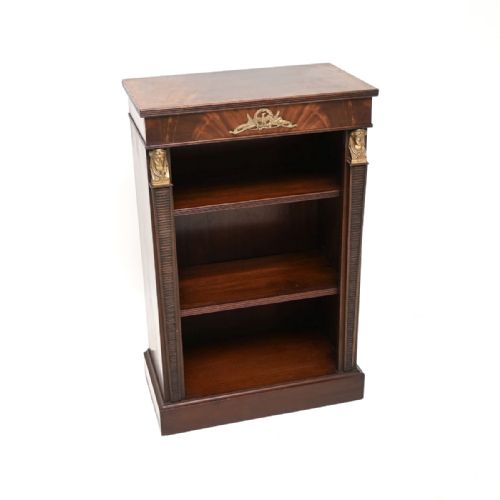
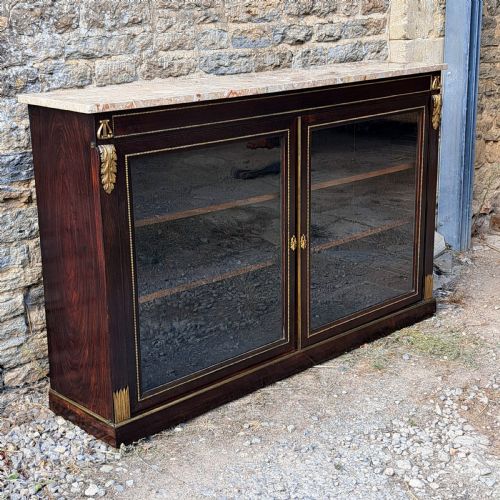
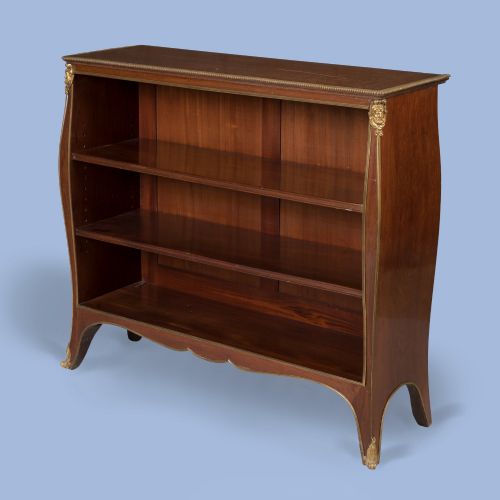


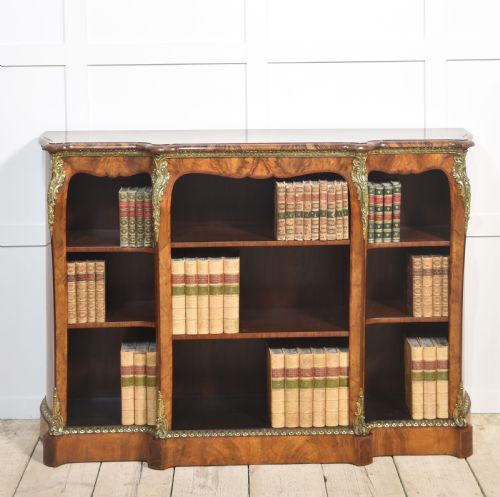


French Ormolu Low Bookcase
A french ormolu low bookcase brings gilt bronze mounts and rich timbers together for refined storage in a drawing room.
French Ormolu Low Bookcase
A french ormolu low bookcase combines low furniture cabinetry with gilt metal ornamentation, often taking the form of open bookcases, pier cabinets, or glazed side cabinets. When you search for this phrase, you find low-profile furniture designed to hold books or display objects without obstructing wall art or windows.
The pieces on this page span the nineteenth century and Victorian eras, along with Georgian and later twentieth-century interpretations. Walnut, mahogany, kingwood, and burr walnut form the primary timber bodies, frequently enhanced by marquetry inlay or ebonised details.
Makers and designers drew on French Empire, Napoleon III, Louis XV Manner, and Rococo Revival styles. These aesthetic influences dictate the sweep of the mounts and the configuration of the shelves or glazed doors.
How they were made
Cabinet makers utilised dense hardwoods like mahogany and walnut as the structural foundation, often applying fine veneers such as kingwood and burr walnut across the visible surfaces. Marquetry panels appear alongside glass doors and marble tops.
Ormolu mounts, cast in brass and finished with mercury gilt or modern equivalents, were meticulously fitted to the corners, friezes, and pieds of each cabinet. These metal elements accentuate the architectural lines of the furniture.
Materials recorded across current items include ormolu, glass, brass, walnut, mahogany, marble, burr walnut, and kingwood.
What varies in quality
The crispness of the ormolu chasing separates standard mounts from exceptional examples, where hand-finishing reveals sharp acanthus leaves and ribbon details. Timber selection also defines the tier, with figured burr walnut and matched kingwood veneers commanding greater visual depth.
Construction fidelity, seen in the thickness of the carcass timbers and the precision of the marquetry, marks the distance between ordinary commercial production and master workshop output.
Gillows
The French Ormolu Low Bookcase Glossary
- Ormolu
- Gilded bronze or brass applied to furniture as decorative mounts. The technique creates a rich gold-coloured finish that contrasts with dark hardwoods.
- Kingwood
- A dense, richly figured Brazilian timber prized in cabinet making. Its dark violet-brown tones feature striking golden streaks.
- Pier cabinet
- A low cabinet designed specifically to stand against the wall space between windows. These pieces often incorporate glass doors or open shelving.
- Marquetry
- The art of applying pieces of veneer to a structure to form decorative patterns. Craftsmen use varied woods to create floral or geometric designs.
- Breakfront
- A piece of furniture where the central section projects forward from the flanking wings. This architectural arrangement adds depth to low bookcases.
French Ormolu Low Bookcase: Frequently Asked Questions
What is a french ormolu low bookcase?
A french ormolu low bookcase is a low-profile cabinet decorated with gilt bronze mounts and constructed from fine timbers like walnut and mahogany.
These pieces function as both bookcases and display cabinets, designed to sit beneath dado height or window lines in period interiors.
How do I date these bookcases?
Dating relies on identifying timber choices, construction methods, and stylistic cues such as Napoleon III or Rococo Revival motifs.
Nineteenth-century examples frequently employ walnut veneers and distinct ormolu casting techniques that separate them from later revivals.
Where should I place a low bookcase?
These cabinets suit living rooms, studies, and hallways where tall bookcases would overwhelm the wall space or block natural light.
Their low profile allows paintings, mirrors, or decorative objects to be displayed on the wall directly above them.
What woods were used in these cabinets?
Cabinet makers utilised mahogany, walnut, burr walnut, rosewood, and kingwood for the primary structure and decorative veneer work.
Contrasting timbers often frame marquetry panels or highlight the architectural lines of the bookcase.