
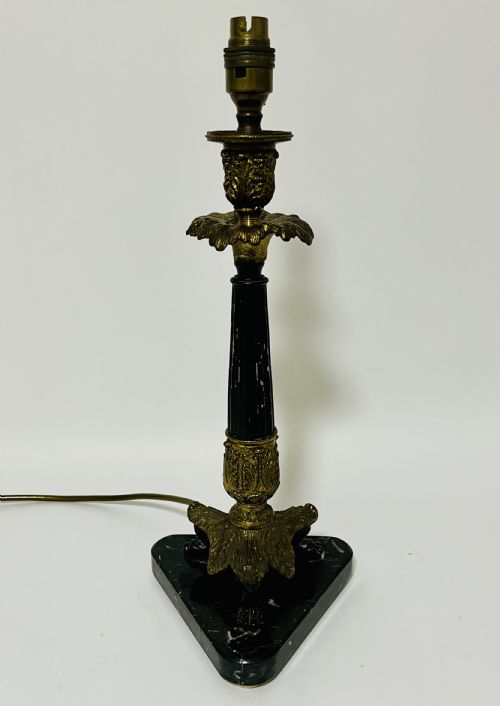


French Ormolu Lamp Base
A french ormolu lamp base brings gilt bronze brilliance and classical French design to a room.
French Ormolu Lamp Base
A french ormolu lamp base is a decorative lighting support cast in bronze and treated with a gold-mercury amalgam or heavy gilding. Buyers search for these pieces to add period character and warmth to an interior scheme through sculptural metalwork.
The options span several key historical aesthetics, including French Empire, Louis XVI, and Rococo Revival styles. Many pieces originate from the nineteenth century and the early decades of the twentieth century, often taking the form of figural columns, urns, or candlesticks adapted for electric lighting.
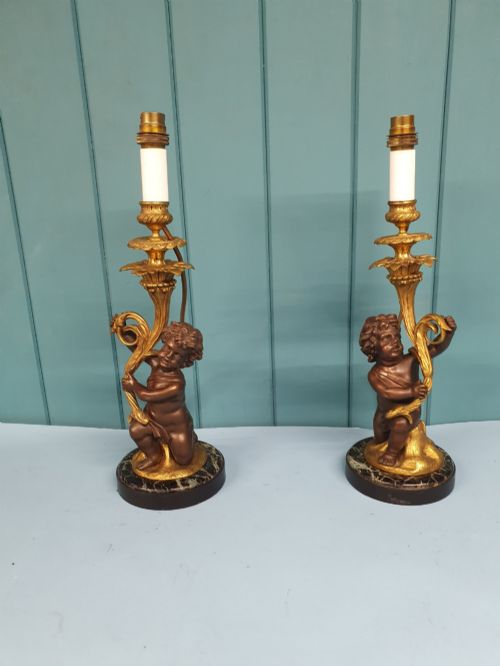
Figural subjects frequently appear, ranging from cherubs and cherubic motifs to classical figures like Apollo Belvedere and mythological subjects such as mermaids. These bases are encountered as single items or balanced pairs.
Materials and construction methods
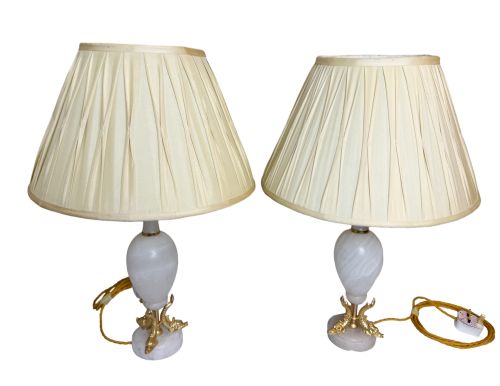
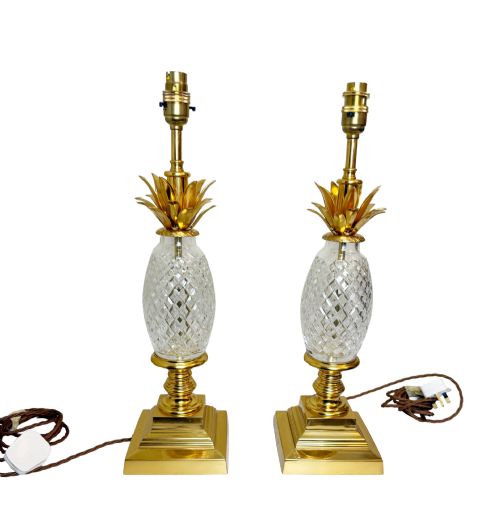
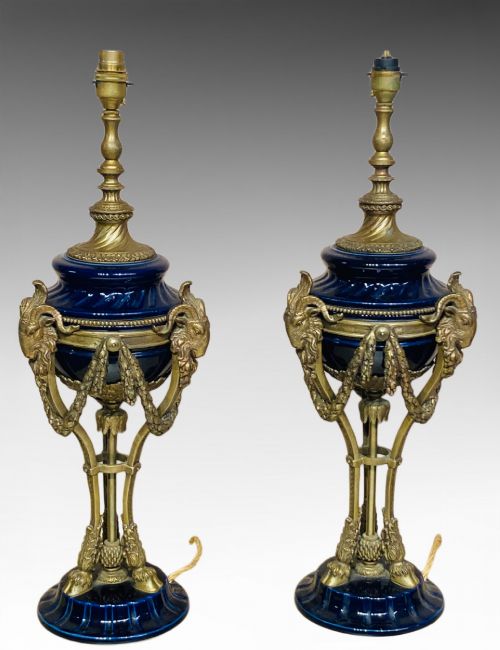
The construction relies heavily on cast bronze or brass finished with a bright, durable layer of ormolu or gilt metal. Artisans combined this glowing metallic surface with contrasting materials such as white or siena marble, crystal columns, and blue glass bodies.
Casting methods allowed for intricate chased details, leaf scrolls, and figural sculpture, which were then mounted securely onto stone plinths. Many surviving examples integrate elements originally designed as oil lamps or candlesticks that were later converted for domestic lamp use.
Keep an eye out for mythological mermaids holding up rock crystal columns to light the corner of a room.
Judging quality and craftsmanship
The choice of secondary materials also dictates the standing of a piece, with heavy marble plinths, rock crystal columns, and heavy gauge bronze elevating the overall construction above standard brass or lighter gilt metal alternatives.
The French Ormolu Lamp Base Glossary
- Ormolu
- Gilded bronze produced by applying a gold and mercury mixture to a bronze object and heating it to leave a golden layer. This technique gives nineteenth-century French pieces their characteristic warm lustre.
- Empire
- A nineteenth-century design style drawing on ancient Roman, Greek, and Egyptian motifs. It typically incorporates strict symmetry, classical urns, and military emblems.
- Louis XVI
- A neoclassical style defined by straight lines, architectural symmetry, and classical ornamentation such as ribbons and acanthus leaves. It reflects eighteenth-century French royal tastes revived in later periods.
- Tole Peinte
- Painted sheet metal used for decorative lamp bodies and shades. It provides a colourful contrast to bright gilt bronze mounts.
- Guéridon
- A small round table or stand which sometimes shares design characteristics with monumental lamp pedestals of the period.
French Ormolu Lamp Base: Frequently Asked Questions
How do I date a french ormolu lamp base?
Dating relies on stylistic clues, mounting techniques, and the character of the bronze casting. Pieces aligned with the Empire or Charles X aesthetics often point toward the nineteenth century, while later interpretations reflect the Belle Epoque or early twentieth-century revivals.
Examining the underside, fixings, and the integration of any electrical wiring helps establish whether a base was converted from an oil lamp or manufactured during a specific revival period.
Were these always electric lamps?
Many examples began life as oil lamps, candlesticks, or decorative garniture pieces before being converted to house electrical components. This history of adaptation is standard for antique lighting fixtures of this age.
Professional conversion ensures the original ormolu and marble structure remains unaltered while meeting modern domestic wiring standards.
How do I style an ormolu lamp base at home?
These lamps function well as focal points on side tables, consoles, or mantelpieces where their metallic surfaces can catch the light. Pairing them with simple fabric shades lets the intricate bronze work remain the visual centrepiece.
They complement both traditional period interiors and eclectic modern spaces that benefit from a touch of nineteenth-century French craftsmanship.
What is the difference between ormolu and brass?
Ormolu specifically denotes gilded bronze, where a layer of gold is bonded to a bronze substrate through traditional fire-gilding or heavy electrogilding methods. Brass is a yellow alloy of copper and zinc used either in its solid form or plated.
Ormolu exhibits a deeper, richer golden hue and allows for finer chisel work and sharper sculptural detail than standard commercial brass.