
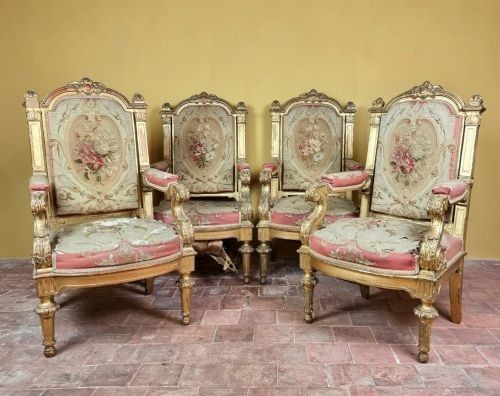


French Open Arm Armchairs
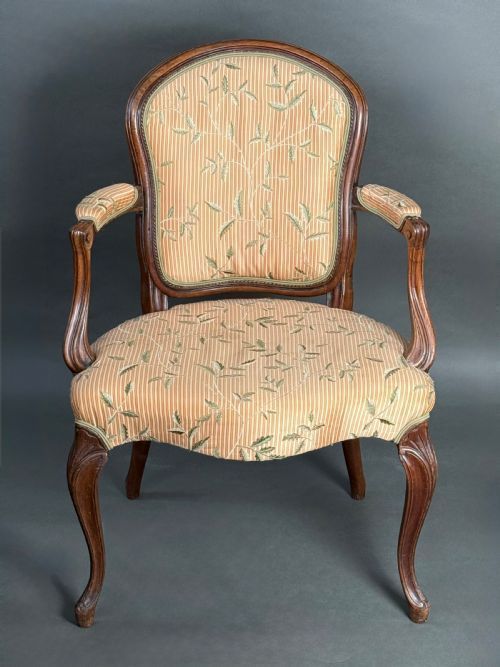
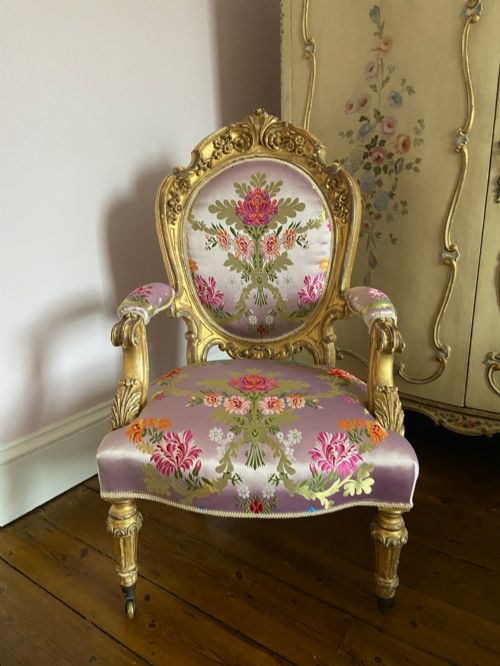
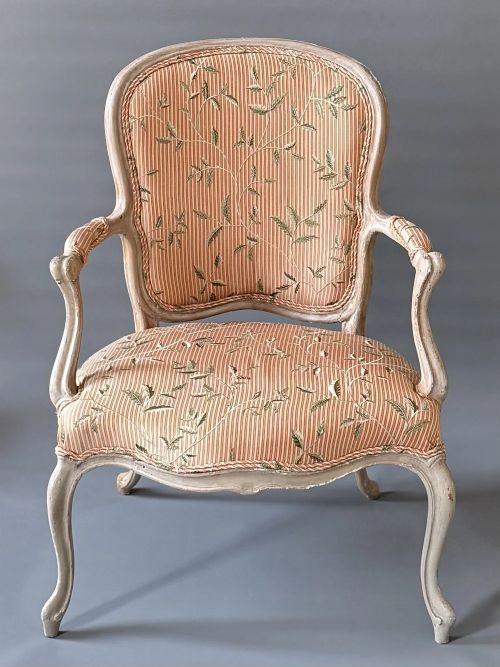
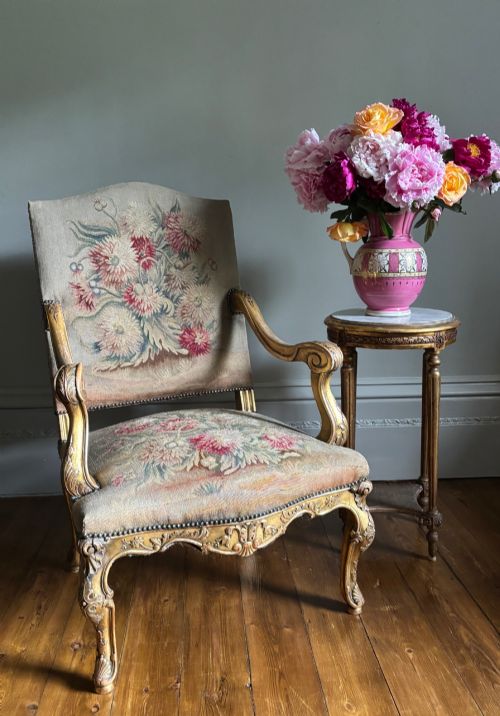
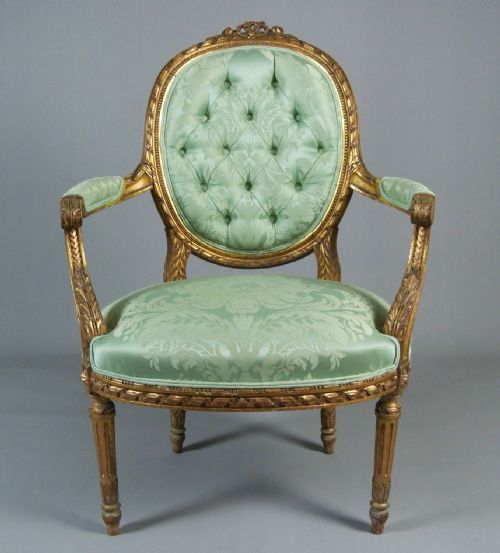
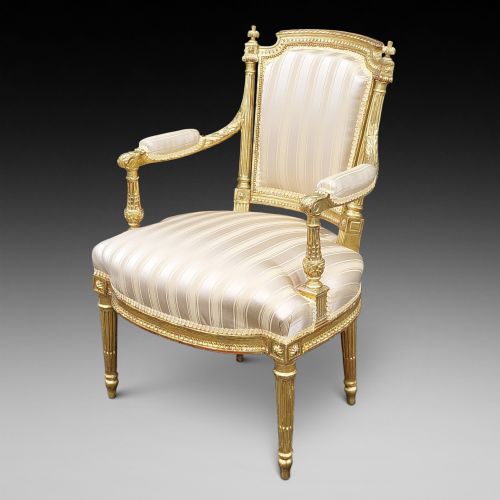
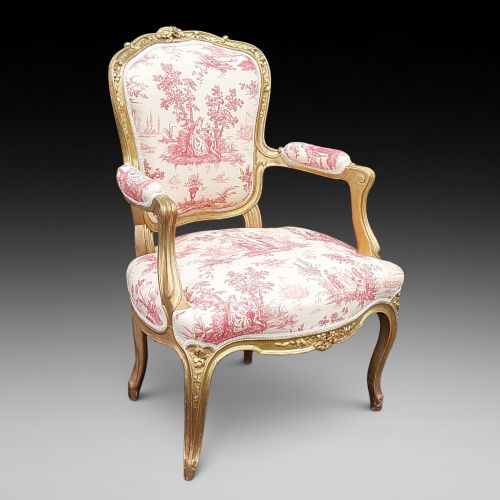
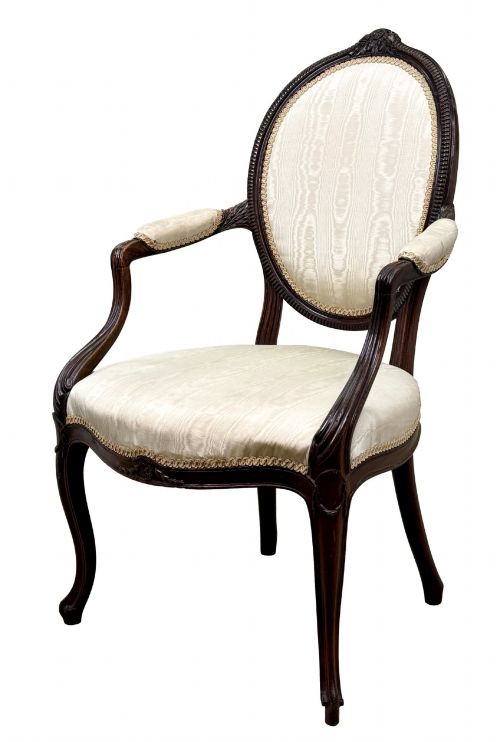
French open arm armchairs combine carved wooden frames with upholstered seats and backs, offering both decorative presence and comfortable seating for a salon or drawing room.
French Open Arm Armchairs
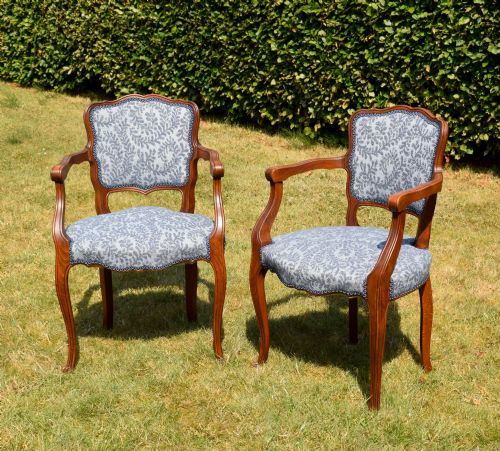
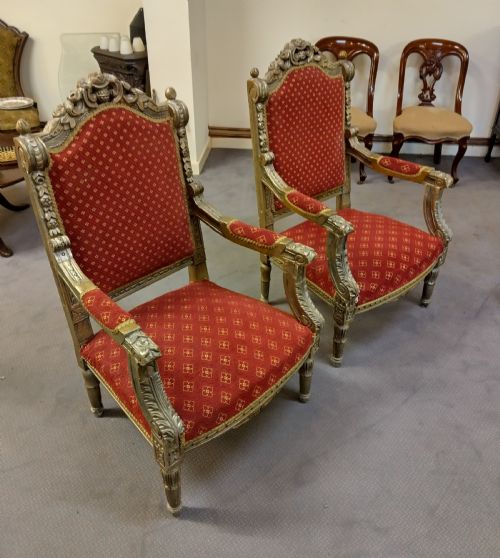
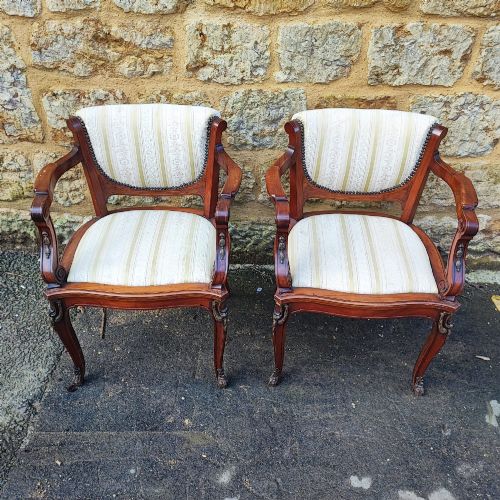
French open arm armchairs primarily appear as walnut or giltwood fauteuils dating from the eighteenth and nineteenth centuries, spanning revivals of Louis styles and provincial forms. Buyers encounter single chairs alongside matched pairs, often upholstered in silk, tapestry, or modern fabric.
The form developed to accommodate formal dress and relaxed posture in period interiors, featuring low sides and open wooden arms that expose the carved structure. Nineteenth-century interpretations frequently adopt Rococo or Empire revivals while maintaining the foundational open silhouette.
How They Were Made
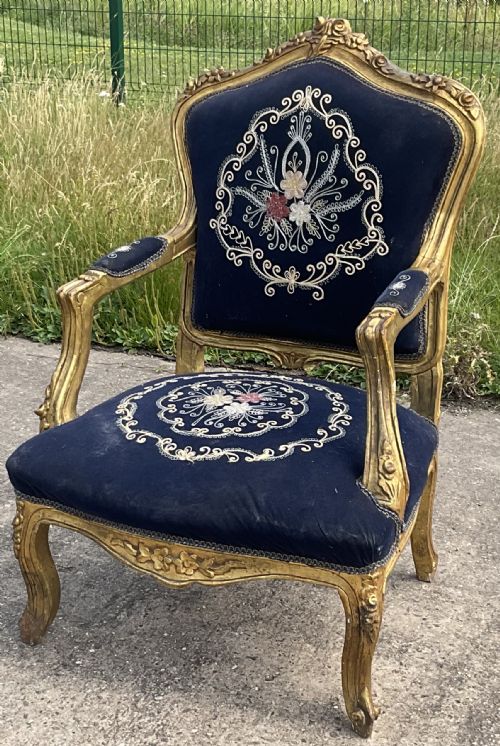
Frames rely on traditional timbers such as walnut, oak, fruitwood, and mahogany, shaped by hand carving and joined with mortise and tenon construction. Giltwood examples receive a thin layer of gold leaf applied over gesso and bole on a carved wooden base.
Upholstery methods involve webbing, springs or stuffing layered directly onto the frame, secured with brass tacks and covered in silk, needlepoint, or patterned fabric. Painted surfaces utilise layered pigments applied directly to the prepared wood.
At least one pair hides carved dragon heads on the armrests.
What Varies in Quality
Carving depth and crispness separate workshop tiers, where skilled carvers produce undercut foliage and fluid scrollwork while lesser examples rely on shallow, mechanical shaping. The choice of primary timber dictates structural longevity, with dense walnut frames outlasting softer secondary woods.
Original gilding and untouched surface patination command higher regard than later repainting or heavy restoration. The integration of the upholstery with the frame proportions signals the original ambition of the piece.
Thomas Chippendale·Holland & Sons
The French Open Arm Armchairs Glossary
- Fauteuil
- An open-armed upholstered armchair originating in France, typically featuring exposed wooden framing around the back and seat. These chairs often display carved scrollwork along the crest rail and cabriole legs.
- Giltwood
- Timber coated with thin sheets of gold leaf over a prepared ground layer. This finish appears frequently on formal nineteenth-century revival seating.
- Cabriole leg
- A furniture leg that curves outward in a convex arc and tapers inward in a concave arc, ending in a pad or scroll foot. This shape derives from animal limbs and defines many Louis-style seats.
- Needlepoint
- Hand-stitched canvas embroidery utilising wool or silk yarn, frequently encountered as upholstery panels on period seating. The tight stitches create durable decorative surfaces for seat backs and pads.
- Regence
- A transitional French design style bridging the late Louis XIV and early Louis XV periods, characterised by asymmetrical scrolling and lighter carved motifs.
French Open Arm Armchairs: Frequently Asked Questions
What is a fauteuil armchair?
A fauteuil is an upholstered French armchair featuring open wooden arms. The design exposes the carved frame along the sides and back.
These seats were designed for formal domestic interiors during the seventeenth and eighteenth centuries, later inspiring numerous nineteenth-century revival interpretations.
How do I identify French revival styles?
Revival pieces emulate earlier monarchical periods such as the reign of Louis XV or Louis XVI. Look for characteristic carved motifs like cabriole legs, acanthus leaves, and cartouche-shaped backs.
Nineteenth-century workshops frequently combined these historical elements with denser walnut or giltwood framing techniques.
Where should I place these chairs?
These armchairs function well in reception rooms, libraries, or parlours as accent seating. Their open frames maintain visual space in a room while providing comfortable seating.
Paired chairs often sit near a fireplace or flank a central table.
Are these chairs comfortable for daily use?
Period armchairs accommodate modern sitting habits depending on the internal upholstery padding and seat depth. Many feature generous proportions designed for relaxed reading or conversation.
Original webbing and stuffing can be maintained or updated by professional upholsterers to suit personal comfort.