



French Opalescent Art Glass
French opalescent art glass captures light with a milky blue fire that defined the luxury of the early twentieth century.
French Opalescent Art Glass
French opalescent art glass encompasses vases, decorative bowls, plates, and perfume bottles created during the Art Nouveau and Art Deco periods. These works rely on a specialised chemical reaction in the glass formula that produces a characteristic milky, translucent blue glow when hit by light.
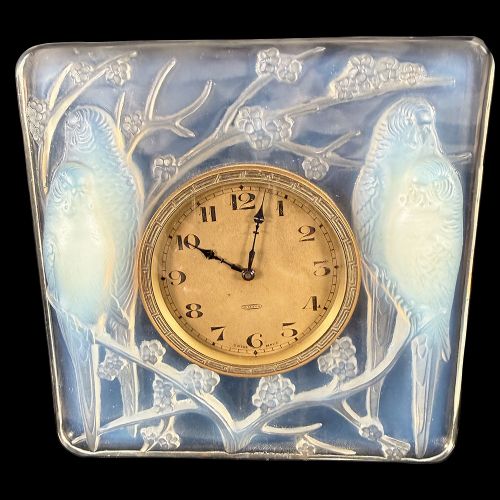
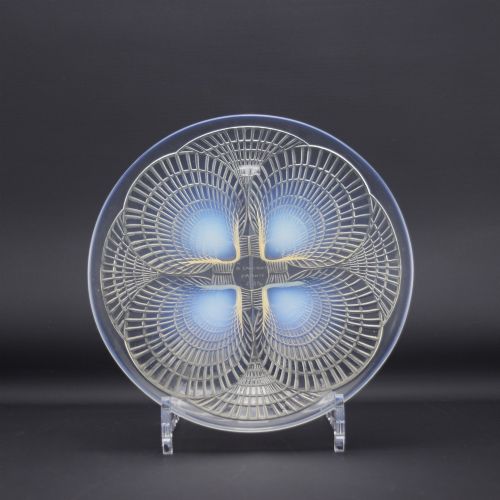
The selection on this page centres heavily on the 1920s and 1930s, alongside examples from the 1900s, 1910s, and the Edwardian era. Vases, car mascots, clocks, and shallow coupes dominate the forms encountered here.
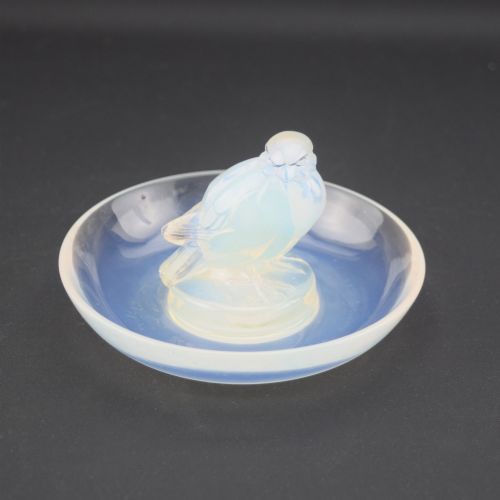
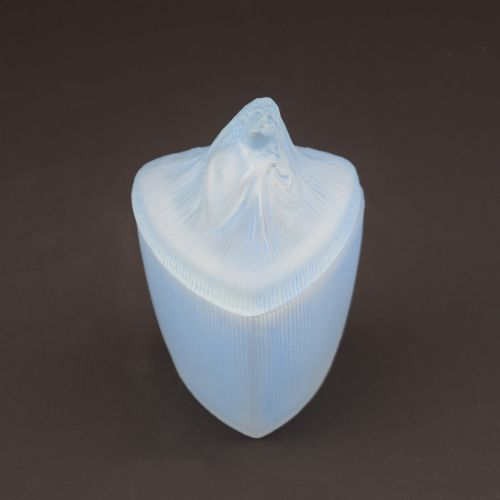
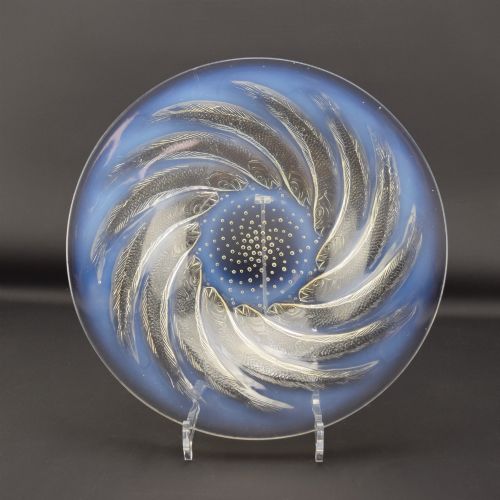
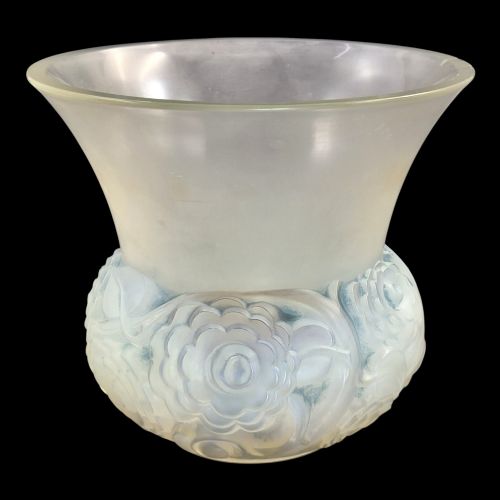
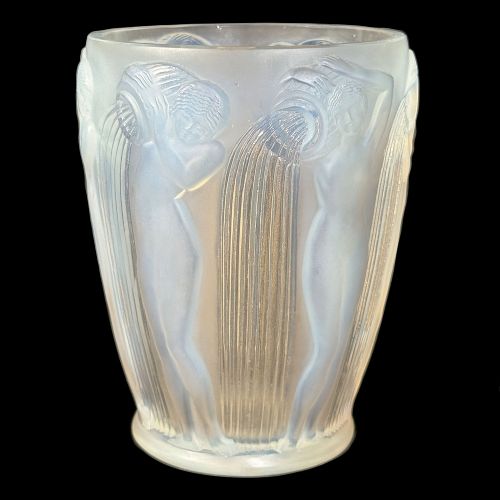
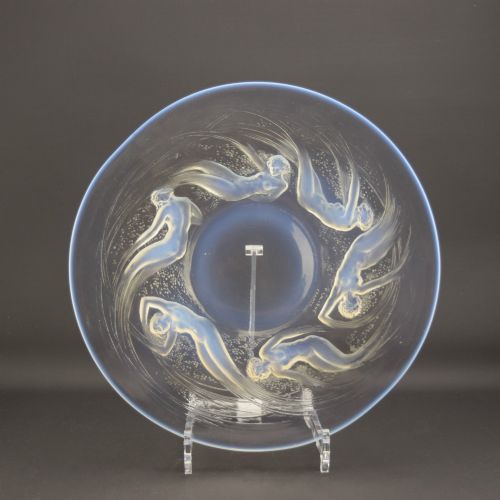
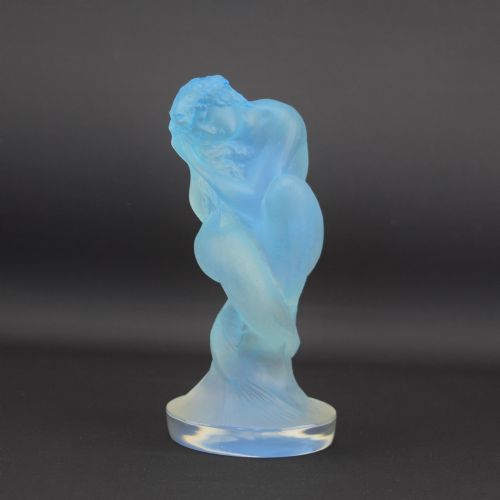
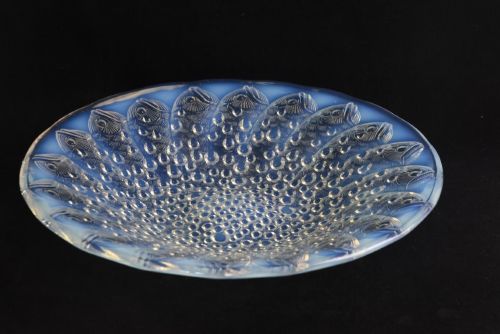
Moulded glass and pressed glass techniques allowed makers to produce intricate low relief figures and patterns. Common motifs range from fish and birds to flora and female nudes.
How they were made
Makers utilised pressed and moulded glass techniques, often adding bone ash or arsenic to the molten batch to achieve the milky opalescent quality. When cooled and struck by direct light, the glass scatters short wavelengths, creating the signature blue and amber fire.
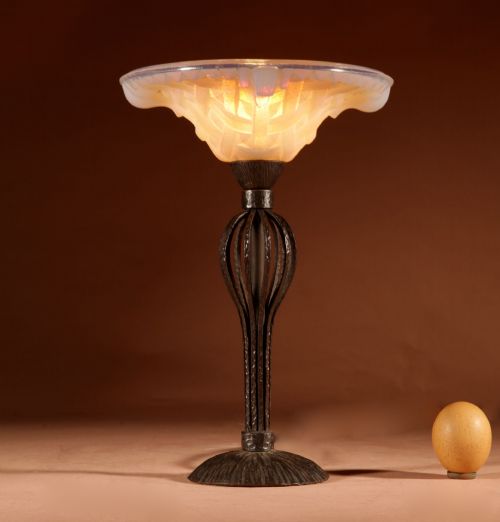
Some pieces incorporate metal elements such as brass, wrought iron, or patinated mounts. Secondary treatments include blue staining or frosting to heighten the contrast of the raised designs against the translucent body.
Makers cast tiny glass love birds, beetles, and car-driving sirens into solid objects meant to adorn motor cars and dressing tables.
What varies in quality
Quality rests upon the crispness of the mould work and the depth of the opalescence within the glass. Superior examples exhibit sharp relief in the figures and a strong, even milky blue shift across the surface.
The integration of the glass with auxiliary materials, such as wrought iron or brass bases, dictates the execution level of the piece. Stronger works maintain harmony between the tactile surface texture and the optical properties of the glass.
Rene Lalique·G Vallon·Etling·Pierre D Avesn·Verlys
The French Opalescent Art Glass Glossary
- Opalescent Glass
- Glass that diffuses light to display a milky, translucent appearance with a characteristic blue or amber glow. This effect is achieved through specific chemical additions during the melting process.
- Moulded Glass
- Glass formed by pressing molten material into an iron or brass mould to create detailed three-dimensional patterns. This technique allowed for rapid replication of complex sculptural motifs.
- Coupe Ouverte
- An open bowl or shallow dish used for decoration or service. These wide vessels frequently display radial floral or animal designs.
- Car Mascot
- A sculptural glass ornament mounted on the radiator cap of an automobile. These heavy pieces double as desk paperweights.
- Frosted Glass
- Glass treated by acid-etching or sandblasting to create a matte surface. This finish diffuses light and softens the visual transition into the opalescent areas.
French Opalescent Art Glass: Frequently Asked Questions
What causes the blue glow in French opalescent art glass?
The milky blue effect results from the inclusion of specific minerals and bone ash in the molten glass batch. As light passes through the cooled glass, the suspended particles scatter the shorter blue wavelengths.
This optical phenomenon creates the characteristic fire that changes depending on the angle of illumination and the background.
How do I distinguish Art Deco pieces from Art Nouveau?
Art Nouveau works tend to feature flowing, asymmetrical lines inspired by natural organic forms like plants and insects. These pieces often date from the 1900s and 1910s.
Art Deco designs from the 1920s and 1930s favour geometric symmetry, stylised motifs, and more rigid architectural integration with metal mounts.
Were these glass objects meant for daily use?
While many items such as bowls, plates, and vases served functional purposes in contemporary homes, their delicate nature meant they were treated as decorative table accessories.
Perfume bottles and clocks combined utility with ornamental display, sitting on dressing tables and mantelpieces.
What is a car mascot?
A car mascot is a heavy glass sculpture mounted on the front radiator cap of luxury motor cars during the interwar period. These figures were designed to catch the sunlight while driving.
Many collectors remove them from the mounting hardware to display them as desk ornaments or paperweights.