




French Office Cabinet
These french office cabinet selections bring handsome storage to a room through traditional materials and sturdy forms.
French Office Cabinet
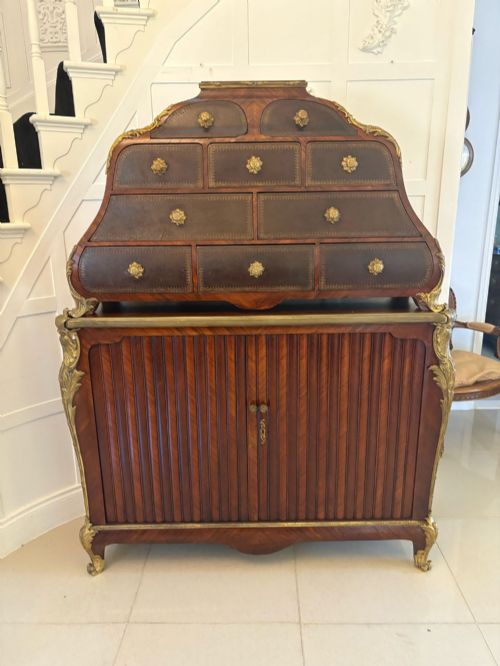
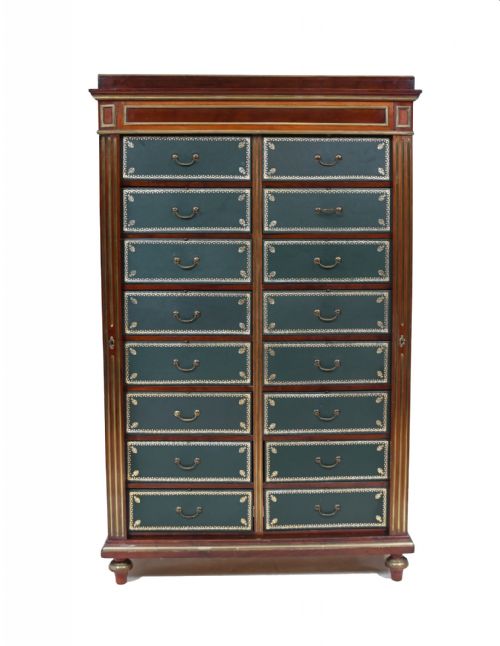
A french office cabinet covers a range of useful storage forms from the eighteenth to the mid-twentieth century, including cartonnier chests, filing cabinets, and desk organisers. These pieces emerge from periods such as the nineteenth century, nineteen-thirty, and the eighteenth century, showing how workspace storage evolved over time.
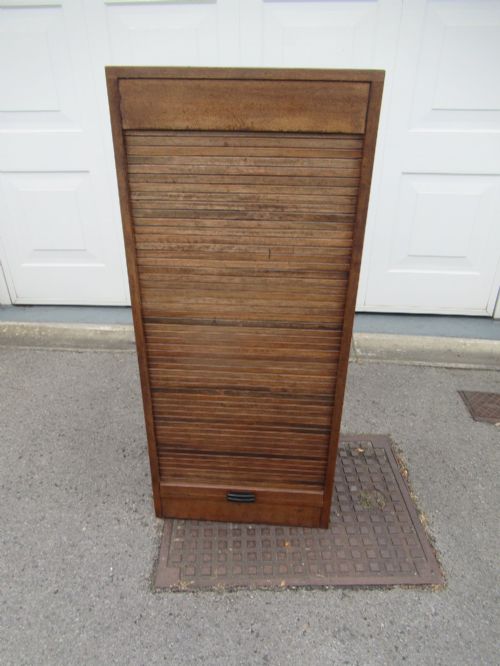
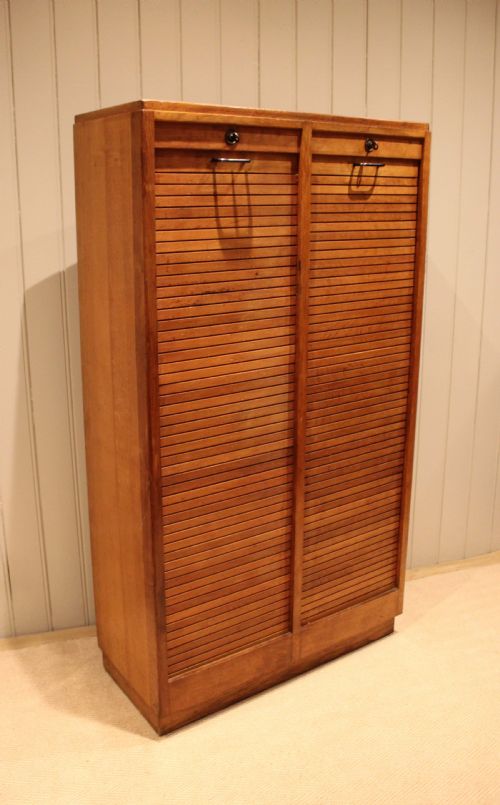
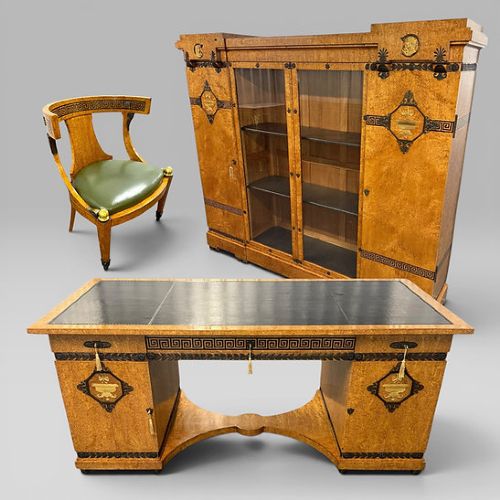
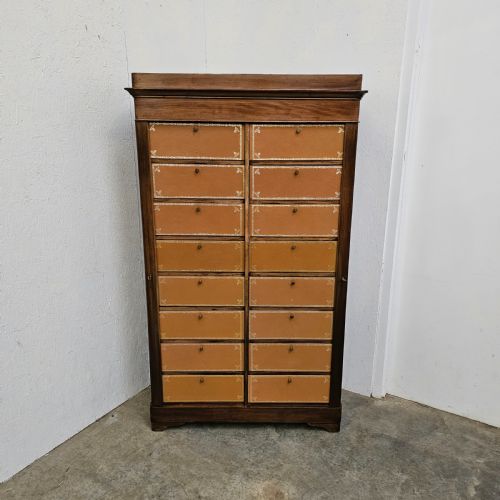
The most common examples on this page are nineteenth-century cartonnier cabinets and early twentieth-century tambour front filing cabinets in oak or mahogany. Buyers encounter everything from formal neoclassical sets to industrial filing solutions and country pieces.
Makers and styles span Charles X designs, French chateau influences, and industrial workshops, offering diverse scales and visual weights for different interiors. Each item serves to organise papers while adding distinct continental character to a study or office.
Materials and construction
Cabinet makers utilised dense hardwoods including mahogany, oak, walnut, and kingwood, often pairing them with supple leather inserts and polished brass or ormolu mounts. Tambour doors required precise individual slats grooved to slide smoothly around curved tracks.
Surface treatments range from French polish on fine eighteenth and nineteenth-century woods to industrial painted finishes on metal variants, protecting the underlying material while defining the aesthetic of each piece.
French Office Cabinet Retail Price Guide 2026
Typical asking prices for french office cabinet among the pieces listed under this phrase on Sellingantiques today, from the lower quarter to the upper quarter. They describe what is for sale here now, not the wider market.
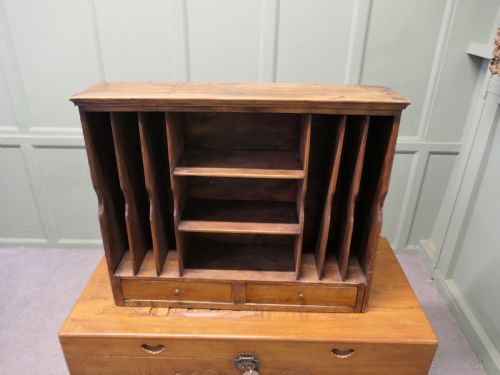
Post office sorting shelves bring authentic sorting cubbies straight from French postal history into domestic hallways.
Distinctions in quality
Quality rests on the choice of primary timbers and the finesse of secondary details, such as heavy ormolu mounts and hand-tooled leather surfaces. Pieces bearing signatures from established houses demonstrate higher craftsmanship in their internal drawer construction and locking mechanisms.
The precision of the sliding tambour mechanism separates standard utilitarian cabinets from finer examples, as well-fitted wooden slats operate without sticking or sagging across the opening. Structural integrity in the carcase ensures that heavy paper loads do not distort the frame over decades of use.
Mercier Frères
The French Office Cabinet Glossary
- Cartonnier
- A tall cabinet or chest fitted with multiple horizontal compartments designed specifically for holding loose papers, documents, and files.
- Tambour
- A door constructed from narrow vertical strips of wood glued to a canvas backing, allowing it to slide smoothly around a curved corner.
- Ormolu
- Gilded bronze mounts applied to furniture for decorative effect, common on nineteenth-century neoclassical and luxury pieces.
- Kingwood
- A dense, richly figured exotic timber featuring dark brown and violet stripes, utilised in fine cabinet making.
- Charles X
- A French design period spanning the early nineteenth century characterised by clean architectural lines and rich mahogany veneers.
French Office Cabinet: Frequently Asked Questions
What is a cartonnier cabinet?
A cartonnier is a specialised storage piece designed with tiered internal compartments or drawers for organising letters and documents.
They often feature leather-faced files and decorative ormolu mounts on fine timber carcases.
How do tambour doors work?
Tambour doors use narrow slats of wood fixed to a flexible backing fabric that runs along a grooved track within the cabinet frame.
This system allows the door to slide open around a corner, concealing the interior without requiring clearance space in front.
Where were these cabinets used?
These pieces served in administrative offices, private libraries, and studies during the nineteenth and early twentieth centuries.
They provided secure storage for correspondence, ledgers, and official paperwork.
How do I style a filing cabinet at home?
An antique filing cabinet brings practical organisation to a modern home office or living space while introducing historic texture.
Pair wooden models with traditional leather desks or use industrial metal variants to add contrast in contemporary rooms.
How do I identify a nineteenth-century piece?
Nineteenth-century cabinets typically display hand-cut dovetail joints, traditional timber framing, and period locking mechanisms.
Stylistic cues such as neoclassical brass mounts or rich mahogany veneers also point towards this era.