

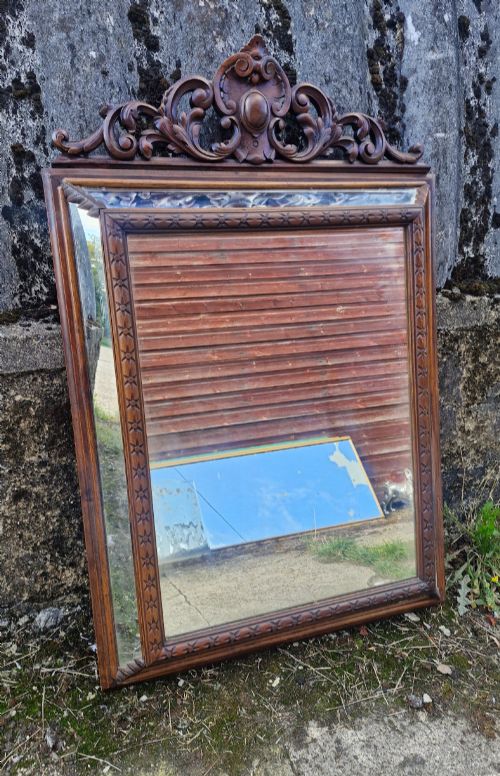
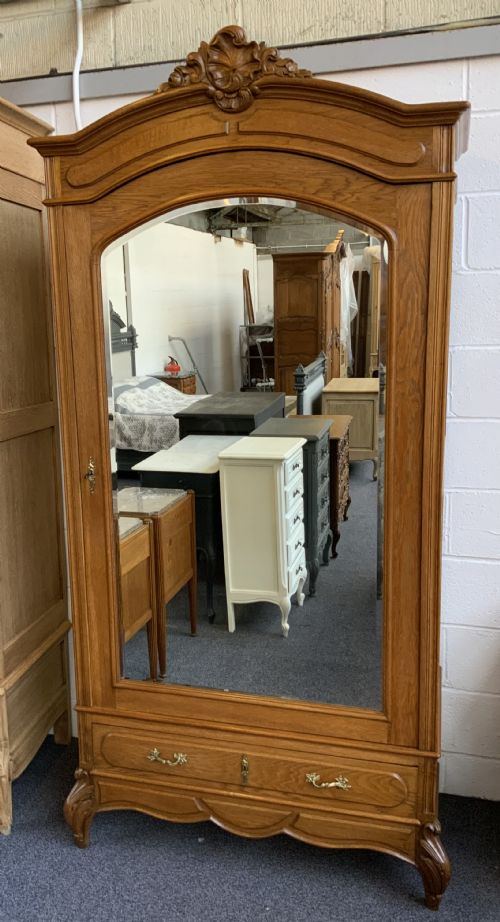
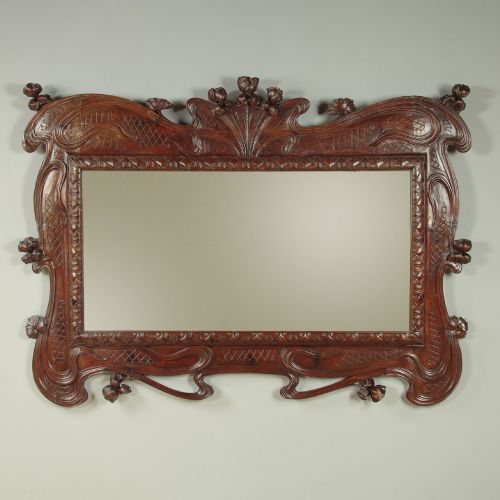
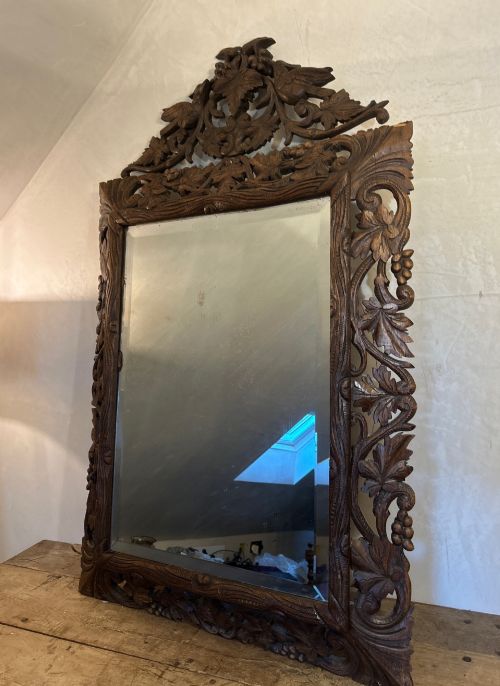




French Oak Mirror
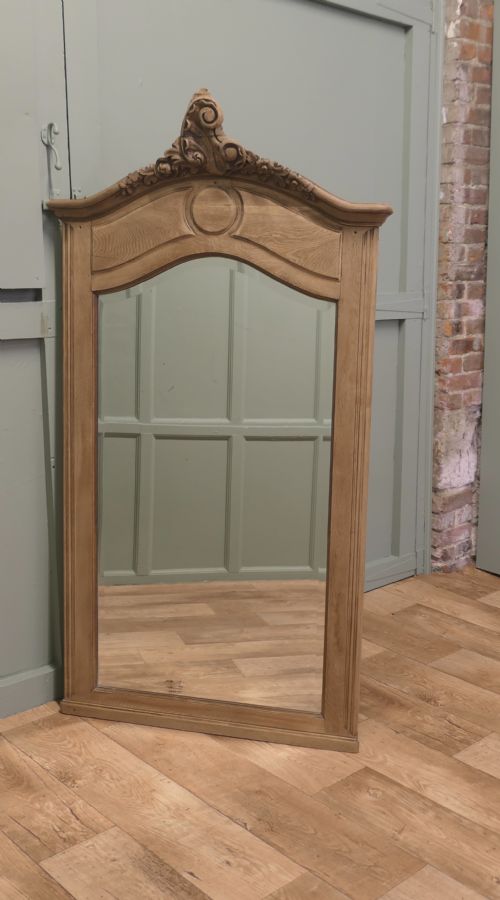
A French oak mirror brings warmth, weight and deep character to a room through solid timber framing and confident carving.
French Oak Mirror
A french oak mirror combines robust native timber with continental decorative traditions, ranging from heavy architectural overmantles to lighter wall-hung plates. You will frequently encounter examples spanning the nineteenth century into the early decades of the twentieth, often shaped by regional provincial tastes or revivalist movements.
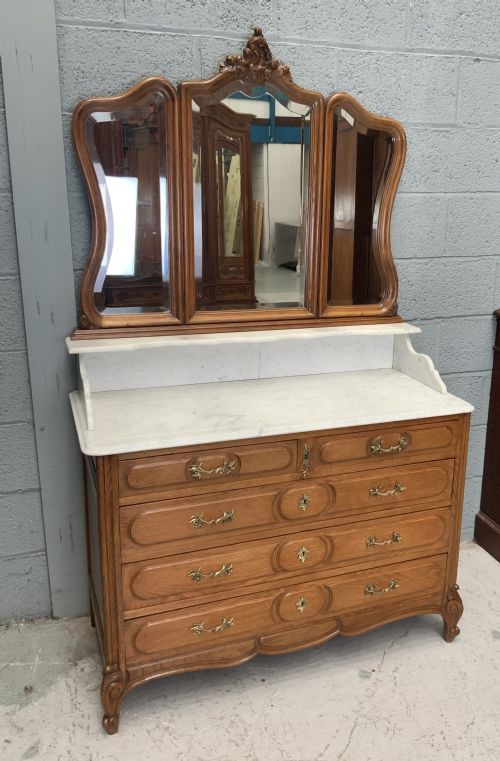
The forms extend beyond simple domestic looking glasses into mirrors integrated with shelves, coat racks, and architectural crests. While armoires and washstands occasionally incorporate mirrored doors, the dedicated wall mirror remains the primary focus for buyers seeking this particular combination of oak and French styling.
Most surviving pieces reflect historical periods such as the Victorian era, Art Nouveau, and various revival styles including Rococo and Gothic. These frames demonstrate the enduring appeal of oak as a structural and decorative medium across domestic interiors.
How they were made
Makers constructed these frames from solid oak, sometimes applying surface treatments like bleaching, scrubbing, or parcel-gilding over gesso to alter the tone of the grain. Joinery relied on traditional pegged or rebated construction to support heavy glass plates safely within the dense timber.
Decoration typically involved hand-carving directly into the solid wood or applying shaped wooden crests, fret-cut elements, and side columns. Glass plates varied from standard mirror glass to silvered or mercury plates held securely behind the wooden rebate.
French Oak Mirror Retail Price Guide 2026
Typical asking prices for french oak mirror among the pieces listed under this phrase on Sellingantiques today, from the lower quarter to the upper quarter. They describe what is for sale here now, not the wider market.
Styles represented in the inventory include French Provincial, Gothic, Rococo Revival, and Victorian designs.
What varies in quality
The distinction between standard examples and exceptional pieces lies in the depth and execution of the wood carving, particularly on crests and corners where artisans demonstrated their skill. Crisp detailing on motifs like oak leaves, baskets of flowers, or architectural mouldings elevates a frame well beyond routine production.
Proportion and the integration of original glass plate also dictate the character of the piece, as balanced dimensions and untouched historic surfaces preserve the intended aesthetic. Well-judged surface treatments, whether naturally weathered, scrubbed, or historically bleached, maintain the integrity of the oak better than unsympathetic modern refinishing.
The French Oak Mirror Glossary
- Bleached oak
- Timber treated to lighten its natural tone, producing a pale, weathered finish popular in French provincial furniture. This treatment softens the heavy appearance of darker heartwood.
- Overmantle mirror
- A large horizontal looking glass designed specifically to hang above a fireplace mantelpiece. These pieces often feature architectural framing to anchor them within the room.
- Gesso
- A plaster-based mixture applied to wood surfaces as a smooth base for gilding or painting. It allows for intricate, sharp decorative details on gilded wooden mouldings.
- Mercury plate
- An older type of mirror glass made using a tin and mercury amalgam behind the glass. This technique creates a characteristic mottled, dark reflection.
- Rococo revival
- A nineteenth-century design style drawing on asymmetrical C-scrolls, shell motifs, and naturalistic foliage. It frequently manifests in curving, exuberant wooden frames.
French Oak Mirror: Frequently Asked Questions
How do I date a French oak mirror?
Dating relies on examining the construction methods, the hardware on the reverse, and the style of the carving. Revival periods often mimic earlier centuries, so backing boards and screw types offer clearer clues than surface decoration alone.
Changes in glass manufacture and silvering techniques also help narrow down the decade of production. Original plates frequently show subtle imperfections that distinguish them from modern replacements.
Where should I hang a heavy oak mirror?
Heavy carved frames require solid masonry walls or proper stud anchoring to support their substantial weight safely. Placing them above a low piece of furniture or a mantelpiece helps balance their visual mass.
Adequate wall fixings prevent strain on the antique wooden joints and mounting brackets. Ensure the fixing points align directly with the structural supports of the wall.
What is bleached oak?
Bleached oak is timber that has undergone a chemical lightening process to reduce the deep, dark tones characteristic of mature oak. This finish became particularly common in French provincial pieces.
The resulting surface highlights the natural grain while offering a lighter, more relaxed aesthetic suitable for various interior schemes.
Are the mirror plates original?
Many surviving frames retain their original glass plates, which often display light foxing, minor speckling, or age-related oxidation. These surface characteristics confirm the historical continuity of the object.
Replacement glass is sometimes fitted during restoration if the original plate suffered terminal damage. Inspecting the edges and the backing provides insight into the history of the glass.