


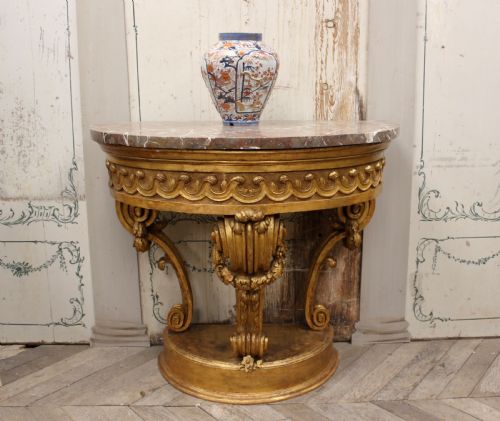

French Neoclassical Wall Table
These french neoclassical wall table pieces bring classical symmetry and formal display surfaces to a room, built for dramatic wall placement.
French Neoclassical Wall Table
When you search for a french neoclassical wall table, you are looking at console tables, side tables, and pier mirrors designed to anchor a room against a wall. The pieces you meet here span periods from the eighteenth century through to the nineteen thirties, drawing heavily on Louis XVI, Empire, and French Chateau styles.
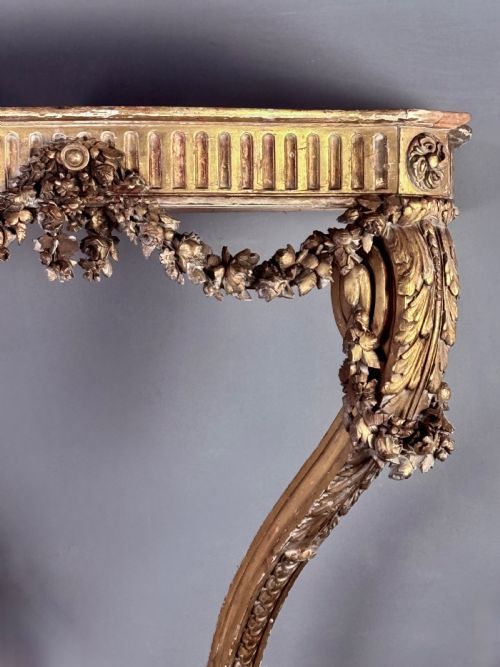
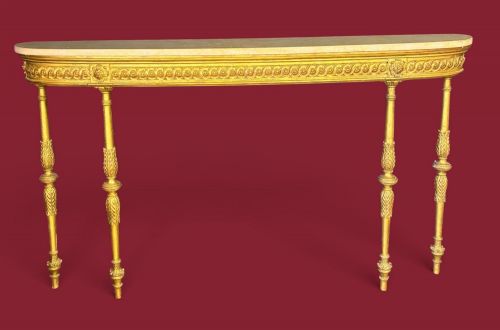
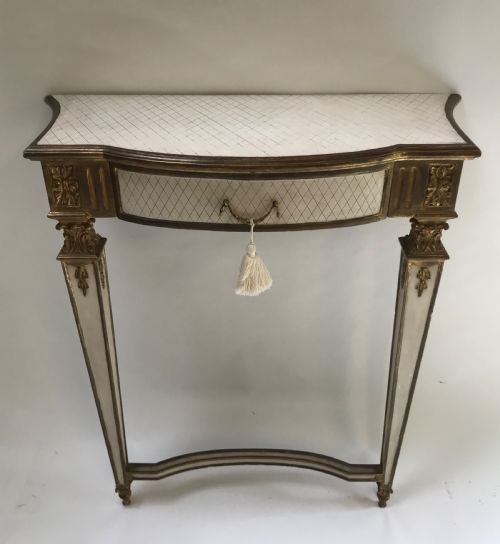
Console tables form the core of what you will find, often topped with marble or granite and paired with matching giltwood mirrors. They appear in carved giltwood, painted wood, and gesso finishes, reflecting formal interior decoration traditions.
Makers represented in this selection include named cabinet makers and designers such as Felix-Alfred Ternisien and Jean Joseph Chapuis alongside anonymous workshop pieces. Their scale ranges from low demi-lune side tables to large empire consoles intended for grand reception spaces.
Materials and Construction
The construction relies heavily on solid woods shaped through hand carving, gesso application, and layered paint or gold leaf gilding. Artisans shaped structural timber to support heavy stone elements without losing delicate classical proportion.
Surfaces frequently feature inset marble or granite slabs fitted neatly into carved wooden frames. Giltwood and painted wood finishes receive detailed decorative carving, often highlighting architectural motifs like fluting, swags, and classical moulding.
Listings feature items spanning the eighteenth century through to nineteen thirty, constructed from marble, giltwood, mahogany, and carved wood.
Judging Quality and Execution
Quality reveals itself in the crispness of the hand carving and the depth of the gilding or paint layers. Superior examples show meticulous detail in acanthus leaves, fluting, and structural joints that remain tight and true after centuries.
The choice of top material also distinguishes the work, with fine polished marble or granite fitted precisely to the wooden base. Signed pieces by recorded makers demonstrate a higher standard of joinery and sculptural confidence compared to anonymous workshop output.
Felix-Alfred Ternisien·Jean Joseph Chapuis
The French Neoclassical Wall Table Glossary
- Console table
- A side table designed to be fixed against a wall, often supported by front legs with the rear secured to the masonry. They frequently carry heavy stone tops and elaborate underframes.
- Giltwood
- Timber coated with a thin layer of gold leaf or gold dust over a prepared gesso ground. It provides a brilliant reflective surface popular in formal European interiors.
- Demi-lune
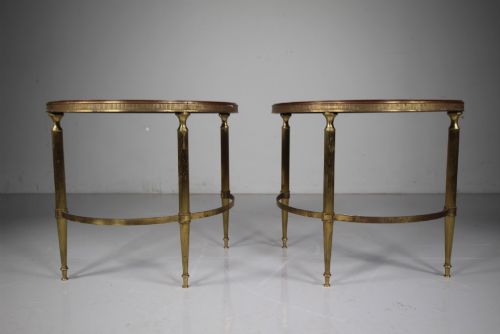
- Half-moon shape in plan, describing tables with a straight back edge to sit flush against a wall and a curved front. This profile softens the geometry of formal hallways.
- Pier mirror
- A large tall mirror designed to hang on the pier of wall space between two windows, frequently positioned directly above a matching console table.
- Gesso
- A plaster mixture applied to wood surfaces as a smooth base for painting or gilding. It allows carvers to achieve sharp relief details before applying gold leaf.
French Neoclassical Wall Table: Frequently Asked Questions
Where should I place a wall table?
These tables suit hallways, formal reception rooms, and dining spaces where wall space allows for a statement piece. They anchor the room visually, especially when paired with a matching pier mirror above.
Because they rely on the wall for absolute stability, positioning them in low-traffic areas prevents accidental knocks while maintaining their decorative function.
How do I care for a marble top?
Marble surfaces require gentle cleaning with a damp cloth and neutral soap, avoiding acidic cleaning agents that etch the stone. Regular dusting preserves the polished finish.
Using coasters and mats protects the porous stone from staining, keeping the surface in prime condition for daily use.
What defines the French neoclassical style?
This style draws inspiration from classical Greek and Roman antiquity, emphasising symmetry, straight lines, and restrained ornamentation. Motifs often include urns, swags, fluted columns, and laurel wreaths.
In furniture design, this translates to balanced proportions and architectural structure rather than the flowing asymmetry seen in earlier rococo pieces.
How can I tell older pieces apart?
Eighteenth and nineteenth-century pieces display hand-carved details and traditional joinery methods that differ from later twentieth-century interpretations. Wear patterns on the gilding and natural ageing in the timber indicate the passage of time.
Examining the underside reveals tool marks and construction techniques specific to period workshops rather than modern reproduction methods.