

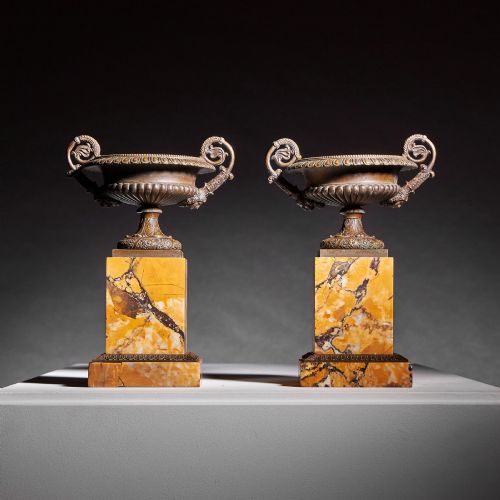
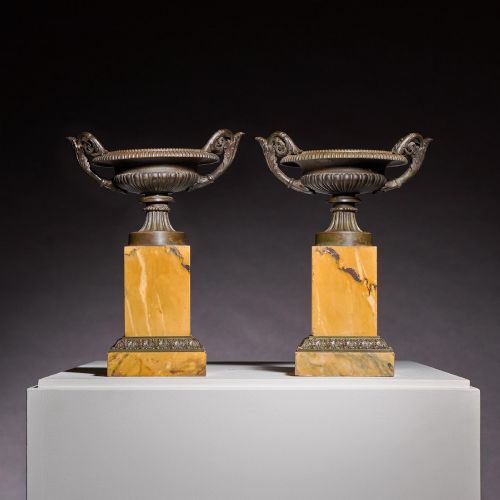
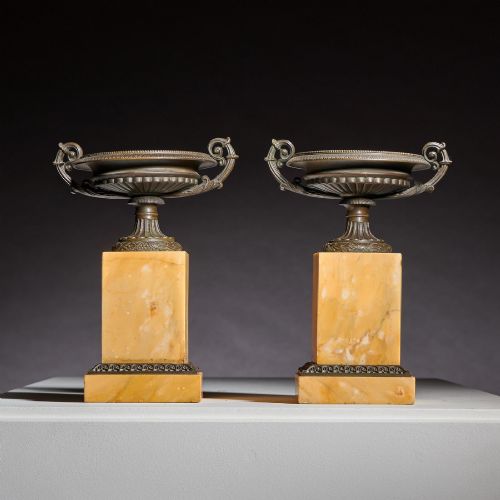
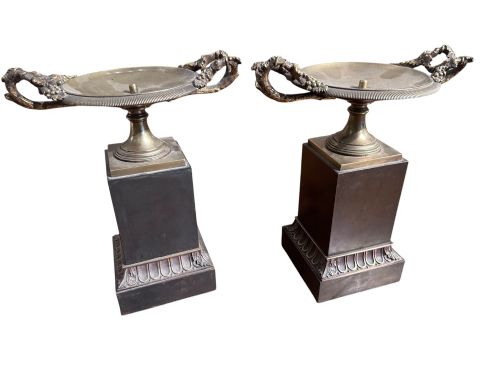


French Neoclassical Tazzas
French neoclassical tazzas are sculptural bronze and marble footed dishes that bring classical dignity and proportion to a room.
French Neoclassical Tazzas
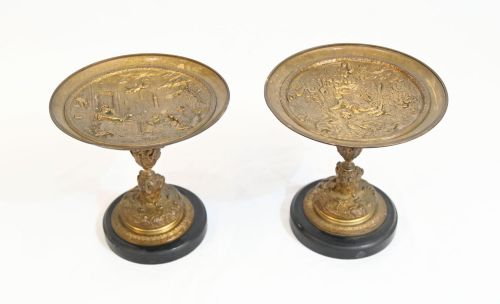
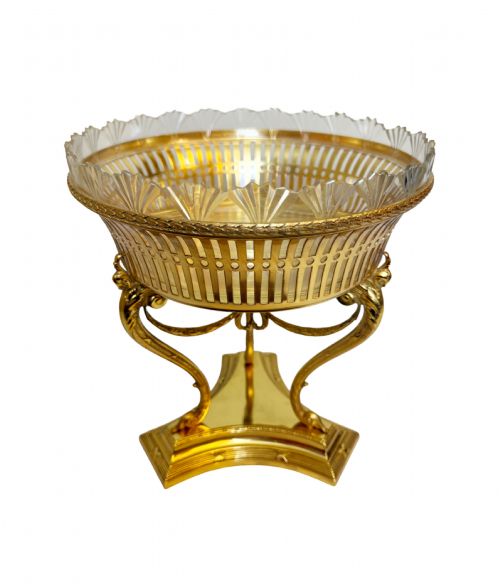
When you search for french neoclassical tazzas, you are looking at decorative footed bowls and vessels that combine classical antiquity with nineteenth-century craftsmanship. These pieces draw heavily on ancient architectural forms, serving historically as ornamental centrepieces or display objects on libraries, sideboards, and mantelpieces.
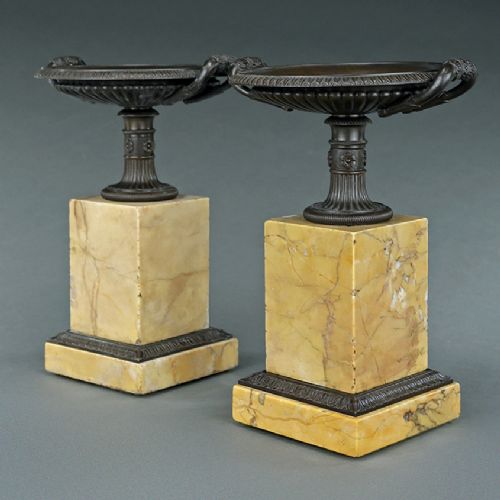
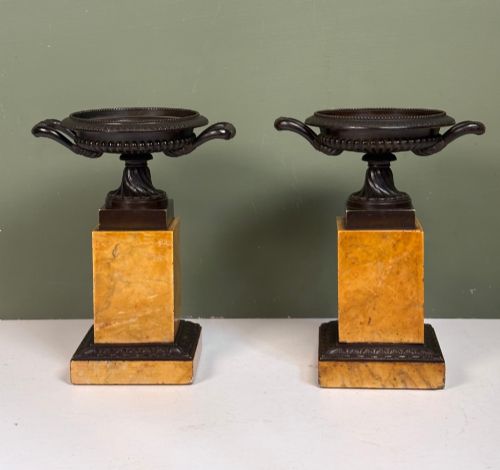
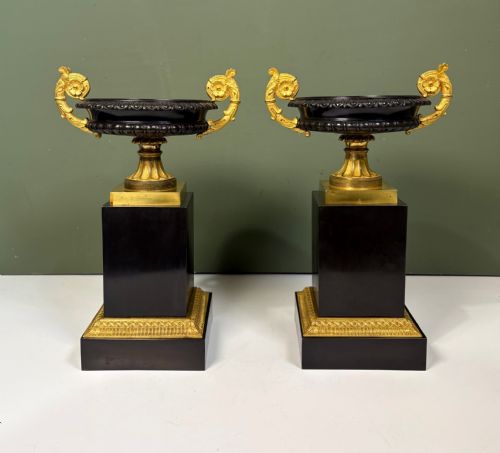
The versions you are most likely to meet on this page date from the nineteenth century, including specific pieces from eighteen hundred up to eighteen ninety. They frequently appear as matched pairs, combining heavy stone bases with cast metal ornamentation in the neoclassical and French Empire styles.
How they were made
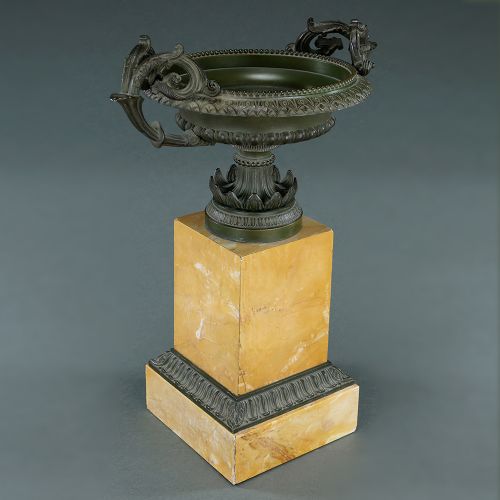
The construction of these pieces relies on the pairing of cast metals with dense natural stone. Makers utilised bronze, patinated bronze, gilt bronze, and ormolu for the structural bowls, mounts, and classical figures, often finishing the surfaces with meticulous chasing.
Marble forms the substantial bases and pedestals that anchor the metalwork, utilising white, black, and Siena varieties to provide colour and weight. Cut glass and mother-of-pearl also appear as insert dishes or central bowls supported by the metal frames.
French Neoclassical Tazzas Retail Price Guide 2026
Typical asking prices for french neoclassical tazzas among the pieces listed under this phrase on Sellingantiques today, from the lower quarter to the upper quarter. They describe what is for sale here now, not the wider market.
Materials recorded across the inventory include Siena marble, black marble, cut glass, mother-of-pearl, and patinated or gilt bronze.
What varies in quality
Quality in these works rests upon the crispness of the metal casting and the depth of the hand-chasing applied after the mould leaves the foundry. Superior examples show sharply defined acanthus leaves, figures, and classical motifs where lesser pieces appear soft and rounded.
The selection and turning of the marble base also dictate the grade of the object. Heavier, richly figured Siena or black marble bases combined with fire-gilt ormolu rather than plain bronze indicate a more ambitious workshop production.
The French Neoclassical Tazzas Glossary
- Ormolu
- A technique of applying finely ground high-carat gold to an object of bronze through a mercury amalgamation process, yielding a warm metallic lustre. This finish defines the most ornate French Empire and neoclassical decorative objects.
- Sienna marble
- A distinctive yellow-gold Italian marble with dark grey and purple veining, heavily utilised during the Grand Tour period. It provides a striking contrast against dark patinated or gilt bronze.
- Patinated bronze
- A chemically induced surface coloration applied to bronze, ranging from deep brown to near black. It highlights the modelled details of figures and classical foliage against polished gilt highlights.
- Tazza
- A shallow ornamental bowl set on a slender foot and a flat base. Originating from ancient drinking vessels, nineteenth-century versions served purely decorative functions on tables and mantelpieces.
- Garniture
- A set of matching decorative objects, typically comprising a clock flanked by urns or tazzas designed to sit together on a mantelpiece. These matched suites formed centrepieces of nineteenth-century interior displays.
French Neoclassical Tazzas: Frequently Asked Questions
What were french neoclassical tazzas used for?
These pieces served primarily as decorative ornaments for display on tables, sideboards, and mantelpieces within grand nineteenth-century interiors. They were designed to showcase classical taste and proportion rather than for practical dining use.
Many examples formed part of larger garniture sets alongside clocks or paired urns, creating a balanced visual arrangement in formal reception rooms and libraries.
How do I date a nineteenth-century tazza?
Dating relies on examining the combination of materials, the style of the casting, and the specific patination methods used on the metal. Pieces from the early nineteenth century often reflect strict French Empire or Grand Tour aesthetics with dense Siena marble bases.
Later nineteenth-century examples, spanning towards eighteen ninety, sometimes incorporate cut glass inserts or lighter gilt metal mounts while maintaining neoclassical forms.
Are these tazzas always found in pairs?
Many examples survive as matched pairs because they were originally manufactured to sit symmetrically on either side of a mantelpiece clock or centrepiece. Single pieces do appear, having been separated from their original suites over time.
Pairs generally command stronger interest from collectors seeking balanced arrangements for display on large surfaces or architectural consoles.
How should I clean bronze and marble?
Maintenance requires gentle dusting with a dry, soft cloth to prevent dust accumulation in the crevices of the chased bronze and the porous surface of the marble. Avoid chemical polishes, water, or abrasive cloths that can strip historical patination or damage the gilt surface.
Marble bases benefit from occasional wiping with a barely damp cloth followed immediately by a dry buff, taking care to keep moisture away from any exposed metal joins.