


French Neoclassical Gueridon
A French neoclassical gueridon brings architectural discipline and refined classical symmetry to a room as a compact, round occasional table.
French Neoclassical Gueridon
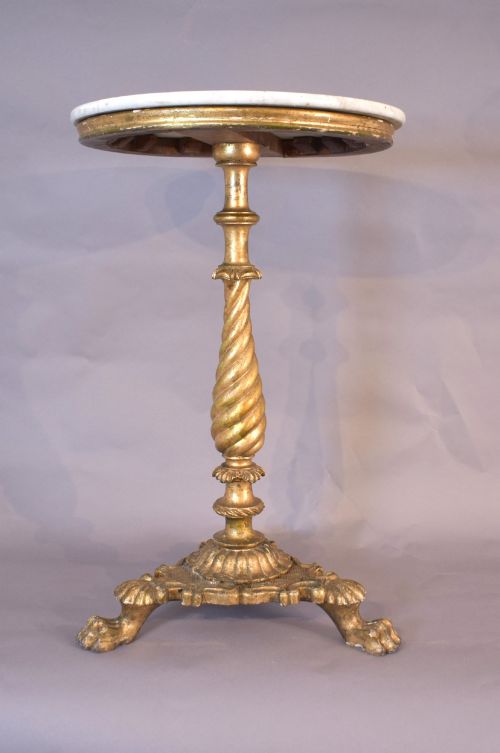
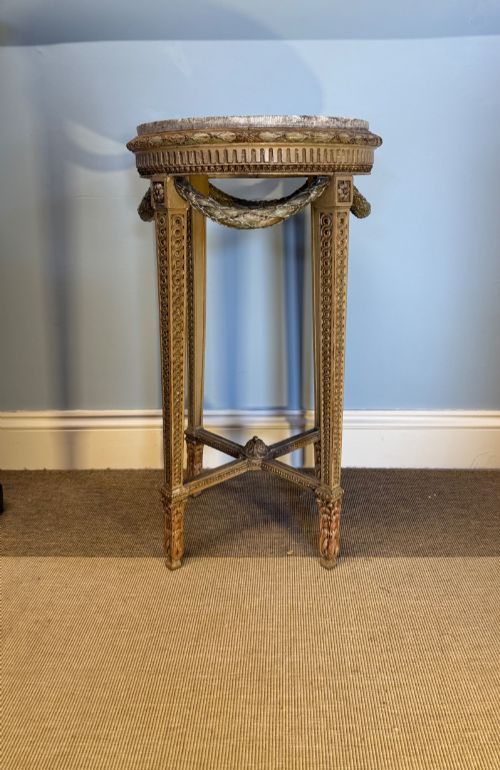
When buyers search for a french neoclassical gueridon, they seek round occasional tables rooted in classical antiquity, often channeling Louis XVI restraint or the bolder lines of the French Empire. These pieces appear primarily as side tables, centre tables, and small display stands designed to anchor a corner or sit beside seating.
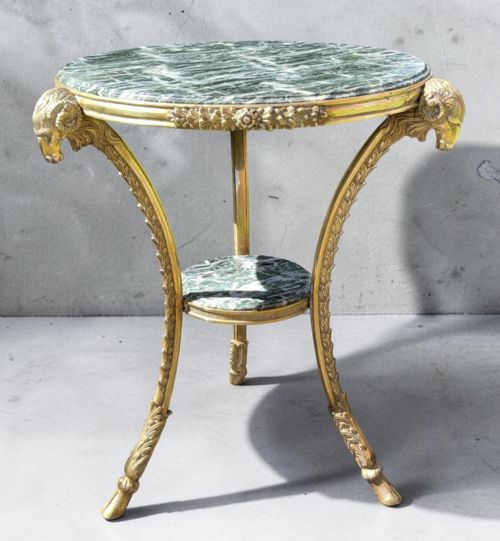
Makers and designers of the period often looked to classical motifs such as rams' heads, swans, and bronze or ormolu mounts to elevate the simple round format. A buyer encounters variations ranging from stark mahogany designs to giltwood and ebonised timber.
How they were made
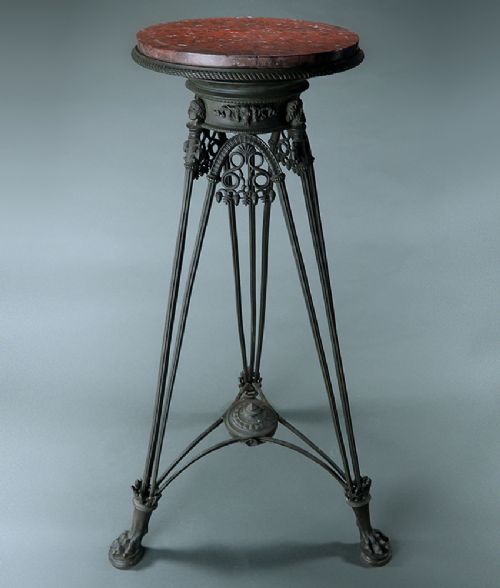
Cabinetmakers constructed these tables using solid and veneered timbers such as mahogany, walnut, and ebonised wood, often framing heavy stone tops. Marble and porphyry inserts provide a cool, durable surface that contrasts against the warm grain of the underlying wood.
Metalwork played a defining structural and decorative role, utilising cast brass, ormolu, and gilt bronze for mounts, feet, and capitals. These metal elements were cast separately and hand-chased before being fixed to the timber frames.
Listings feature periods spanning from the mid-nineteenth century through the 1930s, highlighting persistent revivals of Louis XVI and Empire styles.
What varies in quality
Quality rests heavily on the crispness of the cast bronze and ormolu mounts, where finely chased details like fur on rams' heads or feather work on swans separate master workshops from standard production. Inferior pieces rely on softer, shallower metal castings that lack definition.
The choice and thickness of the marble top also dictate grade, with heavy, richly veined stones or faux porphyry finishes commanding greater presence than thin, plain slabs. Furthermore, the integrity of the timber framing and the tightness of the joinery around the central column determine the structural longevity of the table.
Henry Dasson·Weisweiler
The French Neoclassical Gueridon Glossary
- Guéridon
- A small French round table, typically supported by a central pillar or three legs. The form originated in the seventeenth century before being reinterpreted during the neoclassical and Empire revivals.
- Ormolu
- Gilt bronze produced by applying a gold and mercury amalgam to cast bronze, then heating to drive off the mercury. This technique creates a rich, matte gold surface characteristic of fine French decorative arts.
- Porphyry
- An igneous rock with large crystals, highly prized since antiquity for its deep purple-red colour. In nineteenth-century tables, artisans often imitated its appearance or utilised genuine decorative stone slabs.
- Etruscan Revival
- A nineteenth-century design movement drawing inspiration from ancient Greek and Etruscan artefacts. Tables in this style often incorporate linear geometric motifs and classical patination.
French Neoclassical Gueridon: Frequently Asked Questions
What is a French neoclassical gueridon used for?
These tables function primarily as decorative occasional pieces, serving as stands for lamps, urns, or small objects of art. Their compact round footprint allows them to sit easily beside seating or anchor an empty corner.
Historically, they also served as centre tables in larger salons or boudoirs, offering a surface for reading materials or display without dominating the floor plan.
How do I identify a French Empire style gueridon?
Look for heavy mahogany timbers, symmetrical geometry, and distinctive gilt bronze mounts such as swans, sphinxes, or rams' heads. The legs often sweep inward toward a central triangular or circular platform base.
Many nineteenth-century pieces lean heavily into this Napoleonic vocabulary, pairing dark polished woods with striking contrasting metalwork.
Are marble tops original to these tables?
Yes, heavy marble and onyx tops were standard for many high-end French occasional tables of this period. They provided a durable, cool surface that elevated the status of the piece.
When evaluating a table, check how the stone rests within the timber rebate to ensure it sits flush and matches the era of the base.
How do I care for antique mahogany and gilt bronze?
Maintain the timber using natural beeswax applied sparingly and buffed gently with a soft cloth to preserve the patina. Avoid modern silicone sprays or excessive moisture.
Clean gilt bronze mounts with a dry, soft brush, taking care not to use abrasive metal polishes that can strip the original gilding.