


French Mythological Painting
These french mythological painting works capture classical deities and legends through centuries of continental artistry.
French Mythological Painting
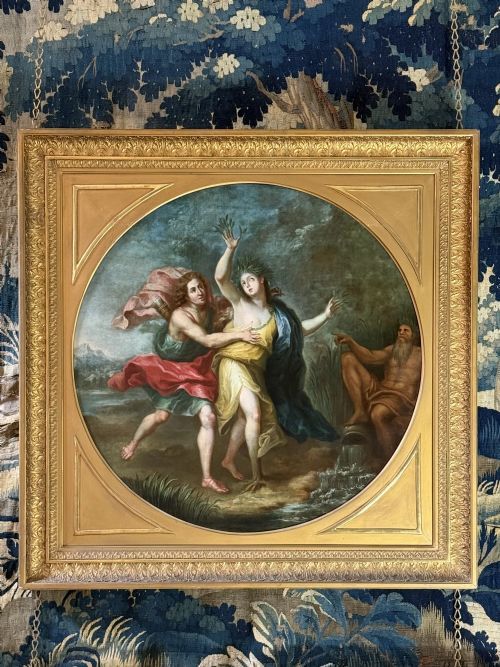
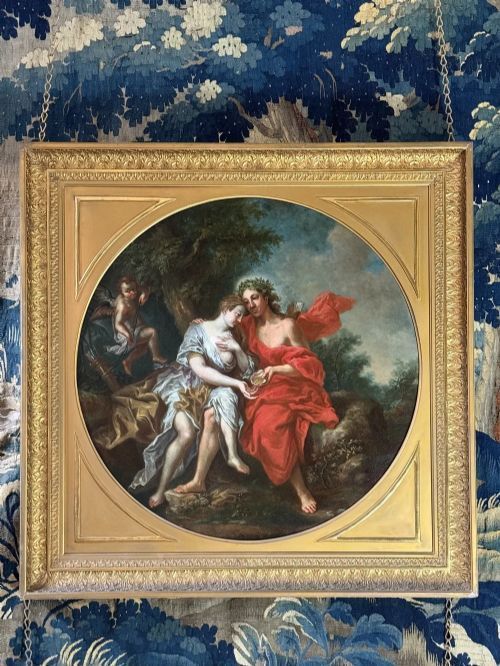
A french mythological painting brings classical narratives and figures from Greek and Roman legend directly onto canvas, paper, or porcelain surfaces. These works range from grand eighteenth century oil paintings depicting Apollo and Daphne to delicate nineteenth century watercolours of Venus and Cupid.
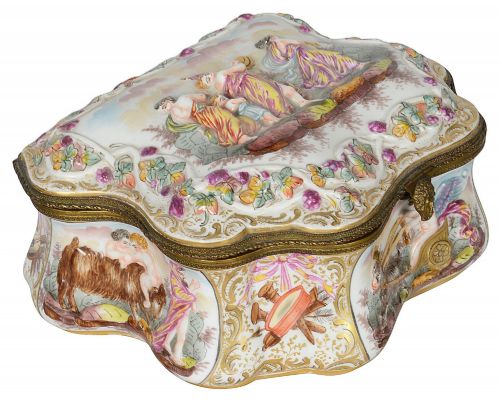
Collectors encounter diverse formats within this category, including framed oil paintings, porcelain jewellery caskets, and decorated faience water pitchers. Subjects frequently feature cherubs, nymphs, and legendary heroes executed in styles spanning French Rococo, Academic, Neoclassical, and Art Nouveau.
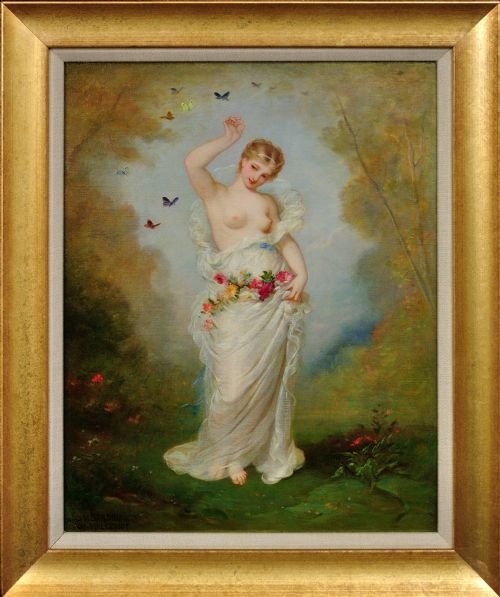
The pieces on this page represent both direct canvases and decorative objects adorned with mythological scenes. Works from the eighteenth and nineteenth centuries dominate the selection, showing deities rendered with varying degrees of academic precision and decorative flair.
Materials and construction methods
Painters utilised oil on canvas and watercolour pigments to build rich narratives, often housing their finished works within ornate gilt wood frames. Ceramic and porcelain items incorporate hand-painted mythological figures alongside moulded bodies and gilt brass or ormolu mounts.
Support structures rely on traditional stretched canvas and dense wooden panels, whilst three-dimensional pieces employ moulded faience and porcelain bodies. Gilding techniques enhance both the wooden frames and the metal mounts that complement the painted scenes.
Cherubs and cupids appear with surprising frequency, seemingly tasked with watching over nineteenth century watercolours and porcelain trinket boxes alike.
Assessing quality in mythological works
Quality rests upon the finesse of the brushwork and the anatomical correctness of the figures depicted in the scene. Superior works display confident line execution and expressive detail in the rendering of deities, cherubs, and narrative backgrounds.
The integration of the artwork with its housing dictates overall merit, particularly where oil paintings meet elaborately carved gilt wood frames or porcelain pieces feature detailed ormolu mounts.
Charles Antoine Coypel·Jean Baptiste Isabey·Sevres
The French Mythological Painting Glossary
- Oil on Canvas
- Pigment mixed with drying oil applied to a woven fabric support. This traditional medium allows for rich blending and deep colour saturation in figurative compositions.
- Faience
- Tin-glazed earthenware produced across continental Europe. It provides an opaque white surface suitable for detailed painted mythological motifs.
- Ormolu
- Gilded bronze mounts applied to decorative objects and furniture. This technique adds metallic brilliance and structural ornamentation to porcelain vases and caskets.
- French Academic Style
- Artistic production governed by the rules of traditional academies. It emphasises polished technique, idealised forms, and historical or mythological subject matter.
French Mythological Painting: Frequently Asked Questions
What subjects appear in these paintings?
The compositions focus on classical deities, legendary heroes, and romantic themes drawn from Greek and Roman mythology. Figures such as Apollo, Venus, Cupid, and Ariadne frequently populate the scenes.
Artists also depict cherubs and nymphs in pastoral or allegorical settings, reflecting the enduring popularity of classical literature among continental patrons.
How should I display a framed painting?
Selecting a wall with stable humidity and away from direct sunlight protects both the canvas and the original gilt wood frame. Proper lighting enhances the delicate pigments of oil and watercolour works without causing heat damage.
Ensuring adequate spacing around larger framed pieces allows the intricate detail of the mythological narrative to remain the focal point of the room.
Are these pieces strictly oil paintings?
While traditional canvas works form a significant part of the category, the selection also includes watercolours on paper. Decorative objects such as porcelain caskets and faience pitchers also carry painted mythological scenes.
This variety means collectors can find both flat fine art and functional decorative arts bearing the same classical motifs.
How do I identify the period of a piece?
Stylistic indicators such as Rococo curves, Neoclassical restraint, or Art Nouveau linework help narrow down the date of execution. Examining the materials, framing techniques, and signatures provides further clues regarding the century of origin.
Comparative study of established artists from the eighteenth and nineteenth centuries assists in dating unsigned decorative items.