

French Marble Top Drawers
French marble top drawers unite stone and timber storage across centuries of continental cabinetmaking.
French Marble Top Drawers
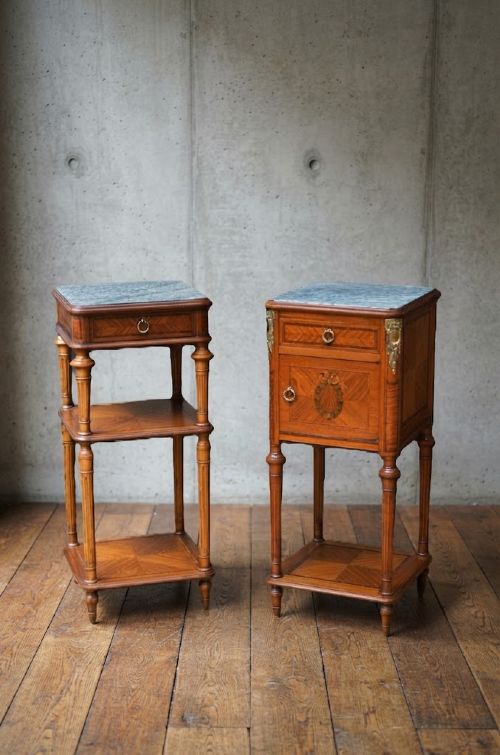
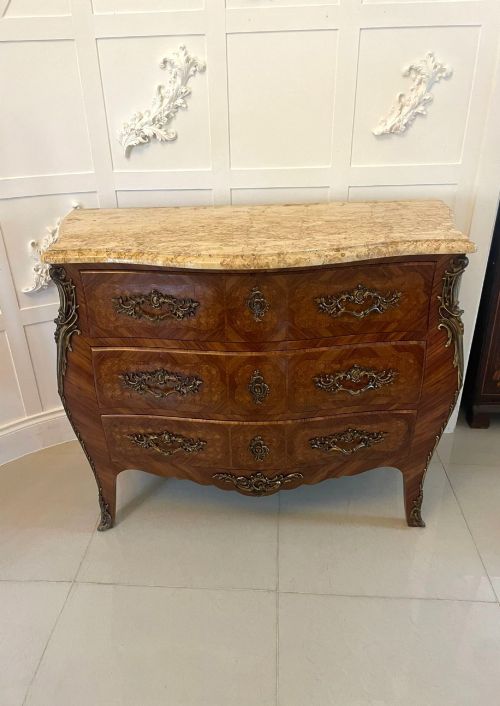
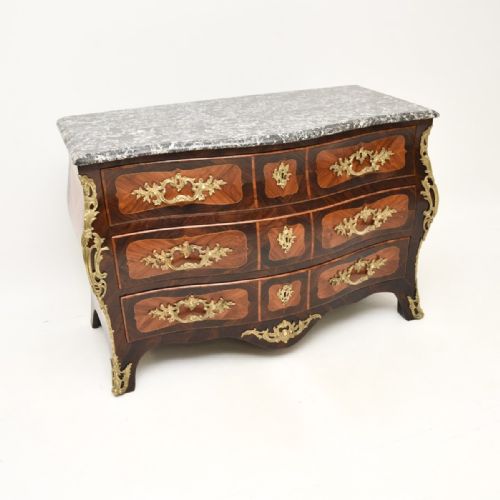
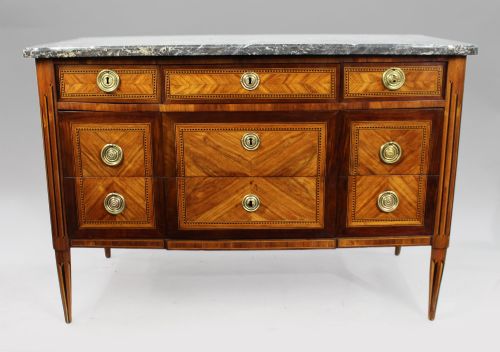
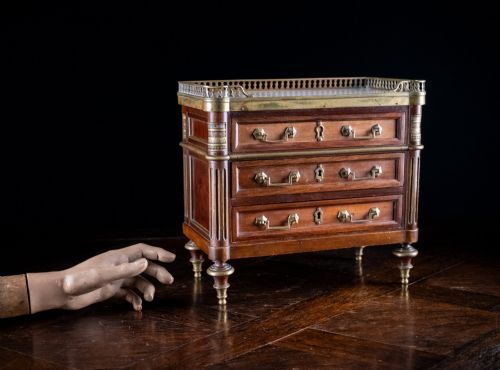
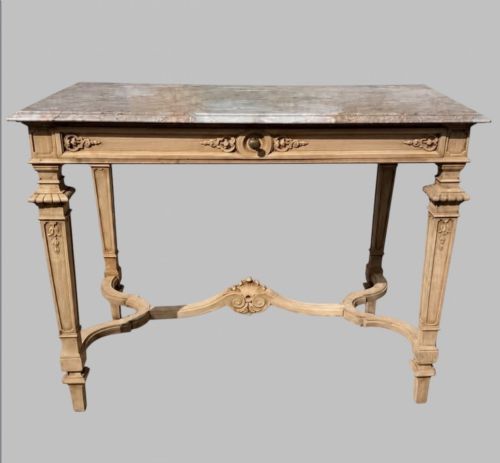
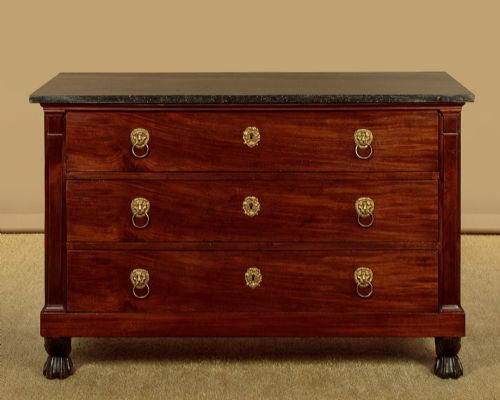
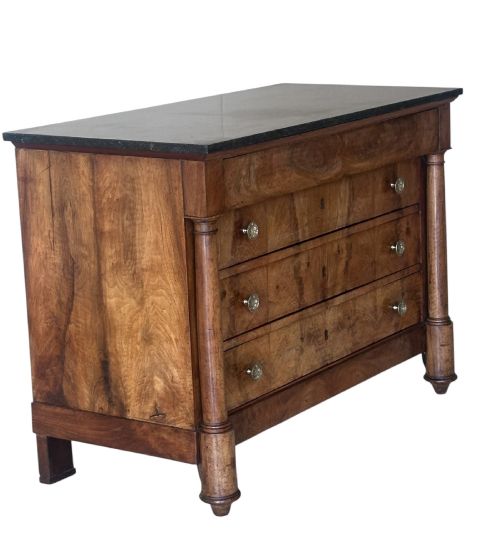
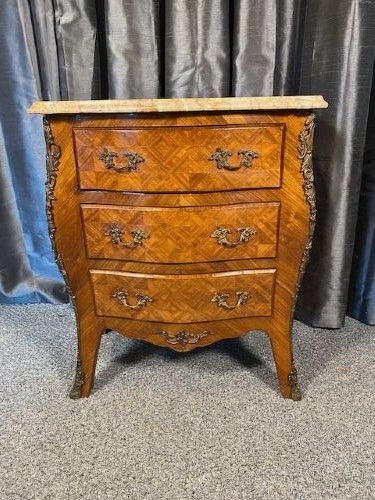
When searching for french marble top drawers, buyers encounter substantial case pieces designed for domestic storage, spanning centuries of craftsmanship. The selection encompasses full-sized commodes, slender bedside cabinets, and diminutive bedside chests intended for domestic quarters. These pieces range from eighteenth-century provincial examples to later revival models produced in the nineteenth and twentieth centuries.
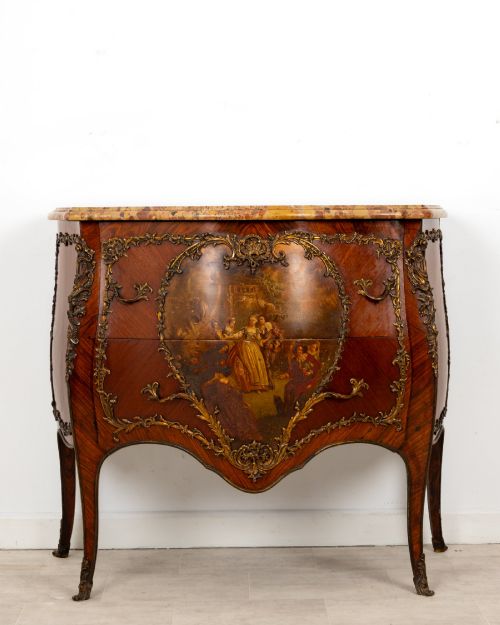
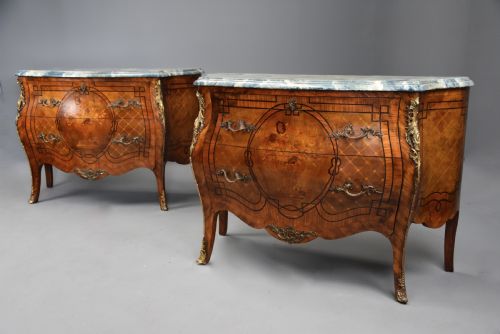
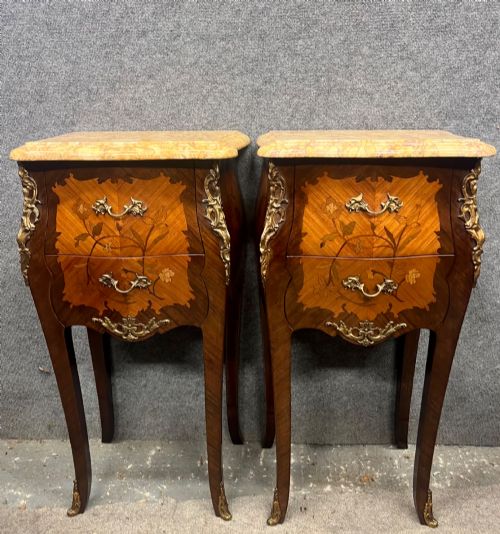
The dominant forms on this page include commodes with serpentine or bombe profiles alongside matched pairs of bedside tables. Woods such as walnut, mahogany, and kingwood frequently provide the structural carcase beneath fitted stone slabs. Oak, cherrywood, and painted finishes also appear regularly among provincial and regional variations.
Materials and construction
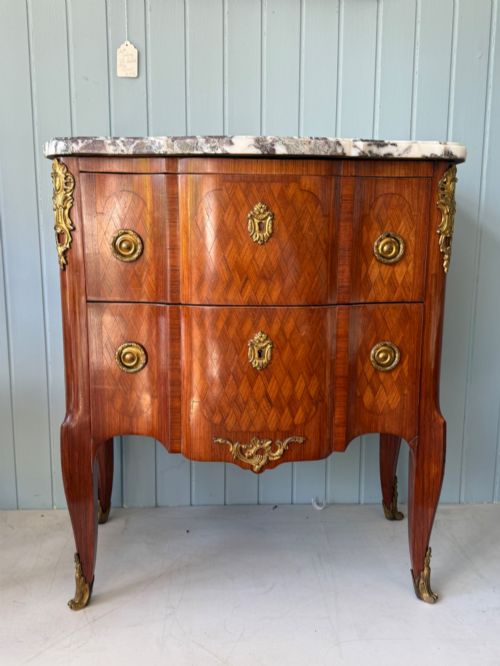
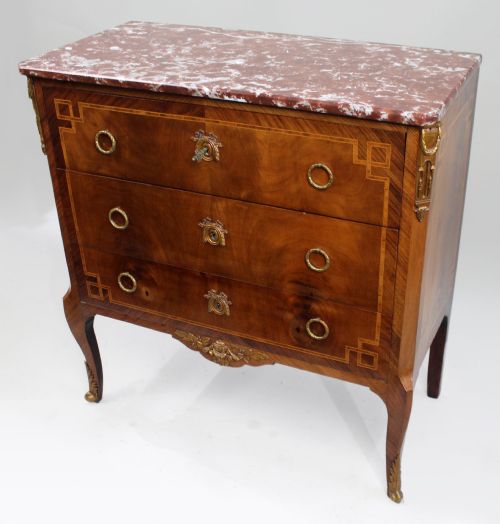
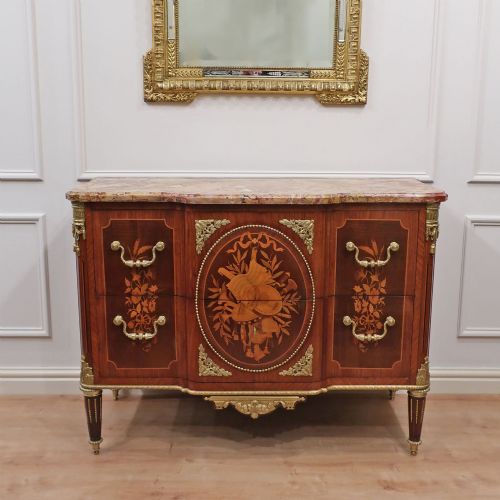
Cabinetmakers constructed the main carcases using native and exotic timbers, often applying decorative veneers in marquetry and parquetry patterns. Walnut, mahogany, and satinwood formed the foundational framework, while specialised pieces incorporated kingwood and vernis martin finishes. These wooden structures support heavy stone surfaces cut to follow the precise contours of the top.
Mounts cast in bronze and ormolu embellish many of the finer examples, accentuating corners, handles, and apron rails. The marble slabs themselves vary in colour and geological type, including grey, rouge, and verde alpi varieties. Each stone top sits unattached or bedded lightly upon the wooden frame, protected by polished edges matching the overall style of the piece.
Listings feature walnut, mahogany, and kingwood as primary timbers supporting marble surfaces across multiple centuries.
Assessing quality and execution
The standard of execution reveals itself in the precision of the veneer work and the crispness of the bronze mounts. Superior pieces display seamless parquetry geometry and substantial bronze castings with defined chasing. Lesser examples rely on simpler timber selections and stamped mounts with minimal hand-finishing.
The choice and thickness of the marble slab further differentiate the tier of production. Dense, richly veined stone fitted with precise edge moulding indicates higher workshop standards. Simpler secondary timbers used in internal drawer linings also signal the distinction between custom Parisian ateliers and regional provincial joinery.
Jacques Bircklé
The French Marble Top Drawers Glossary
- Commode
- A low chest of drawers originating in France, typically featuring multiple drawer tiers and a decorative top surface.
- Ormolu
- Gilded bronze mounts applied to furniture edges and handles, providing metallic contrast against dark wood veneers.
- Marquetry
- The art of applying small pieces of veneer to a structure to form decorative patterns and pictorial designs.
- Bombe
- A swelling, convex furniture contour that curves outward in outward-bulging profiles.
- Parquetry
- Geometric wood mosaic work utilised on drawer fronts and top surfaces to create repeating patterns.
French Marble Top Drawers: Frequently Asked Questions
How do I date a french marble top commode?
Dating relies on examining the construction methods of the interior carcase, the timber species used for secondary woods, and stylistic indicators such as revival motifs. Eighteenth-century models display hand-cut dovetails and regional timber choices, while nineteenth-century revival pieces often utilise standardised machine-sawn components.
The integration of the stone top provides additional context, as edge profiles and marble varieties shifted across stylistic periods from Louis XV curves to Empire severity and later eclectic revivals.
Can the marble top be removed safely?
Most stone slabs rest unattached directly upon the timber framing of the chest, held in place purely by their own substantial weight. Lifting the marble requires multiple people to distribute the load evenly and prevent chipping along the polished edges.
How should I maintain the wooden carcase and stone?
Wood surfaces benefit from periodic application of appropriate natural waxes to nourish the grain and preserve the finish. Avoid silicone-based polishes that degrade antique varnishes over time.
The marble requires simple cleaning with mild, pH-neutral soap and warm water, keeping acidic liquids away from the porous surface to prevent staining.
Were bedside cabinets originally made as pairs?
Bedside cabinets frequently appear as matched pairs intended to flank a bed, though single survivors also occur regularly. Matching pairs exhibit mirrored veneer patterns and identical hardware placement.