


French Mahogany Stool
A french mahogany stool brings warmth and tactile upholstery to a room, offering both quiet utility and classical proportion.
French Mahogany Stool
When you search for a french mahogany stool, you encounter a selection of seating furniture rooted in nineteenth century design, including footstools, piano stools, and window seats. These pieces range from simple nineteenth century forms to more elaborate examples reflecting French Empire and Rococo Revival styles.
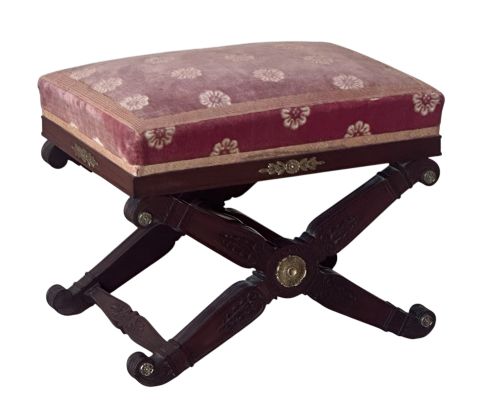
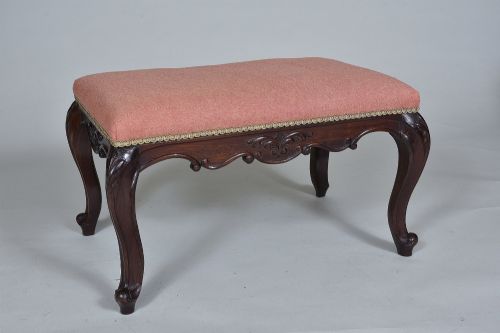
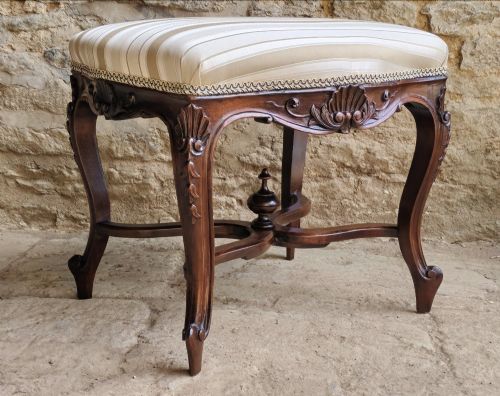
The most common versions on this page are nineteenth century pieces featuring mahogany frames and cabriole legs or X frame constructions. Alongside standard footstools, the selection includes adjustable circular piano stools and ottomans paired with velvet, damask, or tapestry upholstery.
Originating predominantly from the nineteenth century, these stools combine timber structures with varied fabric coverings. Collectors and decorators choose them to add traditional character and functional seating to drawing rooms or bedrooms.
What varies in quality
Quality in a french mahogany stool rests upon the crispness of the timber carving and the architectural balance of the frame. Strong proportions in the cabriole legs or X frame support distinguish finer examples from standard production.
The sophistication of decorative mounts, such as ormolu or brass detailing, elevates certain pieces. Additionally, the integration of original adjustment mechanisms and the retention of period textiles influence the standing of an individual stool.
Swan neck details occasionally peek out from piano stools, proving even timber can develop a sense of drama.
The French Mahogany Stool Glossary
- Cabriole leg
- A furniture leg that curves outward and then tapers inward, finishing in a pad or scroll foot. This form draws inspiration from animal legs and appears frequently on eighteenth and nineteenth century seating.
- X frame
- A structural base formed by two intersecting curved or straight members creating an X shape. This configuration provides sturdy support for folding or stationary stools.
- Ormolu
- Gilt bronze ornamentation applied to furniture mounts and decorative objects. It adds metallic contrast to the dark mahogany wood.
- Damask
- A reversible figured fabric woven on a jacquard loom with patterns formed by contrasting warps and wefts. It provides a textured surface frequently used for period upholstery.
French Mahogany Stool: Frequently Asked Questions
How were french mahogany stools originally used?
These stools served practical roles as footstools, seating at pianos, or window seats in period interiors. Their movable nature allowed them to be placed easily around drawing rooms and chambers.
Larger versions and ottomans provided comfortable foot rests or additional informal seating for guests during social gatherings.
How do I care for mahogany and antique upholstery?
Protect the mahogany wood by keeping the stool away from direct sunlight and sudden temperature changes that can dry out the timber. Gentle dusting with a dry cloth maintains the polished surface.
Vacuum upholstered surfaces carefully with a soft brush attachment to remove dust without stressing old fabrics. Professional cleaning is recommended for antique velvet or tapestry coverings.
How can I tell the difference between Empire and Rococo styles?
French Empire pieces display classical symmetry, architectural restraint, and often incorporate brass or ormolu mounts inspired by antiquity. The lines tend to be more formal and severe.
Rococo Revival stools feature asymmetric curves, naturalistic leaf motifs, and sinuous cabriole legs. These designs emphasise flowing movement and decorative ornamentation.
Are piano stools adjustable?
Many period piano stools feature a central screw mechanism that allows the circular wooden seat to be raised or lowered. This adjustment accommodated different players at the keyboard.
Inspect the under-seat mechanism gently to understand how the height was altered. Not all stools in this category possess this functional capability.