



French Mahogany Secretaire
When you handle a french mahogany secretaire, you hold a piece of history designed for correspondence and hidden storage.
French Mahogany Secretaire
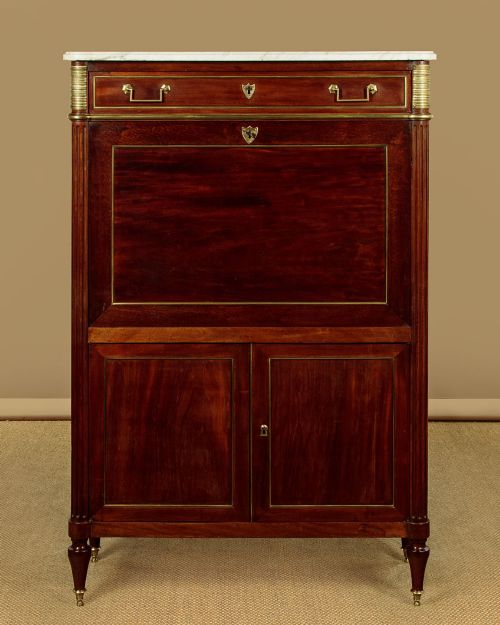
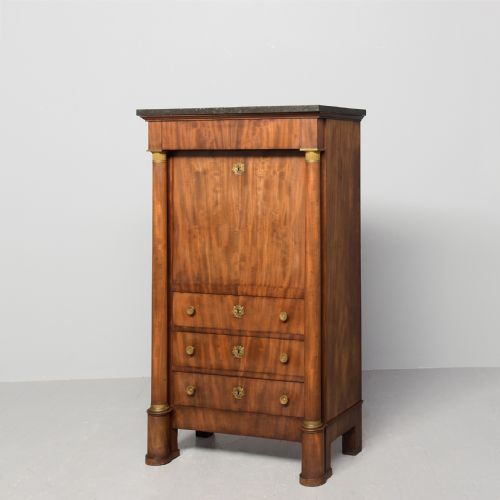
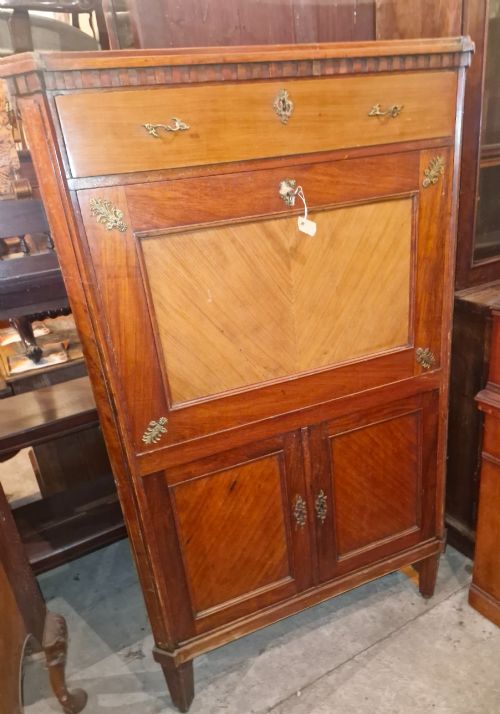
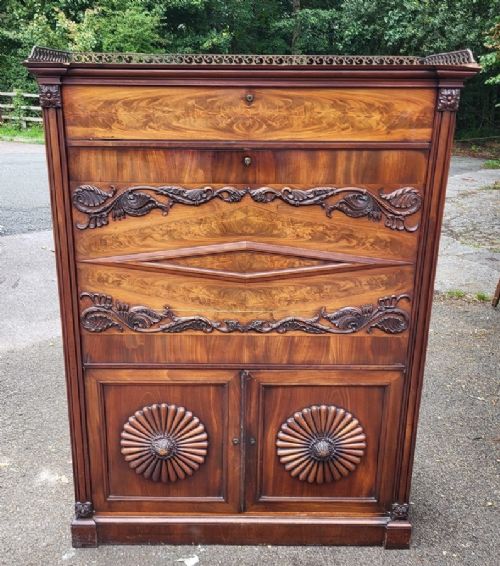
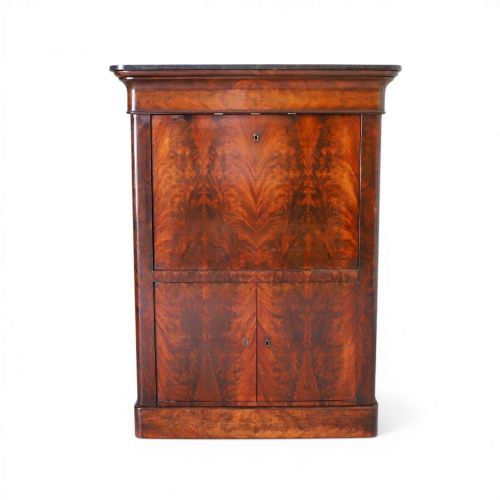
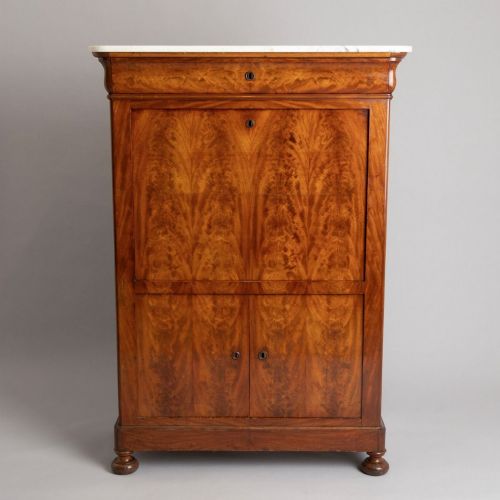
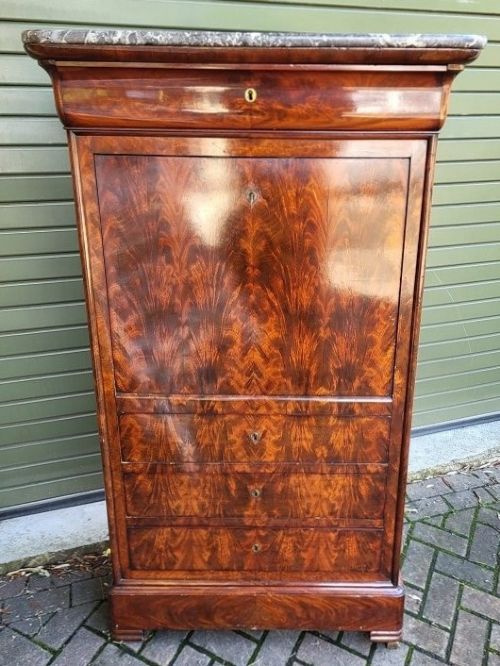
A french mahogany secretaire typically appears as a tall secretaire a abattant with a drop-front writing surface concealing fitted internal drawers. Buyers encounter these writing cabinets frequently in nineteenth century forms alongside cylinder desks and chests of drawers.
The styles span French Empire, Louis Philippe, Directoire, and Victorian periods, bringing distinct regional interpretations to the classic form. Many examples incorporate a marble top above the main body, adding weight and a cool surface texture.
Makers often utilised flame mahogany veneers across the front to create striking grain patterns that catch the light. These pieces served practical domestic and professional roles, housing writing materials while keeping correspondence secure.
Materials and construction
Cabinet makers built these pieces using solid mahogany and mahogany veneers over secondary timbers such as oak and walnut. Flame mahogany selection on primary surfaces provided intense figuring that defined the visual character of the piece.
Marble tops were cut and polished to fit precisely onto the upper surfaces of the cabinets. Metal elements such as brass mounts, ormolu details, and occasional mother of pearl inlay accentuated the architectural lines of the furniture.
Listings feature pieces spanning the eighteenth, nineteenth, and early twentieth centuries, constructed in mahogany, flame mahogany, rosewood, and walnut.
Quality variations
The calibre of a piece rests in the selection of the mahogany veneer and the precision of the cabinet work inside the drop-front compartment. Superior examples display seamless book-matching on the fall-front and tightly fitted internal pigeonholes and secret drawers.
The integration of decorative elements like cast ormolu mounts and heavy marble slabs distinguishes higher-grade pieces from simpler provincial versions. Original hardware and intact internal mechanisms elevate the integrity of the writing cabinet.
The French Mahogany Secretaire Glossary
- Secretaire a abattant
- A tall vertical cabinet featuring a hinged drop-front writing flap that conceals internal compartments. This form represents the majority of pieces seen in this category.
- Flame mahogany
- A veneer cut from the fork of the mahogany tree where the branch meets the trunk. It creates a distinctive rippled flame pattern across the drawer fronts and doors.
- Ormolu
- Gilded bronze ornamentation applied to furniture mounts and architectural details. It provides a bright metallic contrast against dark mahogany surfaces.
- Cylinder desk
- A writing desk featuring a rolling curved shutter that encloses the writing surface and internal pigeonholes. These desks offer a different mechanism for securing private correspondence.
- Marble top
- A polished stone slab fitted to the top surface of the cabinet. This heavy addition protects the wood and introduces a contrasting mineral texture.
French Mahogany Secretaire: Frequently Asked Questions
What is a secretaire a abattant?
A secretaire a abattant is a tall writing cabinet with a hinged drop-front flap that opens to reveal small drawers and pigeonholes.
When closed, the drop-front conceals correspondence and presents a clean veneered facade.
How do I tell Empire style from Louis Philippe?
Empire style pieces often feature bold architectural proportions, dark mahogany, and prominent ormolu mounts.
Louis Philippe examples tend toward simpler, more restrained curves with minimal ornamentation and smooth mahogany surfaces.
How do I use a cylinder desk?
A cylinder desk operates by sliding a curved wooden shutter backwards into the body of the desk.
This action simultaneously extends or uncovers the sliding writing surface and internal compartments.