


French Mahogany Display Stand
These french mahogany display stand pieces combine rich timber with glass, marble, and gilt metal to show off fine objects.
French Mahogany Display Stand
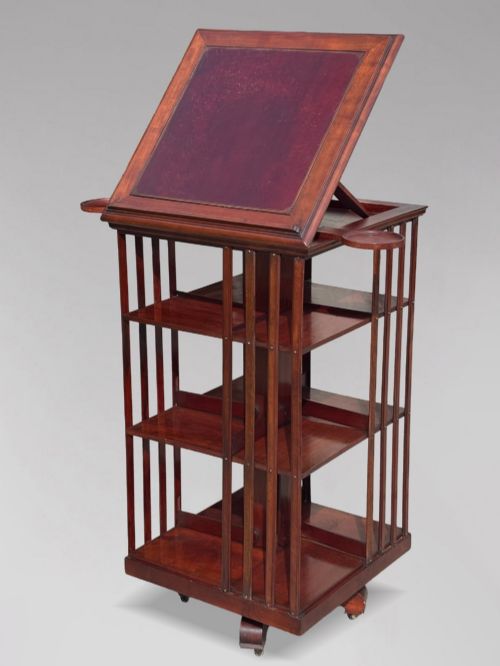
A french mahogany display stand covers a range of multi-tiered furniture designed to hold and exhibit precious items in the home or shop. Buyers searching this phrase look for functional pieces that elevate ornaments, books, or hats using rich timber.
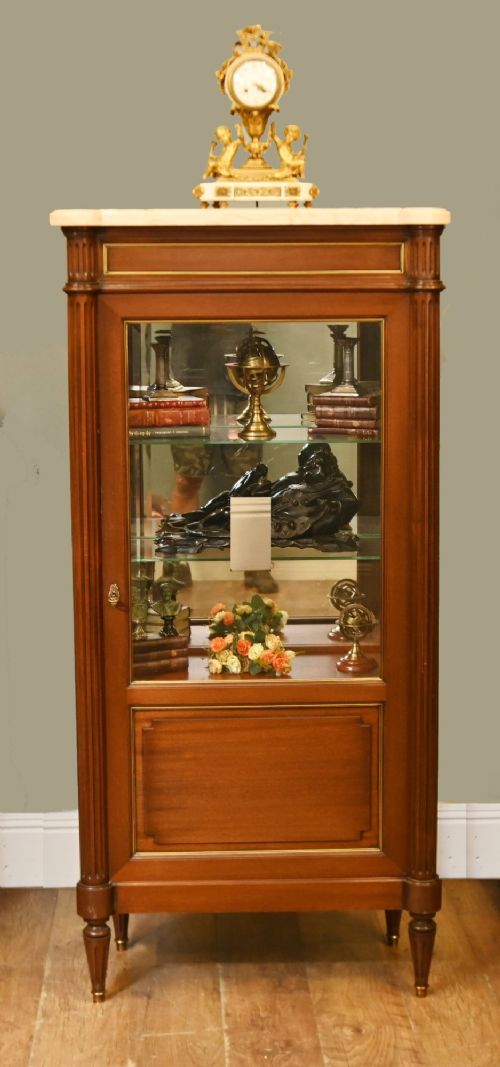
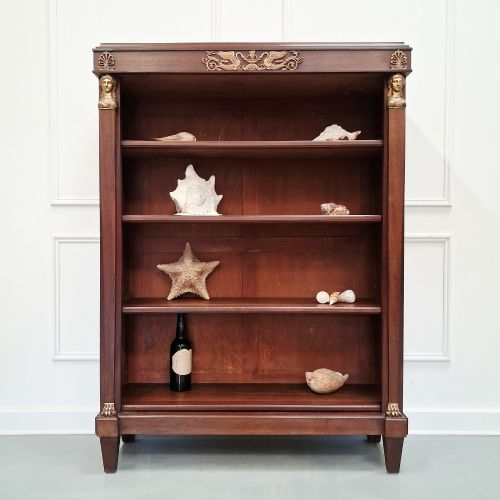
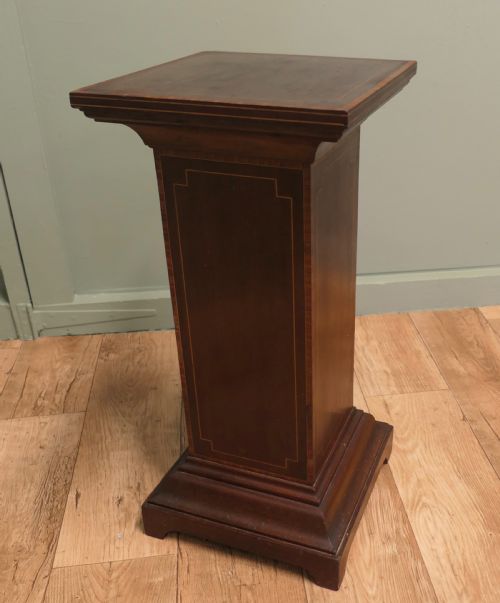
The pieces appearing on this page span the nineteenth century into the Edwardian period, incorporating forms such as etageres, vitrines, bijouterie tables, and pedestals. Makers utilised styles including Louis XV, Louis XVI, French Empire, and neoclassical designs.
Among these forms, etageres and vitrines emerge frequently, alongside occasional tables and specialised shop display stands for hats and wigs. Each object balances structural stability with decorative elegance, often incorporating brass mounts and marble tops.
How they were made
Craftsmen built these structures primarily using mahogany, frequently enhancing surfaces with marquetry and inlay work in satinwood and boxwood. The joinery supports multiple tiers, shelves, and glazed cabinet enclosures designed to bear weight while maintaining slender profiles.
Metalwork played a defining role in construction, with brass, ormolu, and gilt bronze utilised for mounts, gallery rails, and framing. Marble slabs provided heavy, durable tops for tables and stands, while glass formed panels for vitrines and bijouterie cabinets.
Listings span the nineteenth century and the Edwardian era, featuring mahogany combined with marble, brass, and ormolu.
What varies in quality
Quality rests in the precision of the timber inlay, the crispness of the gilt bronze or ormolu mounts, and the integration of marble and glass elements. Finer pieces demonstrate seamless marquetry and robust structural joinery across multiple tiers.
The sophistication of the stylistic revival, whether Louis XV, Louis XVI, or Empire, dictates the refinement of the silhouette. Better examples balance delicate turnings and mounts with sturdy frames capable of supporting display objects securely.
The French Mahogany Display Stand Glossary
- Etagere
- A piece of furniture consisting of open shelves for displaying small objects or ornaments. These tiers rise in gradations from bottom to top.
- Vitrine
- A glass-fronted cabinet designed for displaying fine porcelain, curiosities, or books. The glazed panels protect contents while offering all-round visibility.
- Bijouterie table
- A shallow glass-topped table specifically made for displaying jewellery and small precious trinkets. Often lined with velvet or silk inside.
- Ormolu
- Gilded bronze ornamentation applied to the mounts and feet of furniture. This technique adds metallic lustre against the dark mahogany timber.
- Marquetry
- Decorative veneer patterns formed by fitting together small pieces of coloured wood, boxwood, and satinwood. It creates pictorial or geometric designs on tabletops and doors.
French Mahogany Display Stand: Frequently Asked Questions
What is a French etagere used for?
An etagere provides multiple open tiers for holding and displaying decorative items, porcelain, and books around the room. It organises collections vertically without blocking light.
In period interiors, these tiered stands served as central display points for prized possessions and ornaments.
How do I clean a marble top stand?
Marble surfaces require gentle wiping with a damp cloth and mild, pH-neutral soap to avoid damaging the stone. Strong acids and abrasive cleaners will etch the polish.
Dry the marble thoroughly after cleaning to maintain its smooth finish and prevent water rings.
Where should I place a vitrine cabinet?
Vitrines suit drawing rooms, hallways, or reception spaces where glass panels can catch natural light safely. Keep them away from direct sunlight to protect interior contents.
Ensure the floor is level so the glazed doors hang true and open without rubbing against the frame.
What distinguishes Louis XVI style furniture?
Louis XVI style pieces favour straight tapered legs, neoclassical symmetry, and restrained geometric ornamentation. This contrasts with the earlier curved lines of Louis XV design.
Ornate gilt bronze mounts and marquetry frequently accent the rectilinear mahogany frames of this period.