



French Mahogany Accent Table
A french mahogany accent table brings architectural presence and polished warmth to a room, offering a surface that is both decorative and useful.
French Mahogany Accent Table
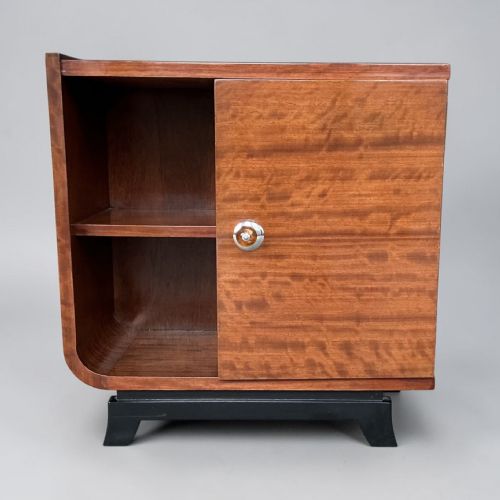
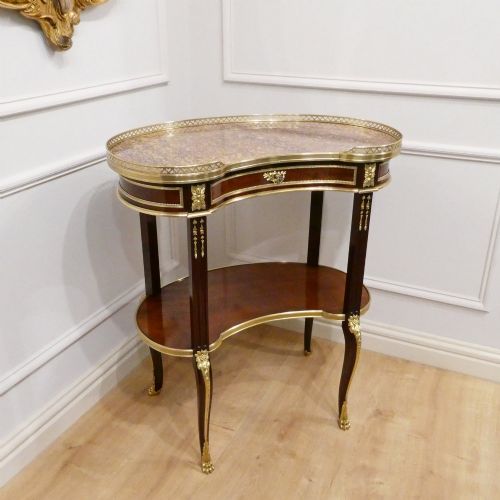
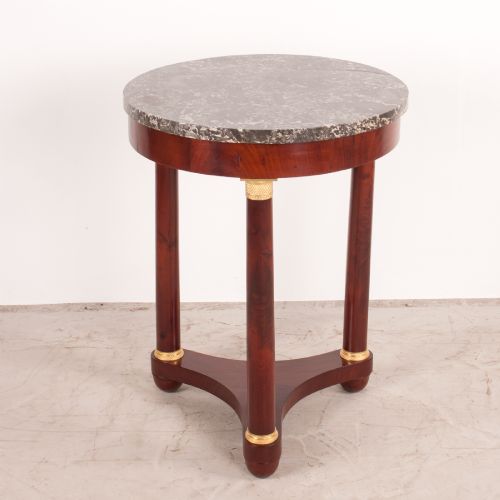
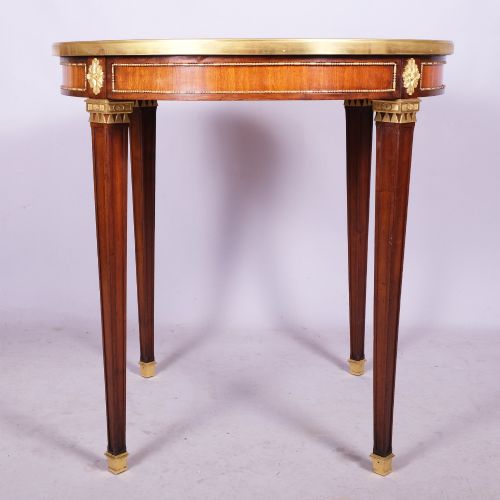
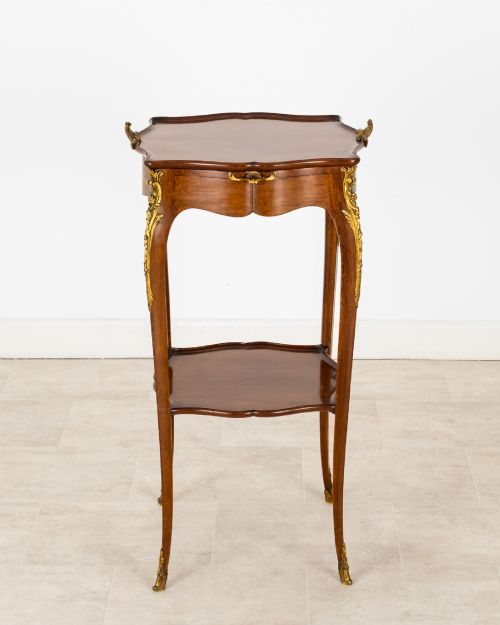
When you search for a french mahogany accent table, you encounter round guéridons, occasional tables, and lamp tables designed for varied domestic roles. These pieces emerge from periods ranging across the nineteenth and early twentieth centuries, spanning styles from French Empire and Louis XVI to Art Deco.
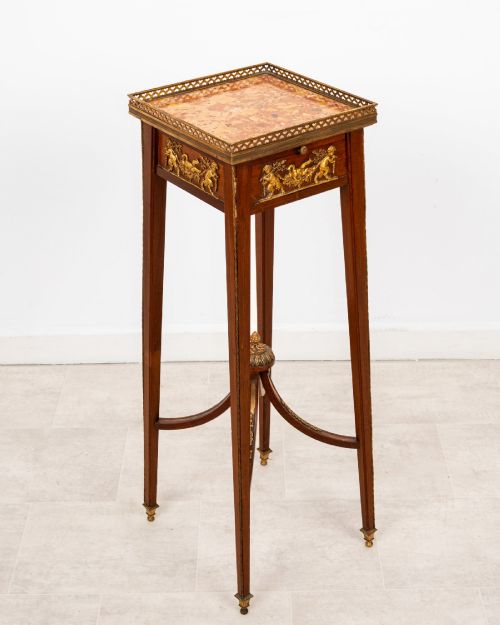
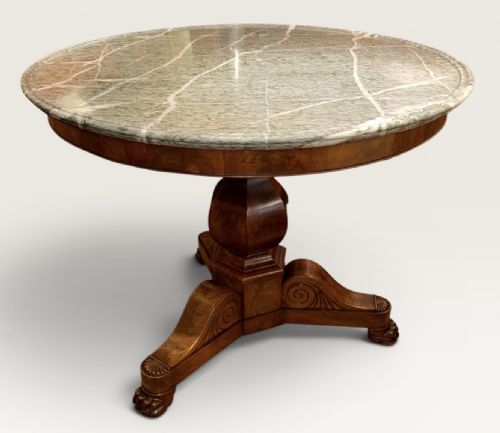
The most common forms on this page are circular lamp and centre tables, often topped with marble and supported by brass or ormolu mounts. Alongside these stand occasional tables, side tables, and occasional cabinets showing classical revivals.
How they were made
Makers built these tables using solid mahogany or mahogany veneers applied to secondary timbers, frequently incorporating satinwood and rosewood for contrasting marquetry inlays.
Metal ornamentation plays a central role in the construction, utilising cast ormolu, gilt bronze, and brass galleries, mounts, and hoof feet fixed to the wooden frames.
Many examples feature inset marble tops, usually in white, black, or rouge varieties, fitted precisely into the mahogany or bronze rims of the table surfaces.
Materials recorded include Mahogany, Brass, Marble, Ormolu, Gilt Bronze, Rosewood, Satinwood, and Marquetry.
What varies in quality
Quality rests upon the crispness of the cast metal mounts and the depth of the mahogany grain rather than mere age or decorative overload. Finer examples display hand-chased ormolu details that integrate seamlessly with the timber framing.
The precision of the marquetry inlay and the stability of the joinery distinguish workshops of high repute from simpler commercial production. Superior tables maintain clean lines in their cabriole or pillar legs without structural compromise.
Maison Millet·François Linke·A Hugnet Paris·Haentgos Freres Paris·Gillows
The French Mahogany Accent Table Glossary
- Guéridon
- A small round French table supported by a central pillar or a suite of legs. These pieces frequently feature marble tops and gilt bronze mounts.
- Ormolu
- Gilding technique involving the application of finely ground gold-mercury amalgam to a bronze object. It provides the bright metallic highlights seen on many nineteenth-century mounts.
- Marquetry
- Decorative veneer work arranged in geometric or floral patterns using various coloured woods. It transforms plain surfaces into pictorial displays.
- Bouillotte
- A small French card table featuring a raised gallery edge to prevent counters from falling. They typically incorporate marble tops and candleholders.
French Mahogany Accent Table: Frequently Asked Questions
What is a French mahogany accent table used for?
These tables serve primarily as lamp stands, bedside surfaces, or central display pieces in a reception room. Their compact proportions allow them to occupy corners or beside seating without crowding the floor.
Historically, specific forms like bouillotte tables held card games or held illumination, while guéridons functioned as movable stands for decorative objects.
How do I identify a Louis XVI style table?
Louis XVI style tables generally display straight tapered legs, often fluted, reflecting classical architectural forms. They favour restrained symmetry and rectilinear geometry over curved lines.
Ormolu mounts on these pieces typically depict classical motifs such as ribbons, beads, and acanthus leaves rather than heavy rococo scrolls.
Are marble tops original to these tables?
Many nineteenth-century French tables were manufactured specifically to house inset marble slabs, particularly white, rouge, or black varieties. These slabs added weight and a cool, durable surface for wine or lamps.
While replacements occur, the presence of fitted marble usually aligns with the original design intentions of the period.
How do I care for mahogany and ormolu?
Mahogany requires dusting with a dry cloth and occasional feeding with quality wax to preserve the natural grain and prevent the timber from drying out. Avoid placing these tables in direct sunlight or near heat sources.
Ormolu mounts should be cleaned gently without abrasive metal polishes, which can strip the original gilding from the bronze underneath.