


French Neoclassical Centre Table
A french neoclassical centre table anchors a room with architectural dignity, bringing classical proportion and fine mounts to the heart of an interior.
French Neoclassical Centre Table
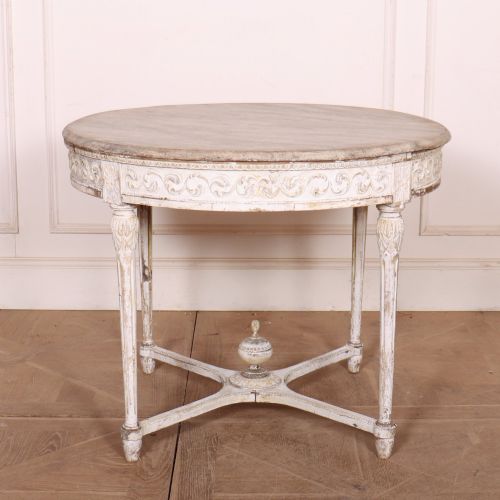
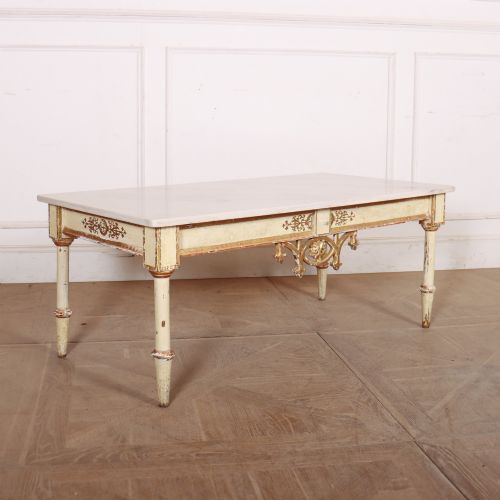
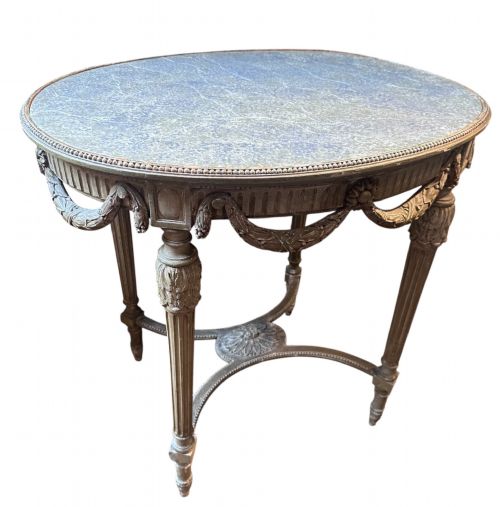
A french neoclassical centre table serves as a freestanding focal point, designed to be viewed from all sides rather than pushed against a wall. The pieces collected under this search phrase span formal nineteenth-century examples and later revivals, frequently taking the form of round gueridons or architectural occasional tables.
Buyers frequently encounter variations rooted in the Louis XVI style and the French Empire period, which rely on strict symmetry, restrained geometry, and classical motifs. These tables bridge the gap between grand reception rooms and smaller domestic spaces through related forms such as coffee tables and side tables.
The materials and construction reflect a lineage of cabinet-making that stretches from the nineteenth century into the twentieth, encompassing both French production and international interpretations. While many pieces retain their original function as centre tables, others adapt the same vocabulary for use as coffee tables.
Materials and construction
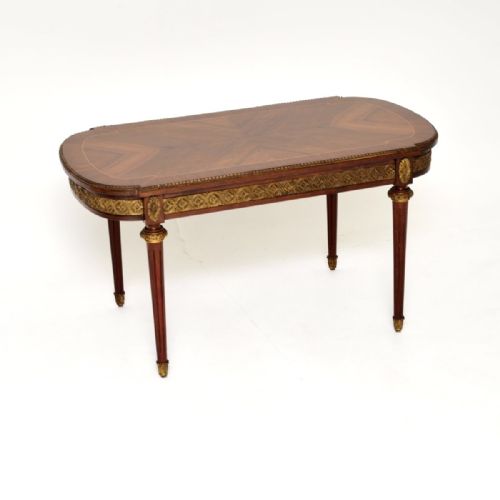
Makers built these tables using dense timbers such as mahogany, walnut, and satinwood, often applying intricate inlay or ebonised details to create visual depth. Structural integrity relies on solid secondary woods beneath decorative veneers and polished surfaces.
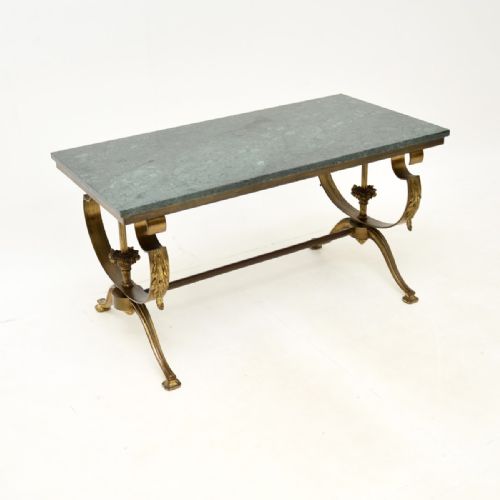
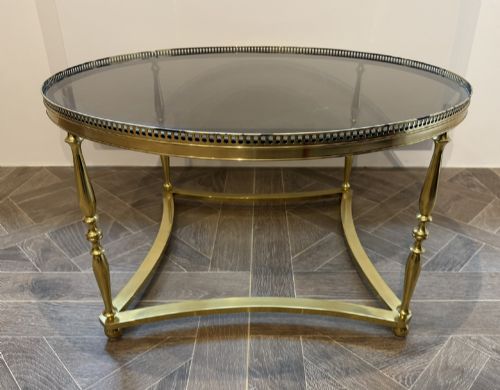
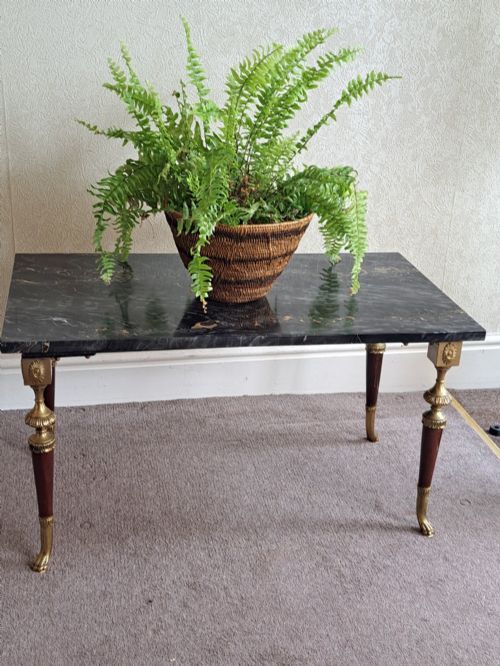
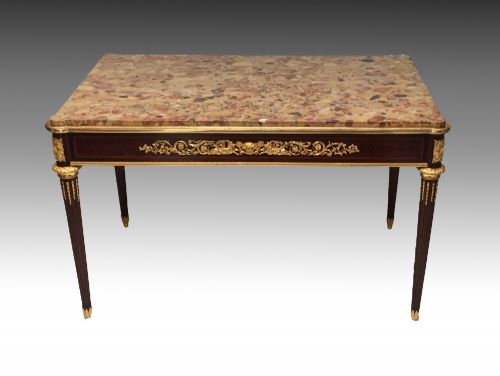
Marble tops, ranging from white varieties to black and porphyry stone, provide a heavy, durable surface supported by wooden frames. Cast bronze and ormolu mounts, along with polished brass elements, accent the corners, friezes, and legs with classical detail.
Several tables swap standard wooden supports for cast brass swans and sculpted ram heads, watching over the room with stern Victorian resolve.
Markers of quality
The refinement of the cast bronze or ormolu mounts distinguishes superior examples from standard production, as sharper chisel work and heavier gilding indicate greater workshop investment. Similarly, the selection of marble and the precision of its fit within the wooden frame signal the original maker's standard.
Joinery and timber choice dictate the structural longevity of the table, with figured veneers and careful matching across the top surface elevating a piece above simpler painted or plain alternatives. The integration of sculptural details, such as carved swan or ram head motifs, requires both artistic fluency and technical skill.
Ince & Mayhew
The French Neoclassical Centre Table Glossary
- Ormolu
- Gilt-bronze ornaments applied to furniture, cast and chased by hand to provide sharp classical detail. This decorative technique characterises much of the French Empire output.
- Gueridon
- A small round table, typically supported by a central pillar or three classical legs. The form originated in the seventeenth century and remained popular through the nineteenth.
- Specimen wood
- An assemblage of various ornamental timbers inlaid to create geometric patterns or pictures. Cabinet-makers used these diverse woods to demonstrate technical mastery.
- Porphyry
- A hard igneous rock with crystal inclusions, valued for its purple-red colour and association with antiquity. It appears frequently in high-status table tops.
- Frieze
- The horizontal band running directly beneath the table top, often decorated with brass mounts or inlaid wood. This section provides structural stability to the frame.
French Neoclassical Centre Table: Frequently Asked Questions
Where should I place a centre table?
A centre table belongs in the middle of a room where it can function independently of walls, acting as a natural gathering point or a surface for lamps and objects.
Because these pieces are finished on all sides, they work effectively in large hallways, libraries, or spacious sitting rooms rather than tight corners.
How do I care for a marble top?
Marble requires protection from acidic substances like wine, citrus, and vinegar, which can etch the polished surface upon contact. Wipe spills promptly with a damp cloth and mild soap.
Applying a neutral stone wax occasionally helps maintain the sheen and guards against minor staining without altering the natural patina.
What is the difference between Empire and Louis XVI styles?
Louis XVI style draws inspiration from ancient Greek and Roman architecture through straight tapered legs, fluting, and restrained geometric symmetry. It feels lighter and more delicate in its proportions.
French Empire design, developed under Napoleon, is heavier and more martial, incorporating rich mahogany, bold ormolu mounts, and direct references to Egyptian and Roman conquest.
Can I use an antique centre table as a coffee table?
Many tables listed as centre tables or gueridons share dimensions and heights that suit modern living spaces, making them practical for daily use beside low seating. Buyers often select these pieces specifically for this purpose.
One should check the height of the specific piece against existing seating to ensure comfortable clearance for daily items.