


French Lustre Lighting
French lustre lighting brings brilliant crystal drops and gilded bronze work together to illuminate period interiors with undeniable elegance.
French Lustre Lighting
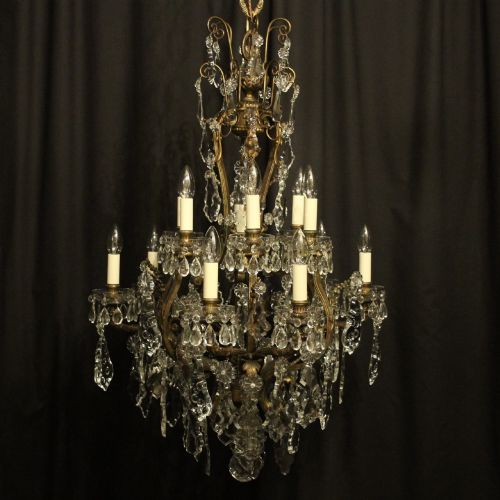
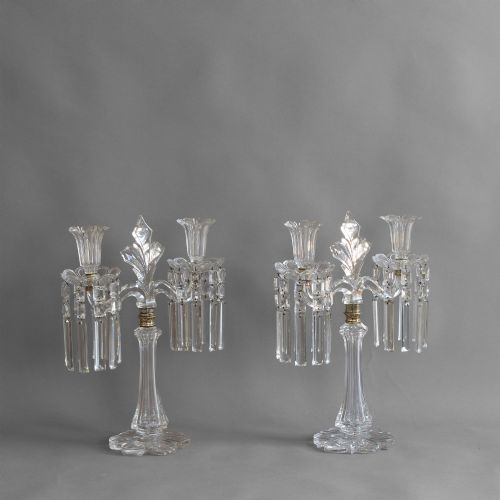
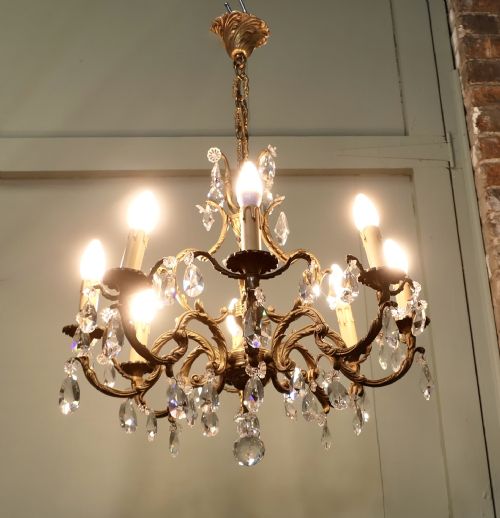
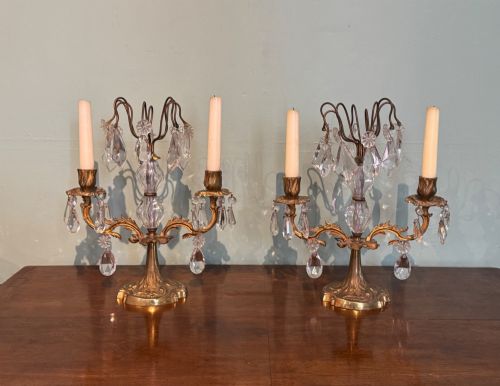
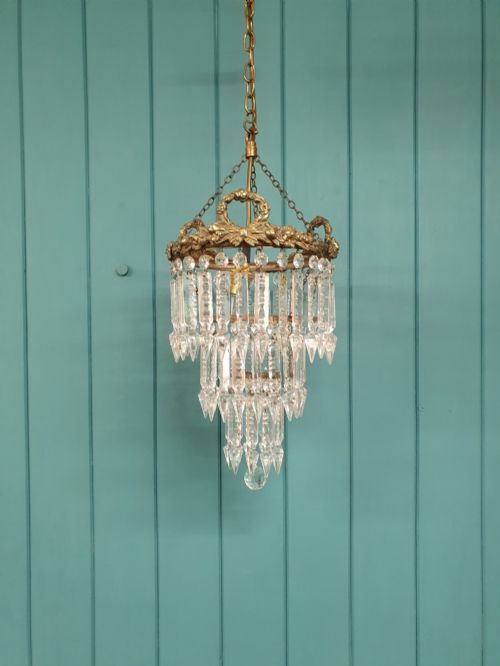
When you search for french lustre lighting, you encounter grand multi-light chandeliers and delicate table pieces designed to refract candlelight and gaslight. These pieces originate primarily from the nineteenth and early twentieth centuries, spanning styles from Regency to Edwardian.
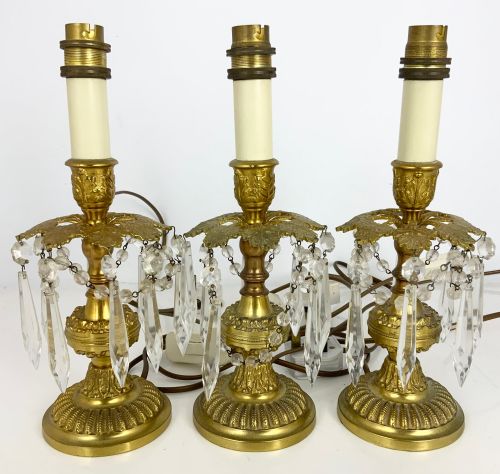
The most common forms on this page include chandeliers hung with cut glass drops, alongside pairs of table lustres and wall lights. Makers utilised brass, bronze, and ormolu to form the structural mounts that support the glass elements.
Originating largely from continental workshops, these fixtures reflect French design influences such as Empire and Rococo. Buyers select them to bring period authenticity and glittering focal points to principal rooms.
Judging quality in lustre pieces
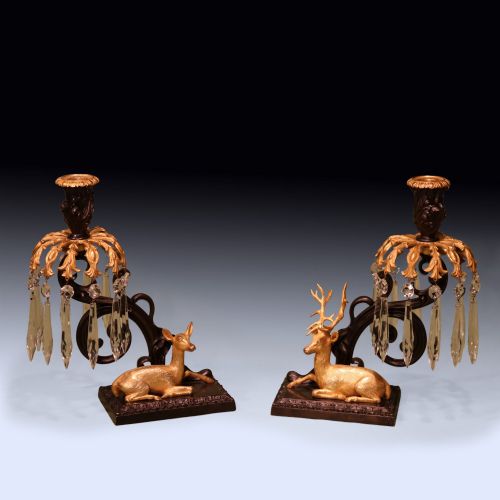
Quality rests heavily on the crispness of the metal casting and the depth of the gilding. Finer pieces display sharply rendered details on figural mounts like cherubs or stags, whereas lesser examples appear soft and flat.
The clarity and cutting of the glass drops dictate the upper tier of pieces. Hand-cut crystal exhibits sharp facets that catch the light cleanly, distinguishing itself from simpler moulded glass.
Several items include sculptural bronze stags, does, and cherubs holding up the light.
The French Lustre Lighting Glossary
- Lustre
- A glass pendant or drop hung from a candelabra or chandelier to refract light. These drops are typically cut or moulded into spear, prism, or pear shapes.
- Ormolu
- Gilded bronze produced by applying a mercury and gold amalgam to a bronze base. This technique creates a rich, durable golden surface seen on finer metal mounts.
- Candelabra
- A branched candlestick designed to hold multiple candles simultaneously. Many examples integrate glass lustres hanging from the drip pans.
- Chandelier
- A large, branched ceiling light suspended from above. French versions frequently feature numerous lights surrounded by cascades of crystal drops.
- Opaline
- A delicate, opaque or semi-translucent glass popular in nineteenth-century decorative objects. It appears in table lustres, often tinted in soft colours.
French Lustre Lighting: Frequently Asked Questions
How do I clean a crystal chandelier?
Cleaning requires a gentle solution of warm water and mild soap applied carefully to each glass drop by hand. Avoid harsh chemicals that can strip the gilt surfaces on the metal frame.
Support each pendant from underneath while wiping it to prevent undue stress on the connecting wire pins. Let everything dry completely before relighting.
Can antique chandeliers be converted to electricity?
Most antique chandeliers on the market have already been adapted for modern electrical wiring. Professional electricians can run internal wiring through the hollow arms without altering the exterior appearance.
Ensure that any conversion uses appropriate candle-tube covers and low-heat LED bulbs to protect the antique metal and glass from excessive warmth.
Where should I hang a wall light?
Wall lights look best positioned at eye level in hallways, flanking a fireplace, or framing a large mirror in a reception room. Their reflective drops amplify ambient light in tighter spaces.
Make sure the weight of the bronze or brass fixture is anchored securely into wall studs rather than relying solely on plaster.
How do I tell Regency style from Edwardian pieces?
Regency designs lean towards classical restraint, often featuring dark patinated bronze paired with bright ormolu mounts and sparse drop arrangements. Edwardian pieces often revive earlier French aesthetics like Rococo, showing lighter frames and abundant crystal drops.
Examining the casting style and the cut of the glass usually reveals the manufacturing period.