
French Louis XVI Table
A french louis xvi table brings neoclassical symmetry and restrained proportion to a room.
French Louis XVI Table
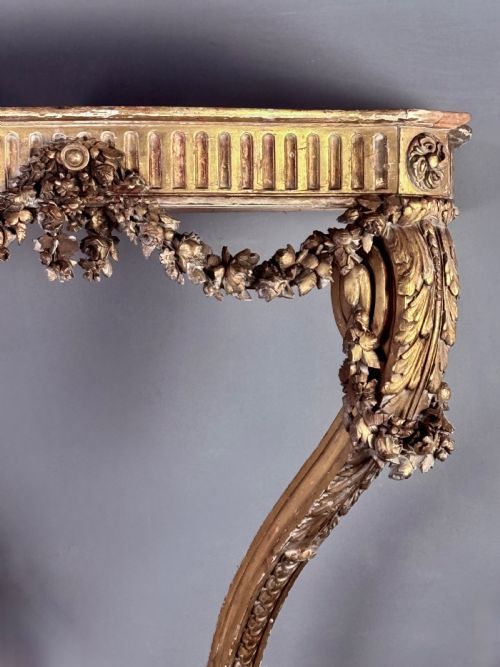
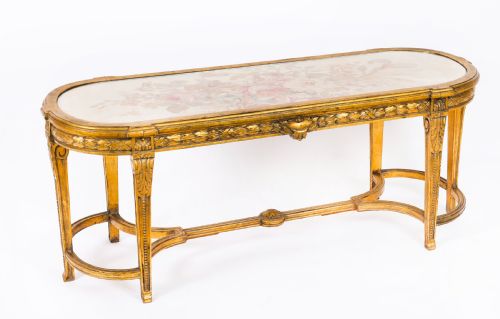
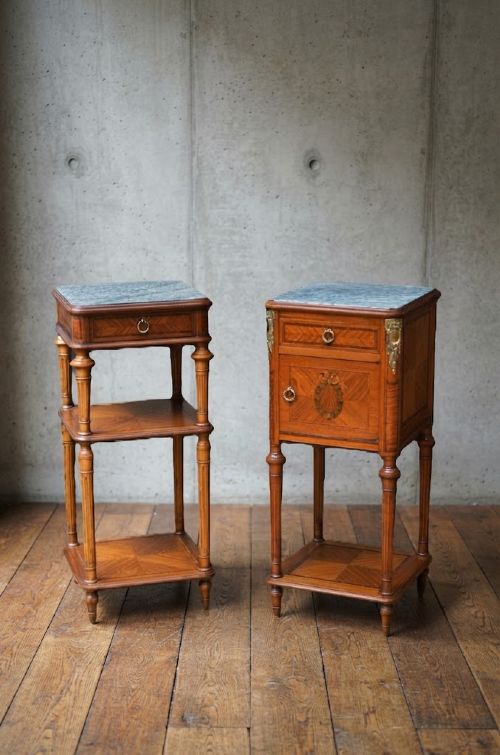
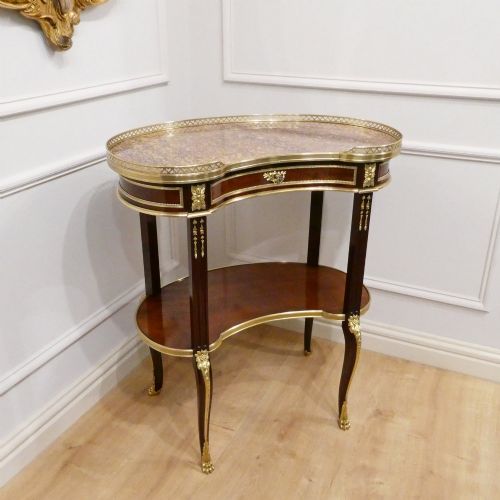
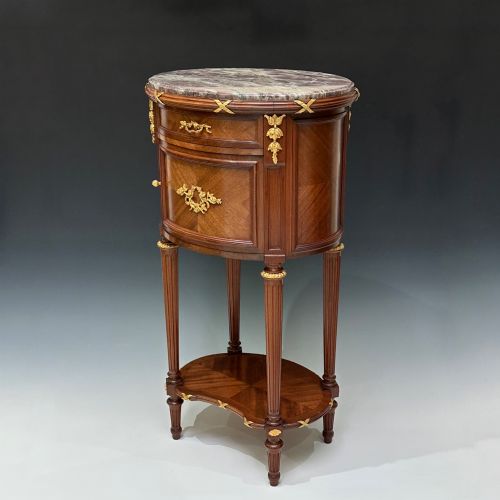
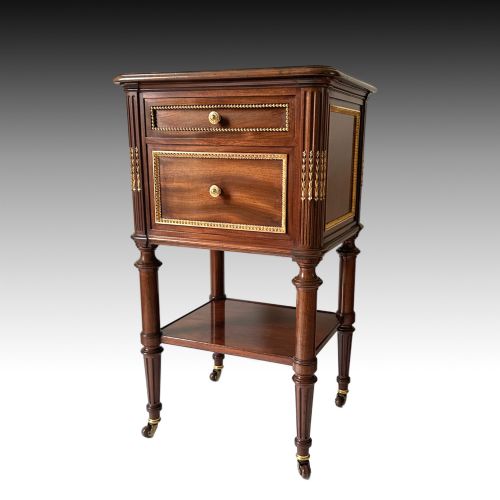
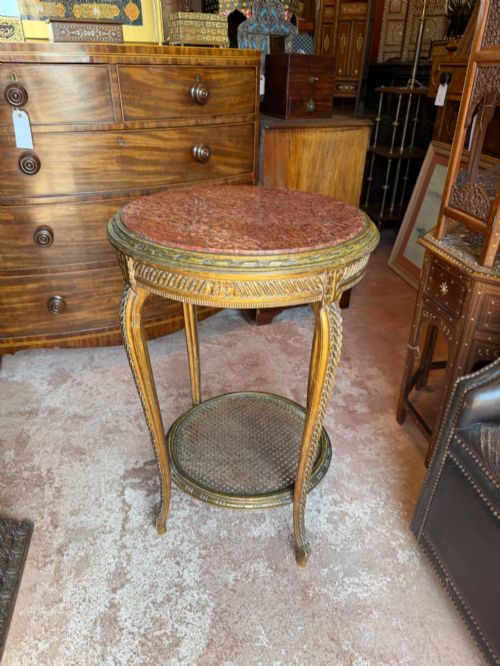
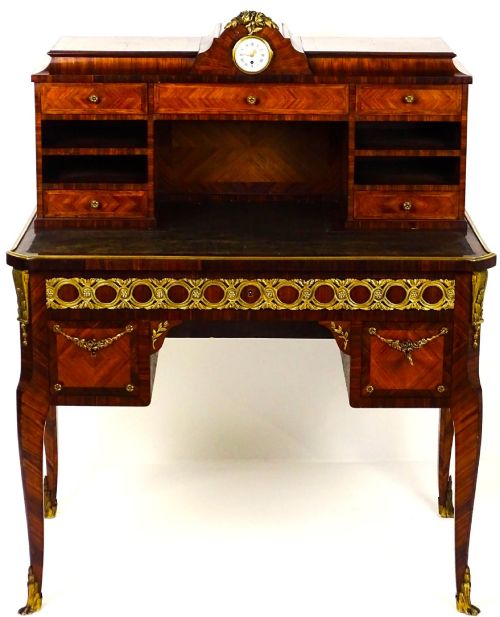
When searching for a french louis xvi table, buyers encounter a variety of forms including side tables, bedside cabinets, writing desks, and occasional tables spanning the nineteenth and early twentieth centuries. These pieces reflect the neoclassical taste of the eighteenth-century reign through straight tapered legs, fluted columns, and disciplined geometric silhouettes.
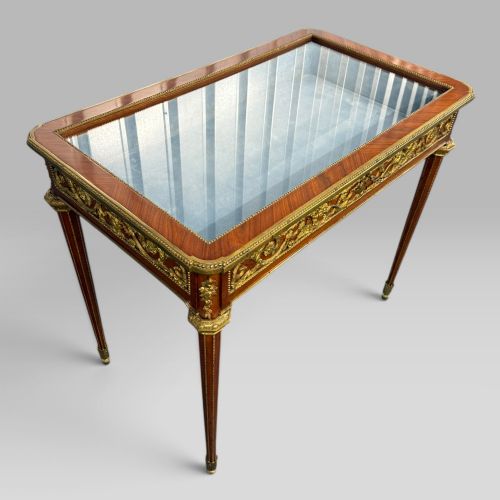
The selection ranges from compact marble-topped bedside units and bijouterie display cases to larger mahogany or kingwood bureaus plats and centre tables. Revival pieces from the nineteenth and early twentieth centuries dominate the listings, produced by both celebrated Parisian ateliers and regional workshops.
Materials and construction
Cabinetmakers utilised dense timbers such as mahogany, satinwood, walnut, and kingwood, often laid as parquetry or marquetry veneers over robust structural frames. White or coloured marble slabs frequently formed inset tops for side tables and commodes, secured by precise edge moulding.
Cast ormolu and gilt bronze mounts, handles, and sabots embellished the structural angles, while brass inlay accented the timber surfaces. Joinery relied on traditional housing and framing techniques suited to supporting heavy stone and metal elements.
Listings feature mahogany, kingwood, walnut, and satinwood, frequently paired with white marble tops and gilt bronze or ormolu mounts.
Distinguishing quality
The standard of execution in the ormolu mounts largely separates ordinary production from exceptional work, visible in the crispness of the chasing and the depth of the gilding. Master cabinetmakers achieved superior harmony between the timber veneers and the cast metal accents, ensuring the hardware integrated naturally into the structural design.
Weight, stability, and the precision of the parquetry geometry further define the tier of a piece. Finer examples display meticulous attention to secondary timbers and drawer linings, maintaining structural integrity across decades of use.
Achille Brocot·Henry Marc·Japy Freres·Maison Millet·François Linke·Paul Sormani·Vincenti·Felix Alfred Ternisien·Antoine Lampre·Constantin Potheau
The French Louis XVI Table Glossary
- Ormolu
- Gilded bronze used for decorative mounts on furniture and clocks. The technique involves applying a mercury and gold amalgam to cast bronze before heating.
- Parquetry
- Geometric patterns formed by small pieces of wood veneer laid onto a backing. This technique showcases the contrasting natural grain of timbers like kingwood and mahogany.
- Bureau Plat
- A flat-topped writing table fitted with drawers across the frieze. These desks typically stand free in a room rather than against a wall.
- Gueridon
- A small circular table supported by a central column or legs. The form originated in the seventeenth century and adapted well to neoclassical proportions.
- Bijouterie table
- A display table with a glass top and sides designed for showing small collectibles. These pieces often feature hinged lids and velvet-lined interiors.
French Louis XVI Table: Frequently Asked Questions
How do I identify a true period piece from a later revival?
Examinations of construction marks, timber shrinkage, and the wear patterns on ormolu mounts help determine whether a piece dates to the eighteenth century or the nineteenth-century revival periods.
Most items found in trade originate from the later nineteenth-century revival movements rather than the original reign, though both share identical aesthetic principles.
Where should I place a marble-topped side table?
Marble-topped tables suit hallways, drawing rooms, or bedrooms as decorative display surfaces. The stone top provides a durable finish resistant to casual moisture.
Their restrained neoclassical lines allow them to sit comfortably alongside both antique and contemporary interior schemes.
How do I care for the ormolu mounts?
Ormolu requires gentle dusting with a soft, dry brush to prevent the accumulation of grit in the chased recesses. Avoid abrasive metal polishes that strip the original gilding.
Preserving the surface involves maintaining stable room humidity to protect both the metal and the underlying timber.
What is the difference between a writing table and a bureau plat?
A bureau plat is a specific type of writing table featuring a finished back and frieze drawers, designed to stand in the centre of a room. Other writing tables might include specialised compartments or folding leaves.
Both forms utilise the clean architectural lines characteristic of the neoclassical style.