
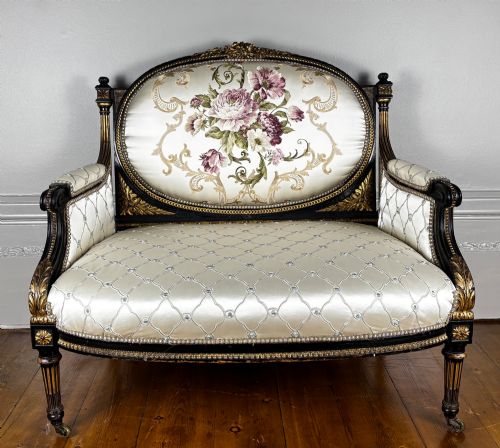
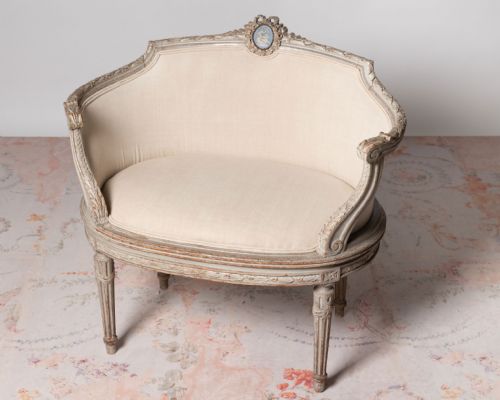


French Louis XVI Settee
When you want a french louis xvi settee, you are looking for neoclassical seating defined by straight fluted legs and classical restraint.
French Louis XVI Settee
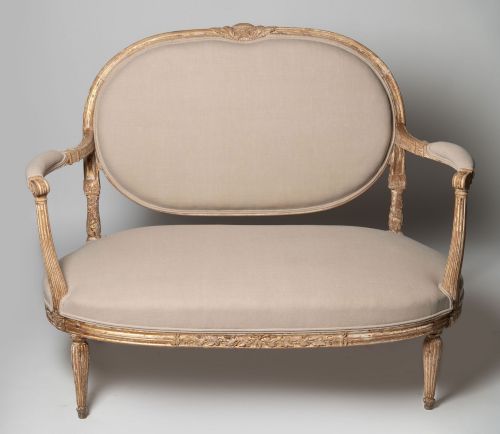
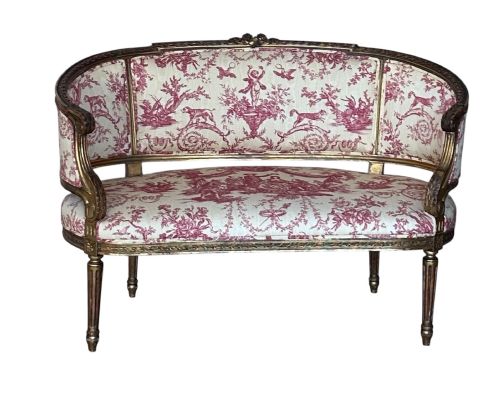
A french louis xvi settee brings neoclassical symmetry and lighter proportions to a room, moving away from the curved exuberance of earlier periods. These pieces include both genuine period examples and later nineteenth century revivals created during sustained periods of historicism.
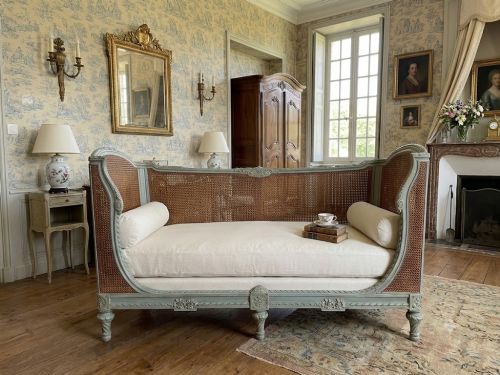
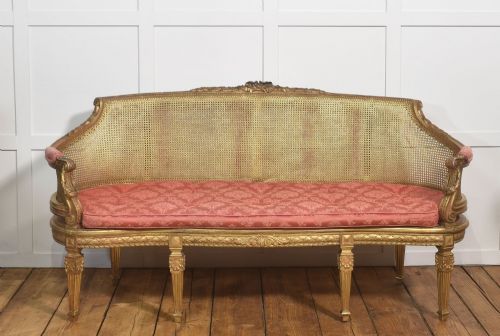
The pieces on this page span from eighteenth century origins through nineteenth century revivals and into early twentieth century interpretations. Common forms include the traditional canapé, daybeds, and smaller two-seat or triple-back settees designed for nineteenth century salons and parlours.
How they were made
Frames are constructed from hardwoods such as beech, walnut, and occasional mahogany, often shaped with carved detailing. Wood surfaces receive either giltwood applications, paint finishes, or ebonised and parcel gilt treatments.
Seating areas incorporate woven cane panels or upholstered foundations covered in fabric, silk damask, or linen. Makers shaped structural components with hand carving to achieve the characteristic fluted leg and straight rail profiles.
Materials recorded across these settees include solid beech, walnut, giltwood, cane, linen, and silk damask upholstery.
What varies in quality
The crispness of the hand carving on the frame separates finer examples from simpler workshop output. Crisp fluting, sharp leaf motifs, and deeply articulated joints indicate skilled carpentry.
The integrity of the structural wood and the retention of original surface treatments, whether gilt or early paint layers, define the standing of individual pieces.
The French Louis XVI Settee Glossary
- Canapé
- A traditional French upholstered sofa or settee. These pieces typically feature an exposed wooden frame and padded backrest.
- Giltwood
- Wood that has been coated with a thin layer of gold leaf. This finish appears frequently on formal neoclassical seating.
- Caning
- Woven rattan material used for seats and back panels. It provides a lighter surface than solid upholstery.
- Neoclassical
- A style drawing inspiration from classical antiquity. It prioritises straight lines, symmetry, and architectural motifs over rococo curves.
- Bergère
- An enclosed upholstered armchair or sofa style with upholstered sides. The design became popular during the eighteenth century.
French Louis XVI Settee: Frequently Asked Questions
How do I identify a revival piece?
Nineteenth and early twentieth century revival pieces often show machine tooling marks alongside hand work and utilise wood seasoning patterns distinct from the eighteenth century. Examining the construction underneath reveals the secondary woods and assembly methods typical of later French workshops.
Makers of the revival era closely copied original neoclassical proportions, making material analysis and tool mark inspection essential for establishing precise age.
What rooms suit a small settee?
These two-seat settees fit well in bedrooms, dressing rooms, and smaller reception spaces where heavy furniture overwhelms the floor plan. Their lighter frames and open legs maintain visual flow in tighter layouts.
In living areas, they work effectively as secondary seating paired with armchairs or positioned beneath tall windows.
Are painted frames original?
Many eighteenth and nineteenth century pieces received decorative paint finishes that have been restored or reapplied over generations. Cream, grey, and distressed painted surfaces often reflect nineteenth century taste rather than the original eighteenth century coat.
Closer inspection of underlying layers helps determine whether a painted finish dates to the primary period of manufacture or a later revival update.
How should I care for giltwood?
Giltwood requires protection from direct sunlight and high humidity to prevent the underlying gesso and gold leaf from flaking. Dusting should be done gently with a soft dry brush without using commercial polishes.
Maintaining stable environmental conditions in the room preserves the delicate metallic surface against degradation over time.