

French Louis XVI Fauteuil
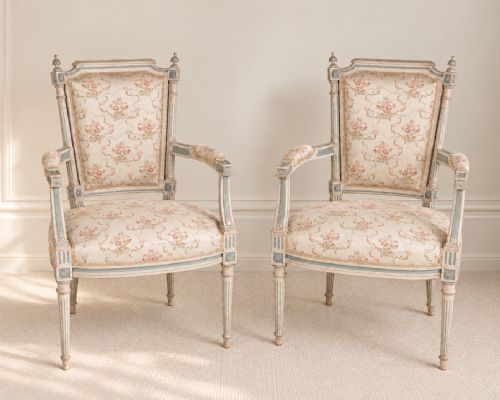
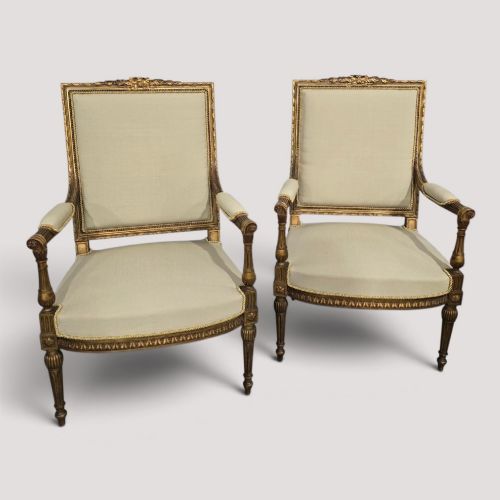
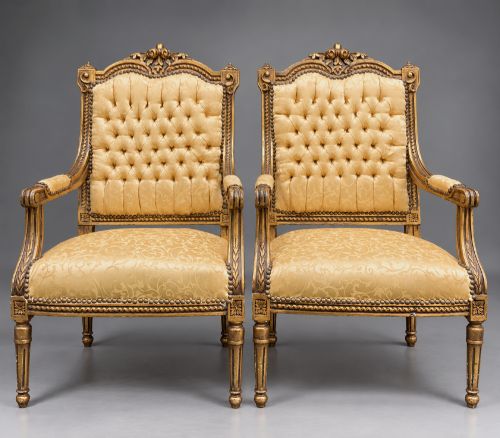
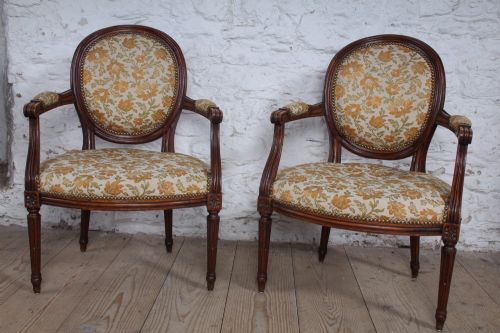
A french louis xvi fauteuil brings neoclassical proportion, exposed timber frames, and upholstered comfort directly from Parisian salons into modern rooms.
French Louis XVI Fauteuil
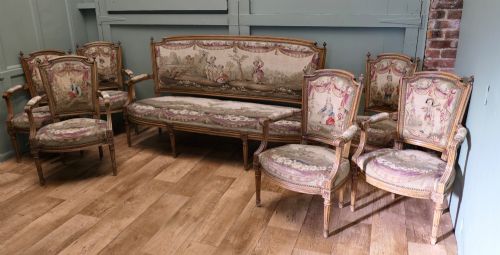
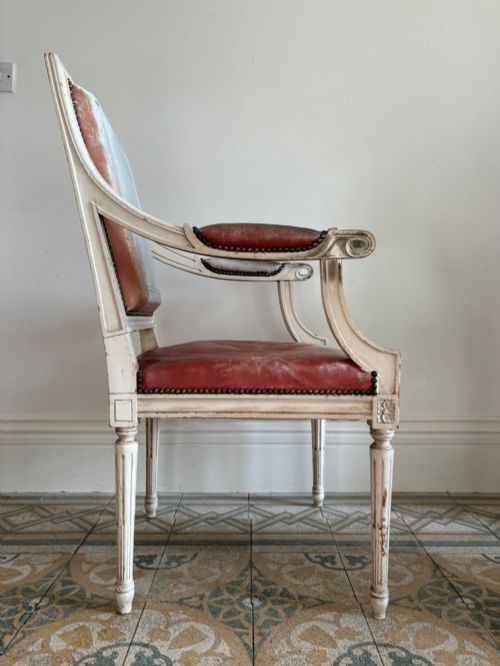
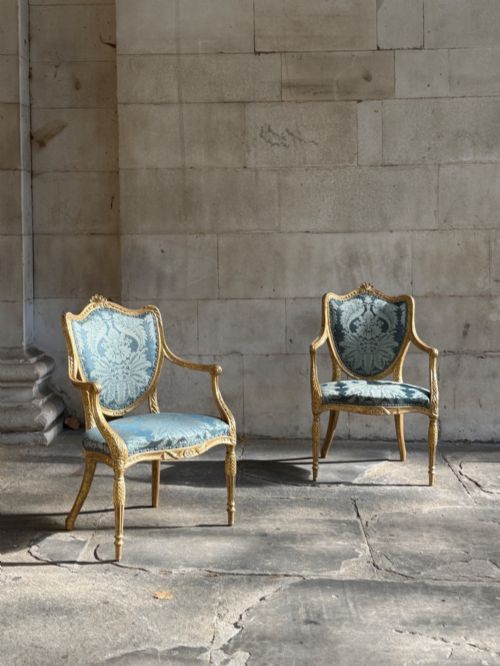
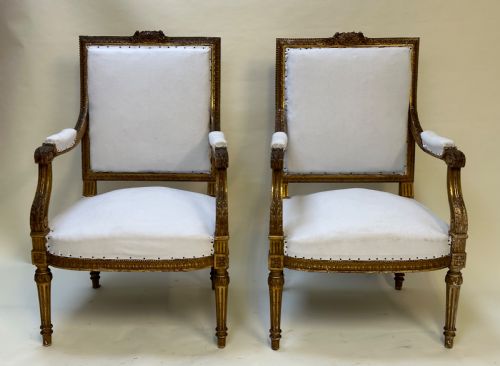
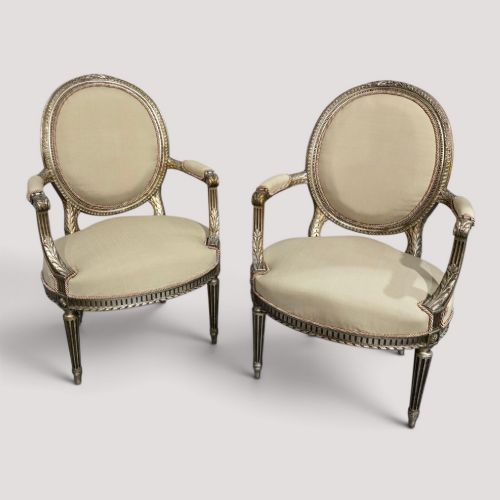
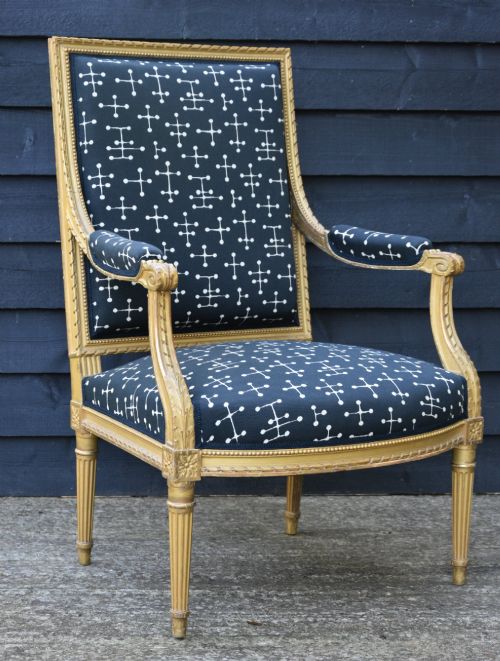
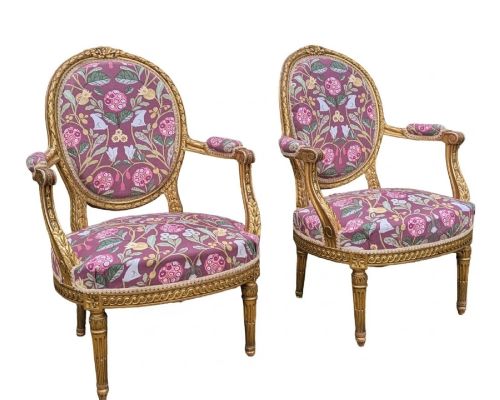
A french louis xvi fauteuil is an open-armed salon chair defined by classical restraint, straight tapering legs, and geometric frames that depart from earlier rococo curves.
Examples on this page span from authentic eighteenth-century productions to nineteenth-century revivals and early twentieth-century interpretations.
Makers shaped these armchairs and salon chairs as matching pairs or larger suites intended for formal reception rooms.
Materials and Construction
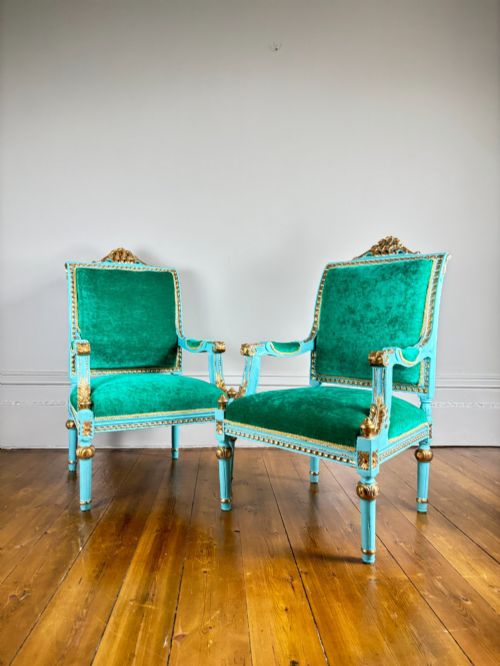
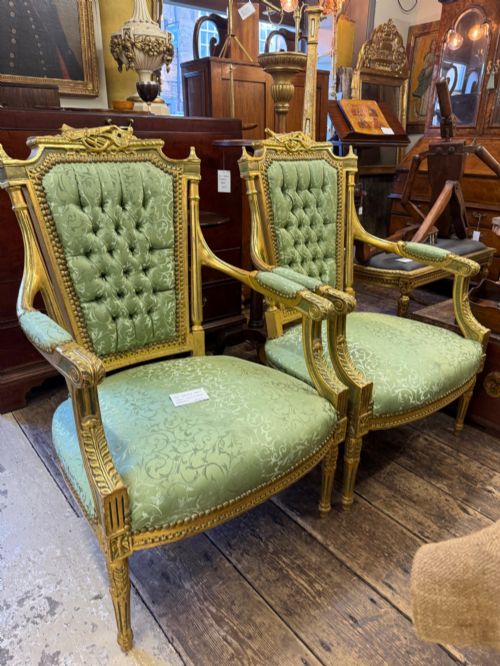
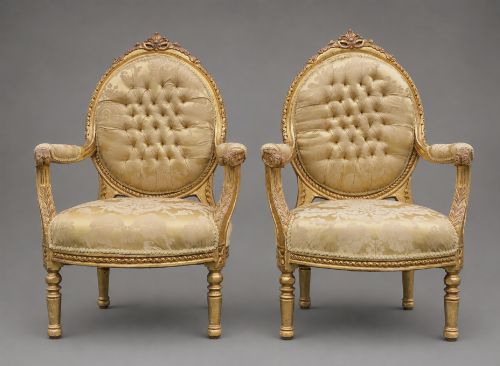
Carved wooden frames utilise beech, mahogany, and solid timber that is frequently gilded, painted, or ebonised to achieve a refined surface finish.
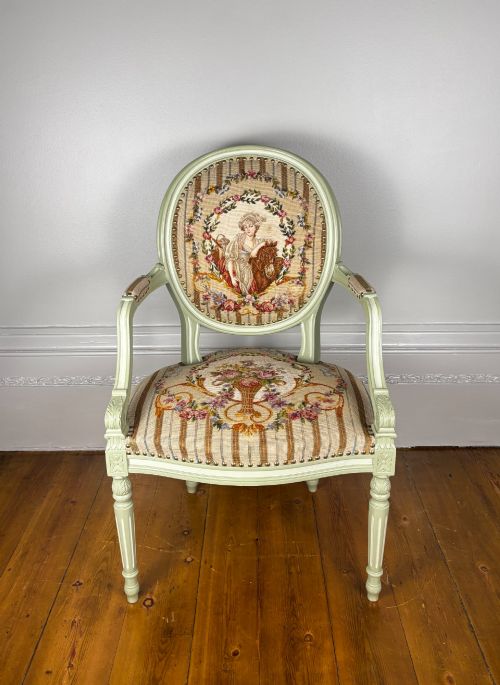
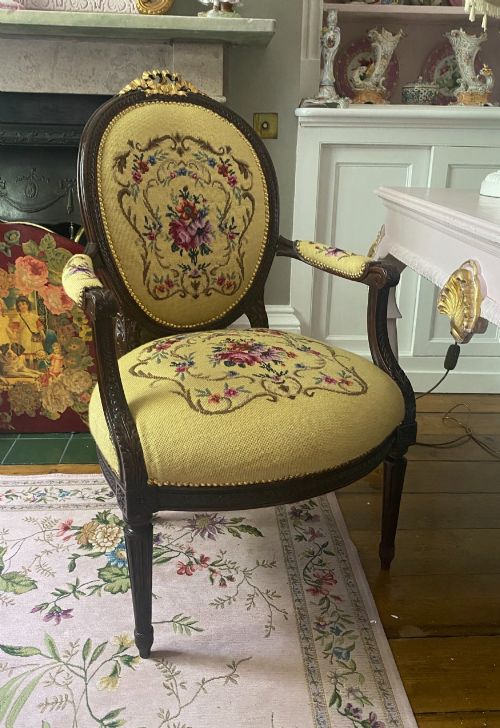
Upholstery incorporates traditional textile coverings such as velvet, silk, tapestry panels, and needlepoint secured over padded armrests and seats.
Brass fittings and subtle decorative elements accent the structural woodwork without overwhelming the strict neoclassical lines.
French Louis XVI Fauteuil Retail Price Guide 2026
Typical asking prices for french louis xvi fauteuil among the pieces listed under this phrase on Sellingantiques today, from the lower quarter to the upper quarter. They describe what is for sale here now, not the wider market.
Listings feature beech, mahogany, and solid timber frames finished with giltwood, paint, or ebonisation.
Craftsmanship and Survival
Quality rests upon the crispness of the wood carving, where deep, clean relief work distinguishes master workshops from simpler commercial outputs.
The integrity of the original gilt or painted surface dictates whether a piece retains its historic visual character or has suffered later intervention.
Survival of period textiles, particularly hand-stitched tapestry or needlepoint panels, elevates the historical weight of an individual armchair.
Henri Jacob·Holland and Sons
The French Louis XVI Fauteuil Glossary
- Fauteuil
- An open-framed armchair with upholstered armrests, typical of French seating design. The wooden sides remain visible beneath the padding.
- Giltwood
- Timber coated with a thin layer of gold leaf or gilt preparation. This finish reflects light in formal eighteenth-century interiors.
- Neoclassical
- A style drawing inspiration from classical antiquity, favouring straight lines, symmetry, and architectural motifs. It defines the Louis XVI aesthetic.
- Tapisserie
- Woven textile panels utilised for seat and back upholstery. Many depict pastoral scenes or floral patterns.
- Ebonised
- Wood treated to imitate ebony through staining or painting. This dark finish creates a sharp contrast against gilt or upholstered elements.
French Louis XVI Fauteuil: Frequently Asked Questions
Where should I place these chairs at home?
These open armchairs suit drawing rooms, bedrooms, and studies where their sculptural silhouettes can be viewed from multiple angles. Their relatively compact proportions allow them to sit comfortably beside modern sofas.
Pair them symmetrically beside a fireplace or use single salon chairs as accent seating in quiet reading corners.
Are original textile coverings durable for daily use?
Period needlepoint and tapestry panels require gentle treatment and occasional conservation rather than heavy daily friction. Historic textiles add immense character but demand a lighter touch than modern synthetic fabrics.
Many historic frames have been reupholstered over the decades to ensure structural support remains reliable for sitting.
What is the difference between revival and period pieces?
Period pieces were built during the actual reign of Louis XVI in the eighteenth century. They carry the exact proportions and material handling of that era.
Revival pieces were manufactured during the nineteenth and early twentieth centuries, paying homage to the earlier neoclassical style with distinct Victorian or Edwardian interpretations.