

French Louis XVI Console
A french louis xvi console brings neoclassical restraint and fine proportions to a room, anchoring a hallway or drawing room with stone and gilt.
French Louis XVI Console
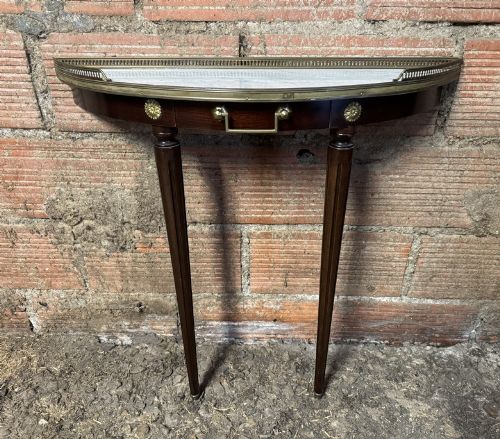
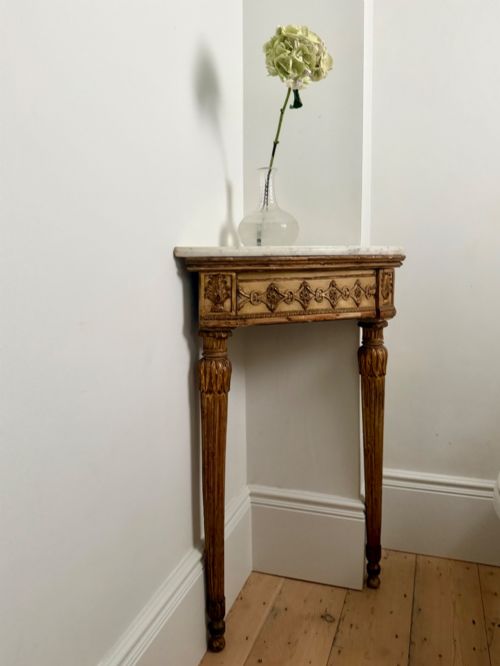
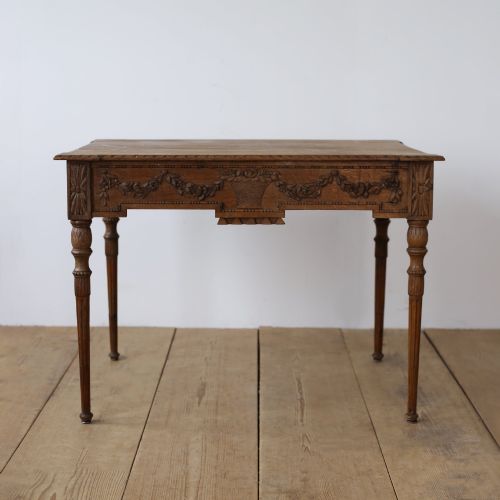
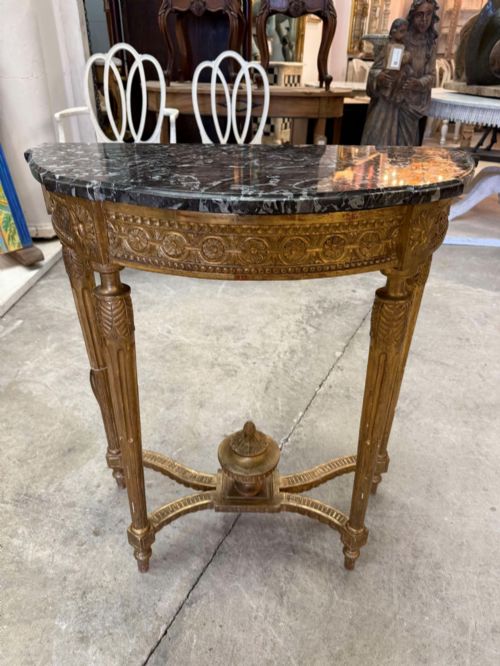
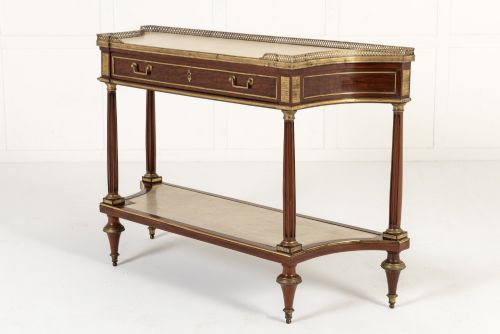
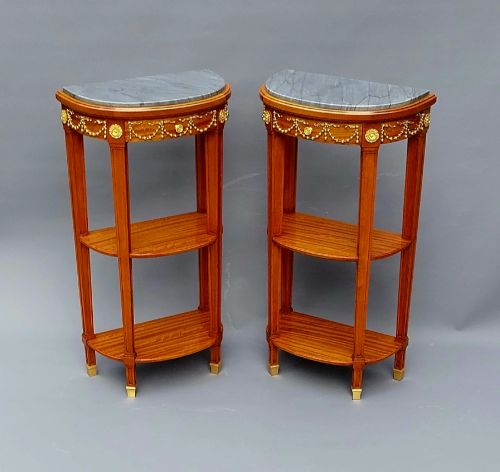
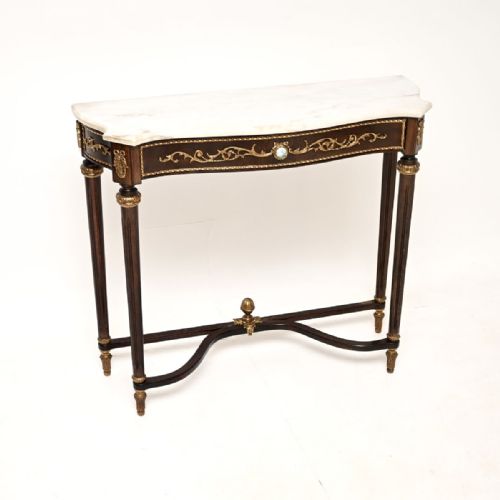
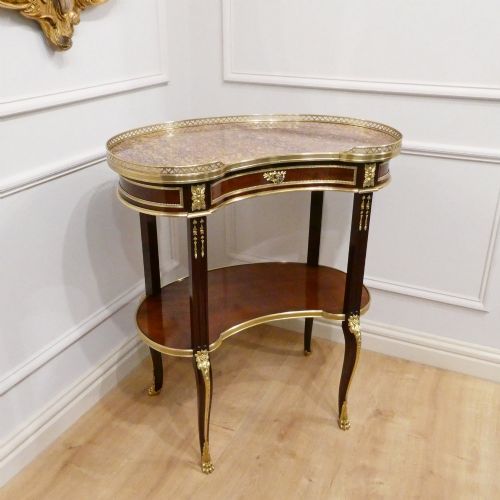
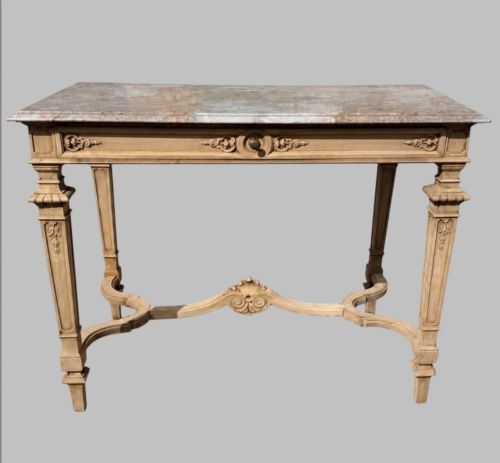
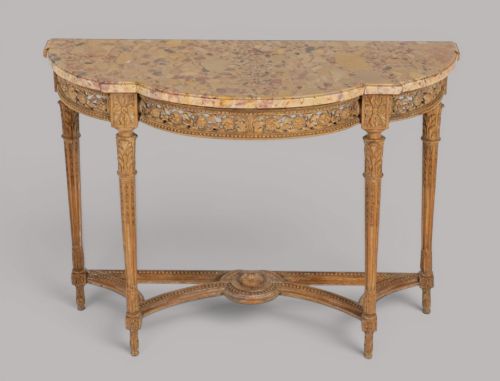
When searching for a french louis xvi console, buyers encounter forms rooted in eighteenth-century design alongside nineteenth-century revival pieces made in similar proportions. These tables typically take a demi-lune or rectangular outline designed to stand against a wall, frequently paired with a matching wall mirror.
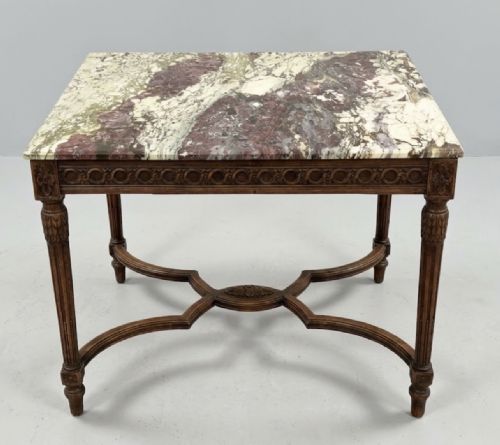
The materials recorded in these listings show a preference for marble tops paired with giltwood, mahogany, and parquetry veneers. Examples range from compact side tables and bedside consoles to larger centre and card tables sharing the same neoclassical vocabulary.
Makers and workshops from the nineteenth century onward interpreted the style through revival pieces bearing ormolu mounts and marquetry. These later interpretations sit alongside examples attributed to period makers, maintaining the straight tapered legs and architectural symmetry characteristic of the movement.
Materials and construction methods
Makers utilised dense timbers such as mahogany, walnut, and kingwood as carcase and veneer materials, often arranging parquetry and marquetry in geometric or floral patterns. Marble tops, including breccia varieties, were cut and polished to fit the serpentine or demi-lune profiles of the tables.
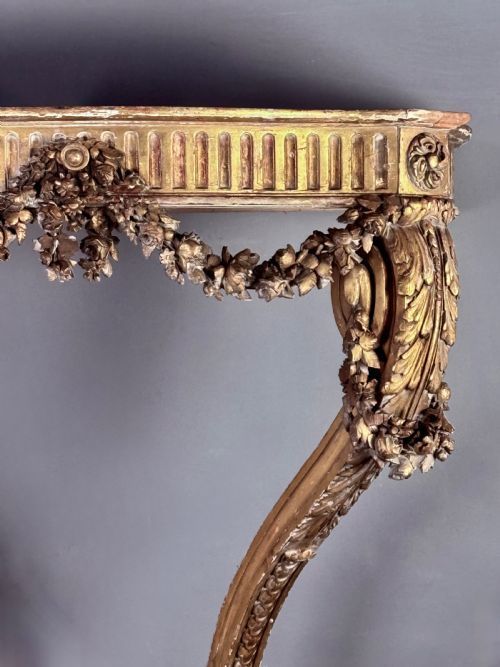
Giltwood and painted finishes formed the primary surface treatments for carved wooden frames, whilst cast ormolu and gilt bronze mounts were applied to corners, aprons, and legs. Joinery relied on traditional cabinet-making techniques to support heavy stone tops without sacrificing delicate proportions.
French Louis XVI Console Retail Price Guide 2026
Typical asking prices for french louis xvi console among the pieces listed under this phrase on Sellingantiques today, from the lower quarter to the upper quarter. They describe what is for sale here now, not the wider market.
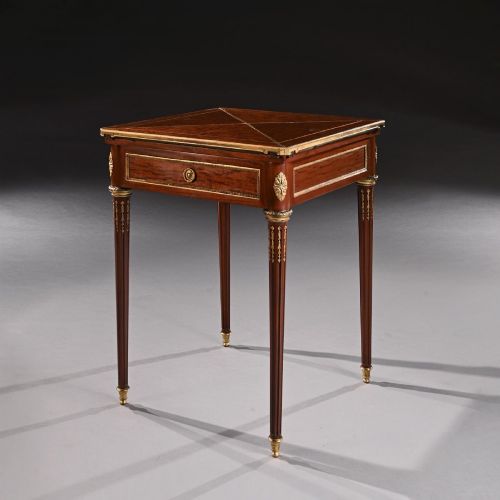
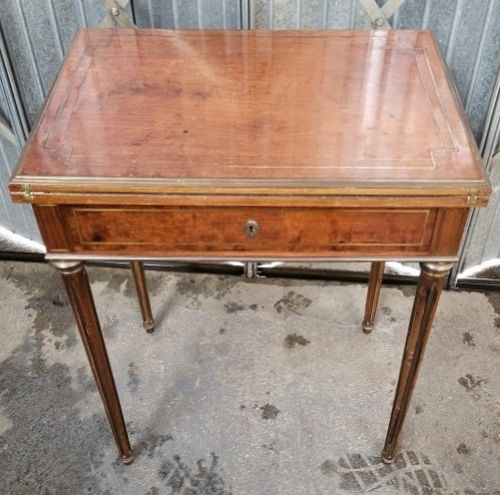
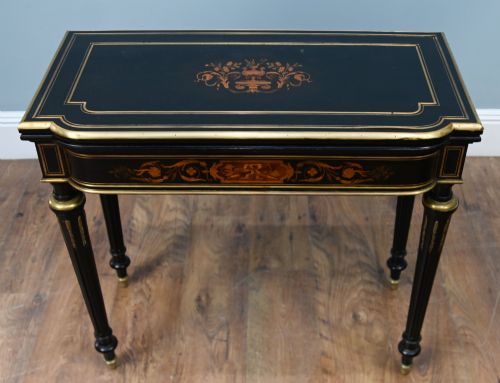
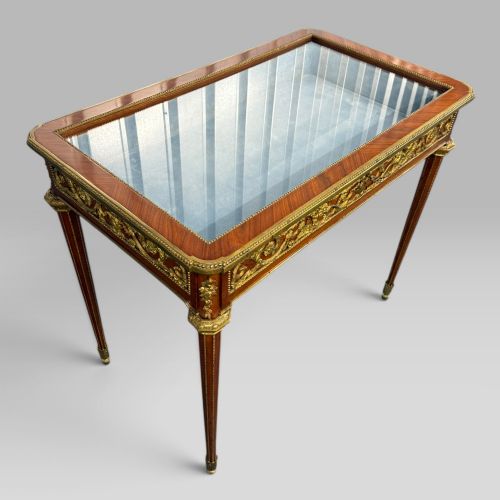
Several tables disguise themselves as innocent side pieces until someone flips the top to reveal a hidden green felt card surface.
Distinguishing quality across pieces
The standard of carving and the crispness of ormolu chasing separate standard revival items from the work of master cabinet-makers. Finer pieces demonstrate precise hand-cut parquetry and substantial marble slabs with harmonious veining rather than simple applied decoration.
Structural integrity depends on how well the frame supports the weight of the stone top over decades of use. Superior examples maintain tight joints and careful gilding application that retains its depth and texture across detailed foliage and fluted leg channels.
Felix-Alfred Ternisien·Maison Millet·François Linke·Maison Mottheau
The French Louis XVI Console Glossary
- Ormolu
- Gilt bronze mounted onto furniture as decorative mounts and accents. This technique involves applying a mercury-gilt finish to cast bronze components.
- Demilune
- Half-moon shape characteristic of many console and side tables designed to sit flush against a wall. This profile saves floor space while offering a decorative surface.
- Parquetry
- Geometric wood veneer patterns arranged in wooden floors and furniture tops. Craftsmen assemble small pieces of contrasting timbers to create interlocking designs.
- Marquetry
- Inlaid wood work forming pictorial or decorative motifs across a tabletop or frieze. Artisans cut various tinted woods and veneers to fit together within a single surface.
- Breccia
- A type of marble composed of broken rock fragments embedded in a fine-grained matrix. It provides colourful, highly figured surfaces for antique table tops.
French Louis XVI Console: Frequently Asked Questions
What is a french louis xvi console?
A french louis xvi console is a wall-standing table characterised by straight tapered legs, neoclassical symmetry, and restrained ornamentation.
These tables frequently feature marble tops and carved wooden frames finished in giltwood or paint.
Where should a console table go?
Console tables traditionally stand in hallways, entrance passages, or beneath wall mirrors in principal reception rooms.
Their shallow depth allows them to fit narrow spaces while providing a surface for decorative objects or lamps.
How do I spot a revival piece?
Revival pieces date from the nineteenth or early twentieth century and imitate eighteenth-century neoclassical design.
They often combine period construction methods with machine-cut veneers or later cast bronze mounts.
Are marble tops original?
Marble tops on these tables are generally heavy slabs cut to fit the specific demi-lune or rectangular frame.
Matching the stone's thickness and edge profile to the period of the wooden base helps determine originality.