

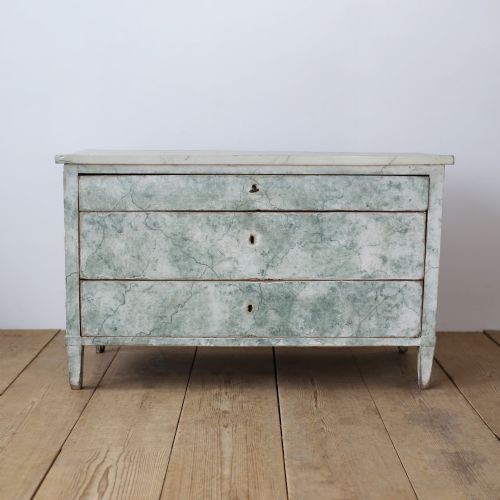
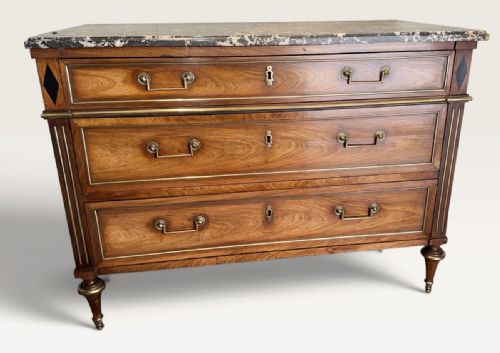
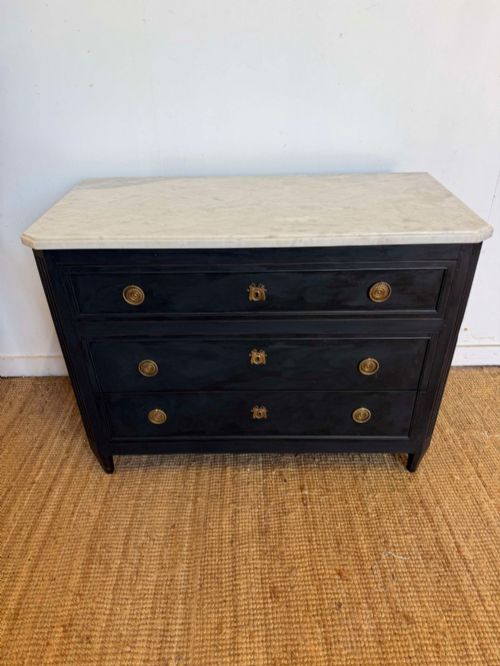
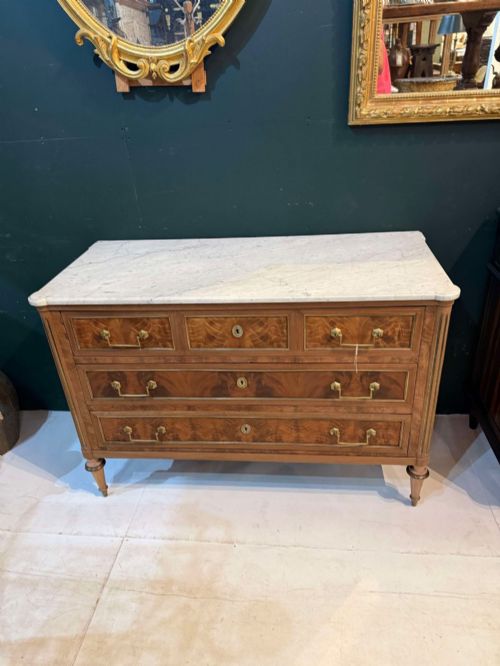
French Louis XVI Commode
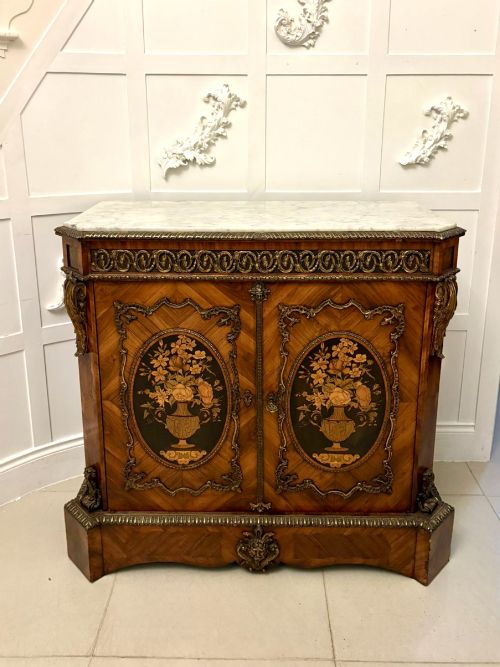
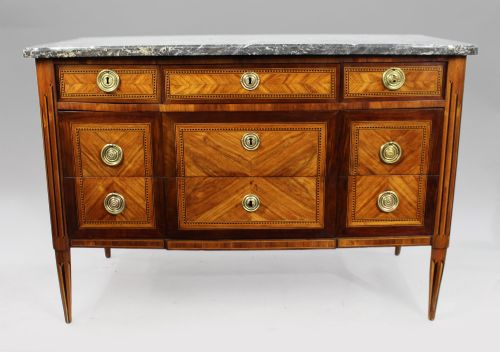
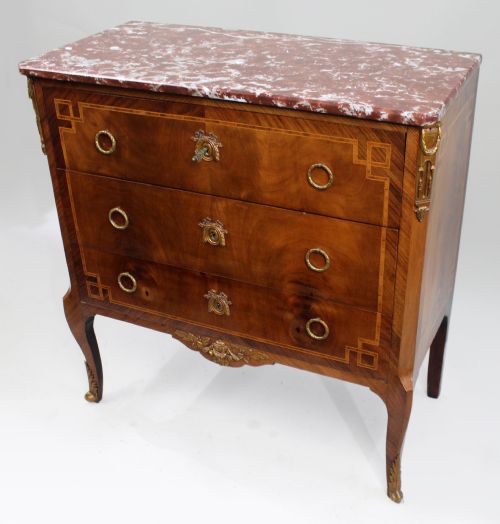
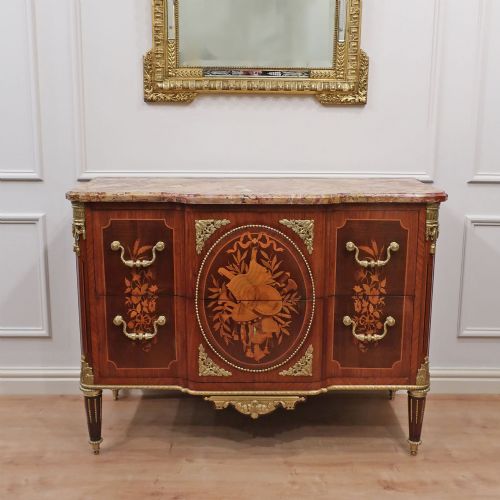
When you seek a french louis xvi commode, you explore an architectural chest of drawers defined by symmetry, classical restraint and refined mounts.
French Louis XVI Commode
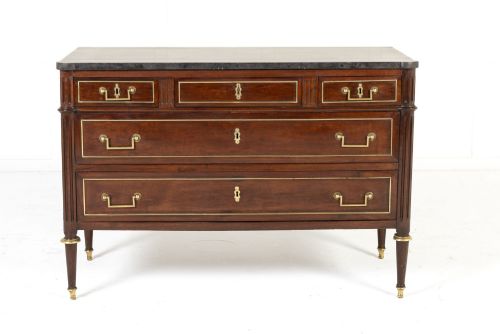
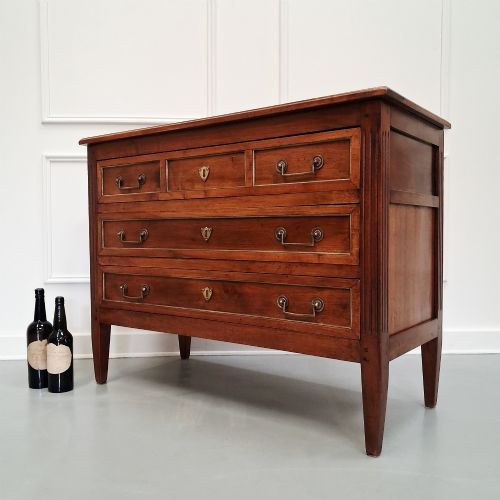
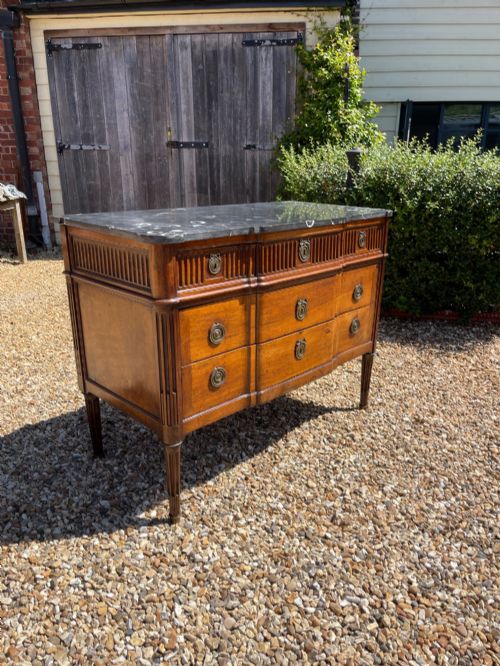
A french louis xvi commode provides structured drawer storage through rectangular or demi-lune carcases, departing from the curvaceous lines of earlier periods. These chests sit lower and wider in rooms, offering stable proportion alongside functional surface space.
Period examples from the eighteenth century appear alongside nineteenth and early twentieth century revivals. The revival pieces often employ traditional joinery and classical vocabulary just like their earlier predecessors, reflecting enduring demand for the aesthetic.
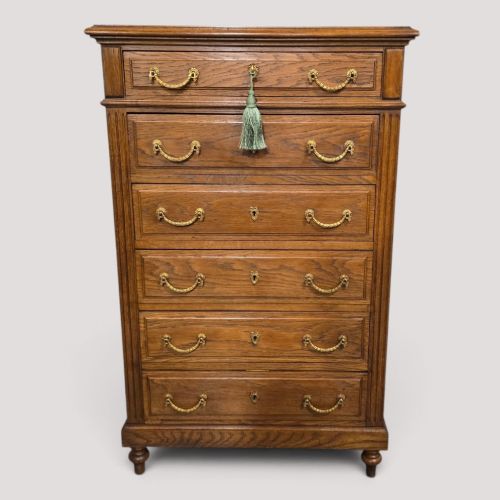
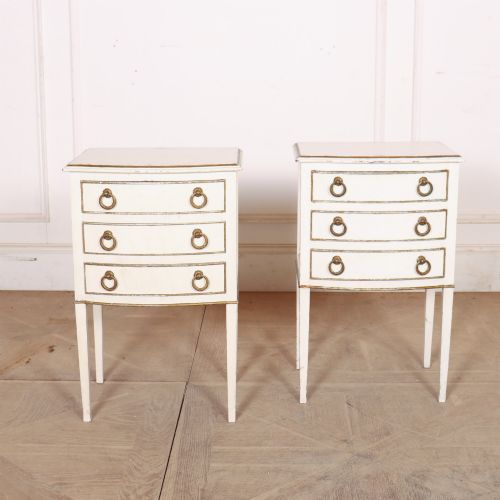
Beyond standard chests, variants include bedside tables, narrow cabinets and miniature chests of drawers. Each maintains the signature rectilinear discipline and restrained brass detailing characteristic of the style.
Materials and Construction
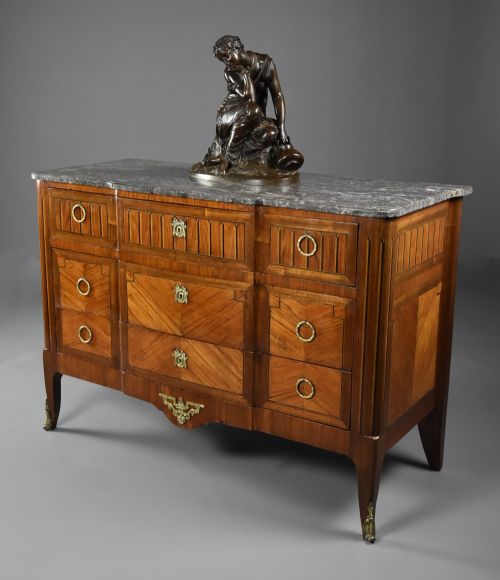
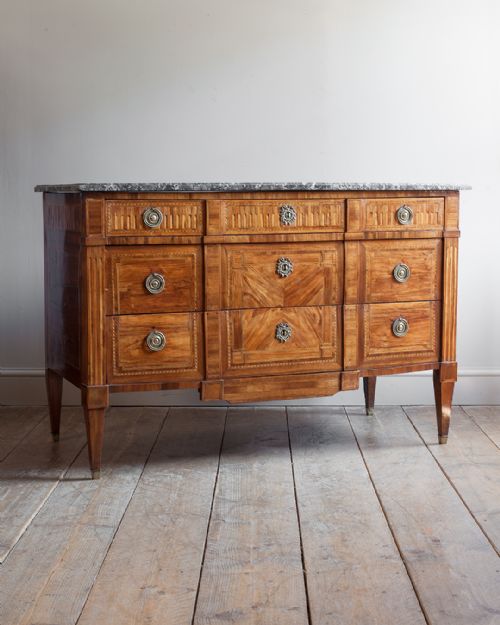
Carpenters built the carcases of solid oak or pine before applying fine timber veneers such as mahogany, walnut, kingwood, tulipwood and satinwood. Marquetry and parquetry patterns arranged these woods into geometric fields or floral motifs across the drawer fronts and sides.
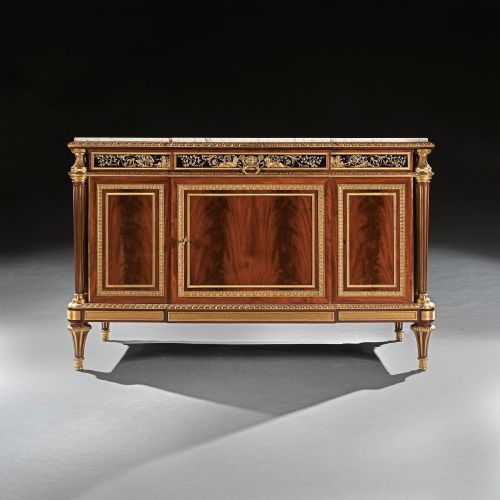
Gilt bronze and ormolu mounts frame the corners, drawer edges and apron centres, lending architectural punctuation to the wooden surfaces. Marble slabs, often in shades of white, grey or rouge, finish the top surface with a heavy, cool counterpoint to the warm timber.
French Louis XVI Commode Retail Price Guide 2026
Typical asking prices for french louis xvi commode among the pieces listed under this phrase on Sellingantiques today, from the lower quarter to the upper quarter. They describe what is for sale here now, not the wider market.
Listings feature oak, walnut, mahogany, and exotic veneers paired with various marbles across multiple centuries.
Markers of Execution
Quality rests in the precision of the parquetry alignment and the crispness of the cast bronze mounts. Superior pieces show hand-chased detail on the metalwork rather than flat, machine-cast edges, and timber grains match symmetrically across the centreline of the chest.
Internal construction reveals the maker's hand through hand-cut dovetails on the drawer linings and panelled carcase backs. The integration of the marble top, cut to follow the exact contours of the wooden frame without overhang gaps, also separates fine cabinetwork from standard production.
Henry Dasson·Weisweiler·Joseph Zwiener·Mon Krieger
The French Louis XVI Commode Glossary
- Ormolu
- Gilded bronze applied to furniture mounts and decorative accents. This technique requires an amalgam of mercury and gold fired onto the bronze base.
- Parquetry
- Geometric wood inlay forming patterns such as cubes or triangles across the surface. Artisans arrange contrasting timber veneers to create an optical illusion of depth.
- Demi-lune
- Half-moon shape utilised for console tables and commodes. This curved front allows the furniture to sit flush against a wall while softening room circulation.
- Marquetry
- Pictorial veneer work using various coloured woods to depict flowers, landscapes or urns. The pieces are cut from thin sheets and assembled like a jigsaw puzzle before gluing.
- Scagliola
- Composite material made from selenite, glue and pigments, mimicking marble. Craftsmen inlay this paste to achieve multi-coloured stone effects without heavy quarry blocks.
French Louis XVI Commode: Frequently Asked Questions
What distinguishes a Louis XVI commode from earlier styles?
The style shifts from curved rococo forms to strict neoclassical geometry, featuring straight tapered legs and architectural mouldings. Fluted columns and symmetrical brass mounts replace asymmetrical scrollwork.
Drawer arrangements also become more regimented, sitting within a rectangular or semi-lune carcase that emphasises horizontal lines and balanced proportions.
How do I care for the marble top?
Wipe the marble regularly with a soft cloth dampened in warm water, avoiding acidic cleaners that etch the polished surface. Wax can provide a protective barrier against moisture rings and light staining.
Lift objects rather than sliding them across the stone to prevent scratching the polished finish.
Can I use a commode as a bedside table?
Smaller variants like petit commodes and bedside cabinets fit well beside a bed while offering enclosed drawer storage. Their scale provides surface space for lamps and reading materials without dominating the bedroom.
Matching pairs frequently appear in the listings, making them practical for twin bed setups.
How do I date a revival piece accurately?
Nineteenth and early twentieth-century revival pieces utilise machine-sawn timber marks and modern adhesives alongside traditional hand-cut dovetails. Examining the secondary woods inside the drawer linings often reveals pine or oak typical of later Victorian workshops.
Stylistic cues remain faithful to the eighteenth-century originals, but technological shifts in assembly give away the later production date.