




French Louis Settee
A french louis settee brings classic seating to a room through carved woodwork and graceful curves.
French Louis Settee
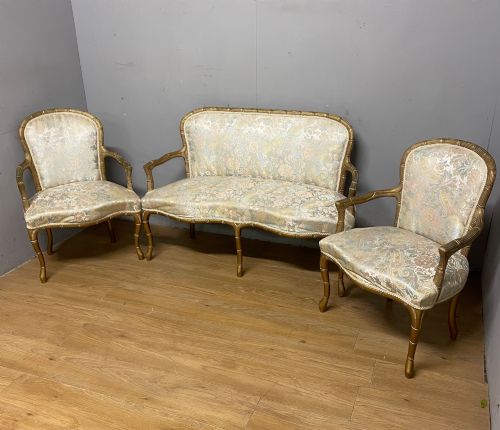
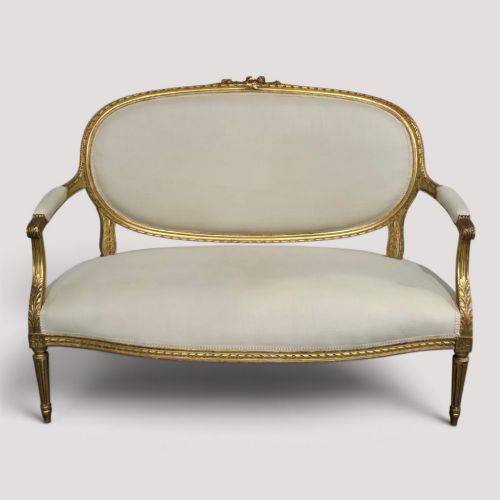
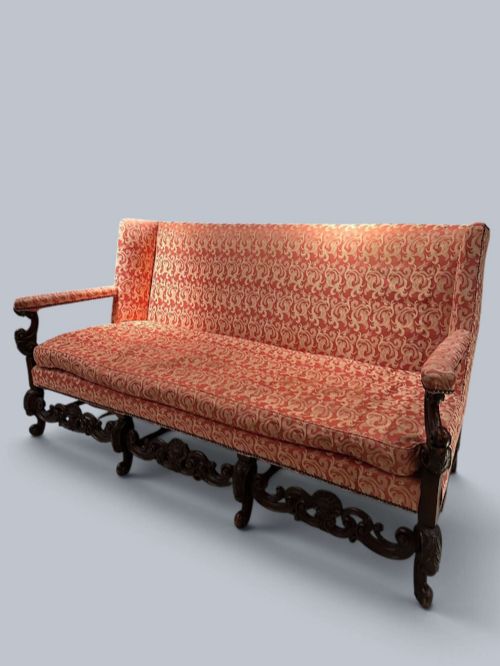
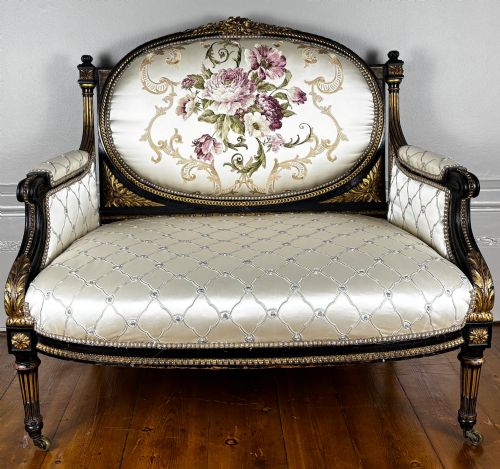
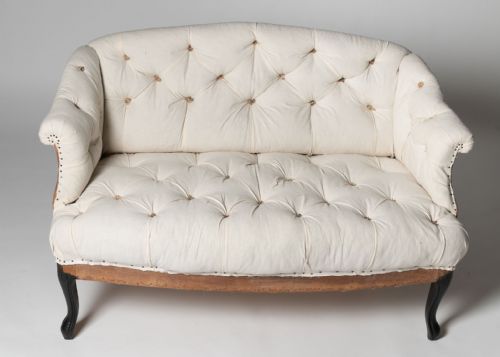
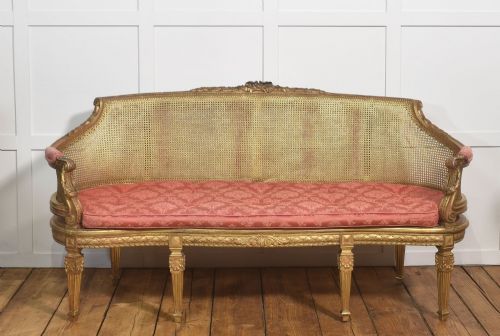
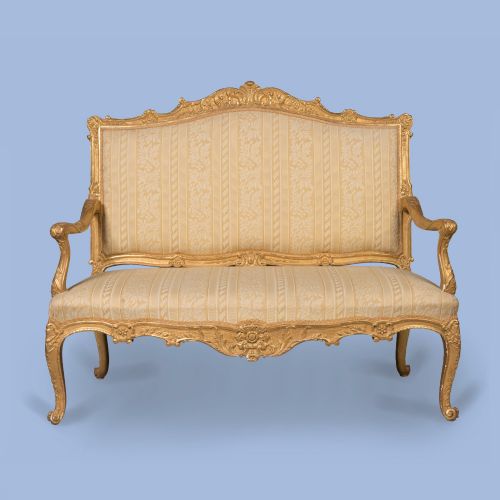
A french louis settee takes the form of a double or triple seat sofa, drawing inspiration from the distinct court styles of the 18th century. These pieces emerge in various iterations across the nineteenth and twentieth centuries, reflecting enduring design tastes.
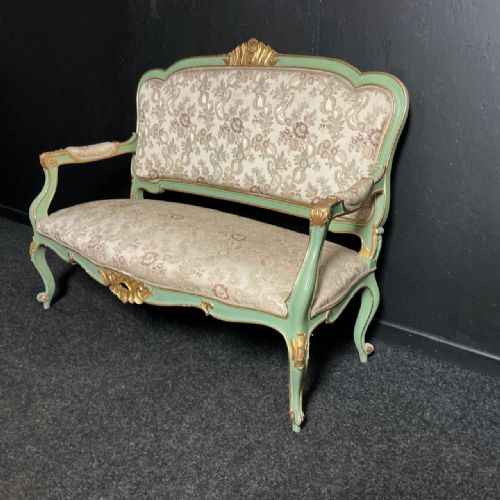
Buyers encounter diverse regional interpretations and revival periods, ranging from ornate giltwood frames to simpler painted wooden structures. The selection spans compact two-seat couches, daybeds, and larger salon suites designed for formal entertaining.
Materials and Construction
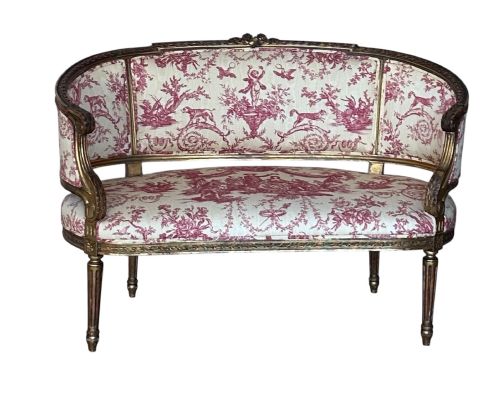
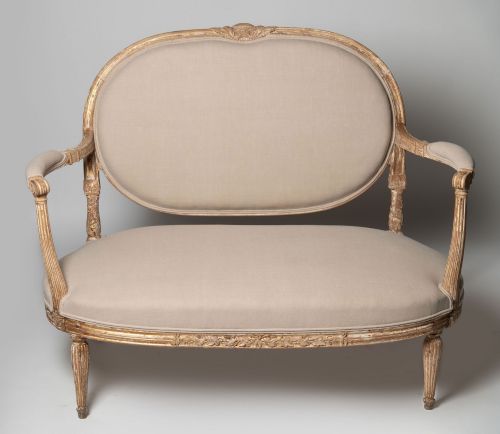
Makers utilised native hardwoods such as beech and walnut to build the foundational frames, often applying a layer of gesso before finishing the surface with paint, ebonising, or gilding. Skilled carvers shaped the timber with floral motifs, scrolls, and fluted legs characteristic of the period.
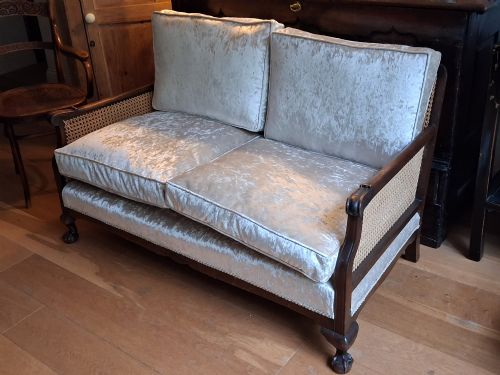
Upholstered panels and cushions employ traditional stuffing methods, whilst certain designs incorporate woven cane work for the backrests and sides. Silk, linen, and velvet fabrics frequently cover the seating surfaces, secured with decorative tines or trim.
French Louis Settee Retail Price Guide 2026
Typical asking prices for french louis settee among the pieces listed under this phrase on Sellingantiques today, from the lower quarter to the upper quarter. They describe what is for sale here now, not the wider market.
Some compact settees served specifically as end-of-bed seating for resting feet during complicated Victorian dressing routines.
Judging Quality
The crispness of the hand-carved ornamentation distinguishes finer pieces from simpler production work. Deep, well-defined relief on the wooden frame indicates skilled craftsmanship rather than shallow machine milling.
The integrity of the structural joinery and the tightness of cane weaving determine the durability of the seating. Original surface treatments, such as worn contemporary gilding or patinated paint, hold greater aesthetic appeal than heavy modern restoration.
The French Louis Settee Glossary
- Canapé
- An upholstered French sofa or settee featuring an exposed wooden frame. It typically accommodates two or more people in a formal room.
- Bergère
- An enclosed armchair or sofa featuring upholstered sides and a cane or padded back. This style provides a deeper and more enclosed seat.
- Giltwood
- Timber treated with gold leaf or a gold-coloured finish. It reflects light and provides a decorative sheen to the carved frame.
- Louis XVI Style
- A neoclassical design vocabulary defined by straight lines, symmetry, and geometric motifs. It contrasts with the flowing curves of earlier monarchical periods.
French Louis Settee: Frequently Asked Questions
How do I clean a cane panel?
Dust the woven cane gently using a soft brush to remove debris from the interstices.
Wipe the surface occasionally with a damp cloth, ensuring the material dries completely to prevent sagging.
Where should I place a settee?
Position the piece as a focal point in a living room, drawing room, or bedroom.
Keep the furniture away from direct sunlight and strong heat sources to protect the delicate textiles and wood finishes.
What is a salon suite?
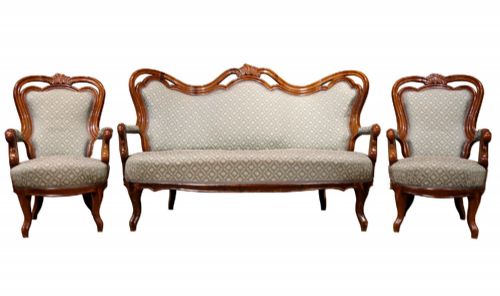
A matching set comprising a small sofa and coordinating armchairs.
These groupings were created for formal reception rooms to maintain a unified decorative scheme.
How do I distinguish Louis XV from Louis XVI?
Louis XV pieces exhibit asymmetrical curves, cabriole legs, and elaborate rococo carving.
Louis XVI items display straight fluted legs, symmetry, and neoclassical geometric details.