

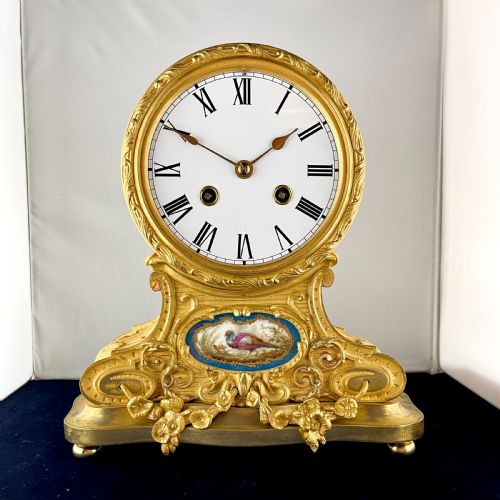


French Late Victorian Clock
A french late victorian clock brings together disciplined horology and ornate decorative metalwork from the closing decades of the nineteenth century.
French Late Victorian Clock
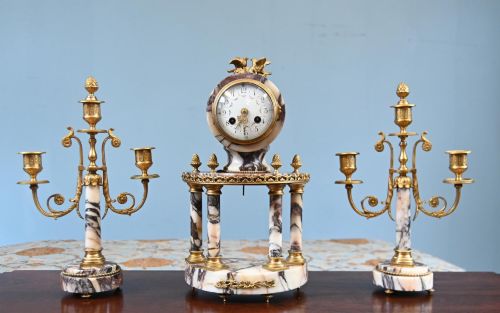
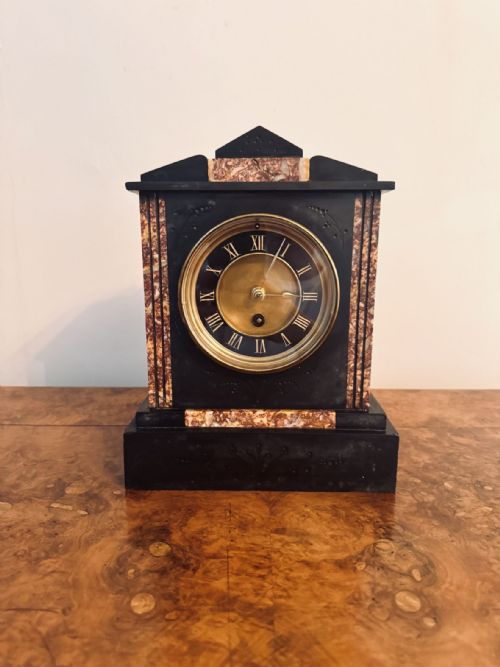
When you search for a french late victorian clock, you encounter a diverse range of timepieces originating from the late nineteenth century, spanning periods marked as Victorian and late nineteenth century French. These objects take several distinct forms, most notably carriage clocks housed in brass corniche cases, architectural four-glass mantel clocks, and grand garniture sets complete with matching candelabras.
The domestic interiors of the period accommodated these pieces on mantels, desks, and boudoirs. Many examples incorporate striking mechanisms, alarms, or repeater functions designed to chime the hours and quarters in formal drawing rooms or private studies.
How They Were Made
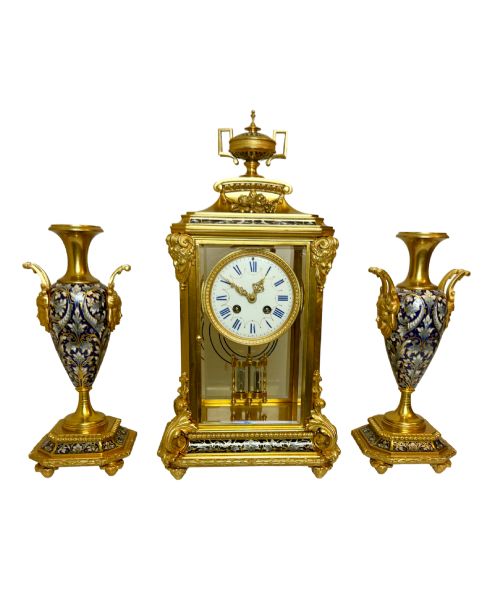
Maker workshops constructed these timepieces using heavy brass, gilt bronze, or ormolu frames, frequently enclosing precision gear trains driven by eight-day movements. Surfaces often receive decorative enhancement through champleve enamel panels, hand-painted porcelain faces, or inset marble and crystal glass panes.
Casing techniques combined cast metal components with meticulous hand-chasing. Dial faces utilised white enamel backgrounds marked with Roman or Arabic numerals, protected behind bevelled glass crystals fitted snugly into brass bezels.
French Late Victorian Clock Retail Price Guide 2026
Typical asking prices for french late victorian clock among the pieces listed under this phrase on Sellingantiques today, from the lower quarter to the upper quarter. They describe what is for sale here now, not the wider market.
What Varies in Quality
Quality differentiates standard production pieces from exceptional works through the complexity of the movement and the refinement of the decorative housing. Grand sonnerie striking complications and fully jewelled escapements elevate the mechanical standard significantly above basic timepieces.
Artistic execution dictates the visual tier, seen in the depth of chased bronze mounts, the crispness of champleve enamel work, and the inclusion of signed maker movements rather than generic commercial assemblies.
F.Milliot·Henri Jacot Paris·Brunelot·Lemerle Charpentier·Samuel Marti·Andre Guilmet
The French Late Victorian Clock Glossary
- Carriage clock
- A portable spring-driven timepiece originally designed for travel, housed in a brass case with glass panels.
- Garniture
- A set comprising a central clock flanked by matching decorative objects such as candelabras or urns intended for a mantelpiece.
- Champleve
- An enamelling technique where troughs are carved into the metal surface and filled with vitreous paste before firing.
- Repeater
- A mechanical complication that chimes the hours and quarters upon pressing a button or lever on the case.
- Four-glass clock
- A mantel clock featuring glass panels on all four sides to expose the mechanical movement within a brass or gilt frame.
French Late Victorian Clock: Frequently Asked Questions
What is a carriage clock?
A carriage clock is a portable brass and glass timepiece developed for travel during the nineteenth century. These clocks utilise spring-driven movements and folding top handles.
Most examples sit inside protective leather or fitted cases, allowing owners to transport them securely. Their robust construction made them practical for both domestic rooms and journeys.
How do four-glass clocks work?
Four-glass clocks utilise transparent crystal panels on the front, back, and sides to showcase the interior brass gear train. Mercury or pendulum escapements typically regulate the timekeeping.
This open design allows light to pass through the entire casing, highlighting the movement from multiple angles. They functioned primarily as decorative mantelpieces in formal reception rooms.
What is a clock garniture?
A clock garniture is a matched decorative set featuring a central timepiece accompanied by matching side ornaments, such as candelabras or urns. Craftsmen designed them to create a unified focal point across a mantelpiece.
Materials such as marble, gilt bronze, and porcelain linked the pieces visually. They were prominent status symbols in late nineteenth-century parlours.
How do repeater movements function?
A repeater movement allows the clock to chime the current hour and quarters on demand by pressing a button or lever on the case. This mechanism operates independently of the standard hourly striking train.
Owners utilised this feature during dark nights to check the time without lighting a candle. The intricate gear work required skilled watchmakers to assemble.