



French Jewellery Cabinet
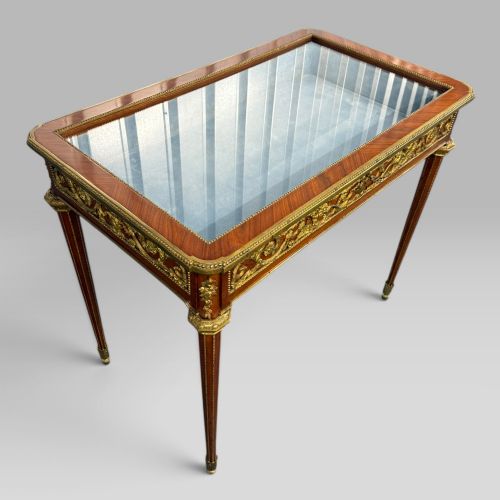
A French jewellery cabinet is a glazed display piece designed to hold precious ornaments, offering a clear view from above or the front.
French Jewellery Cabinet
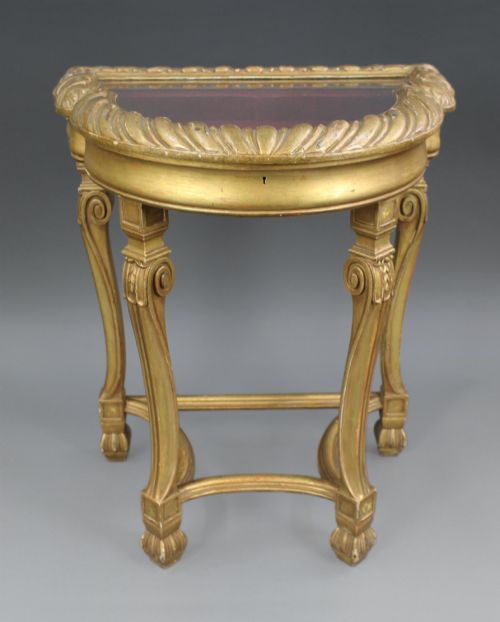
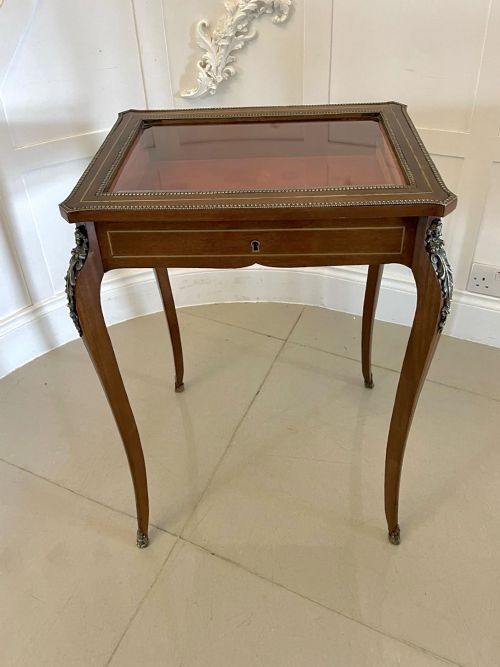
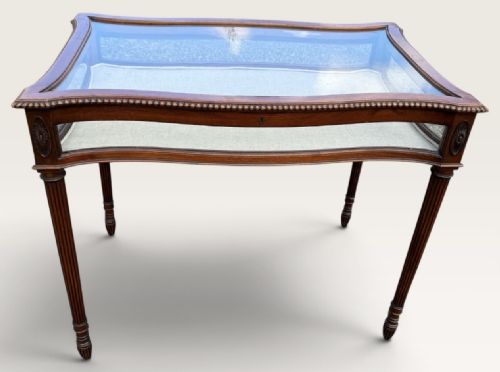
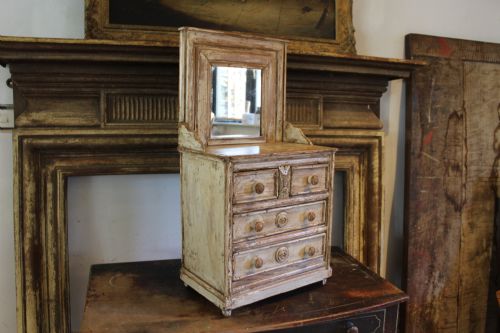
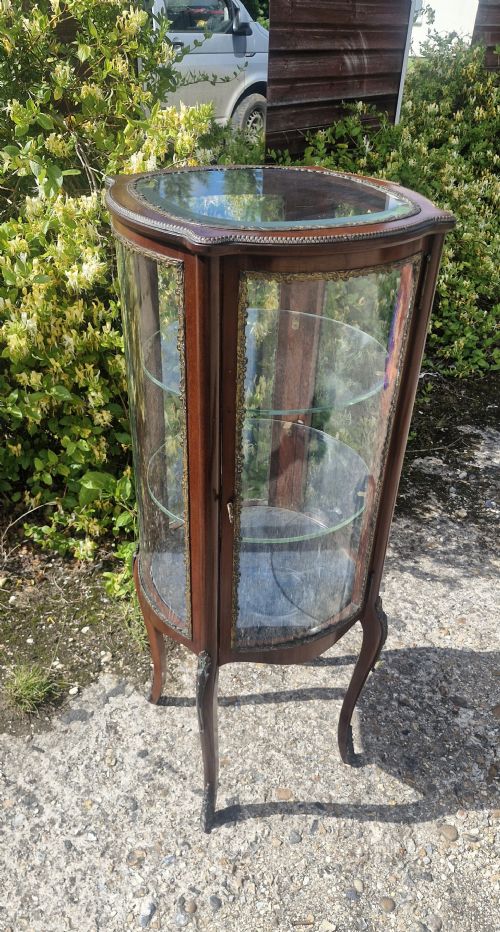
A French jewellery cabinet takes several distinct forms across the selection, most frequently appearing as bijouterie display tables, vitrines, and miniature chests. These pieces originate from the Victorian and Edwardian eras, alongside items dating from the nineteenth and twentieth centuries.
Buyers encounter table-top glass cases with hinged lids, freestanding vitrines, and wall cabinets designed to showcase small treasures. Mahogany, kingwood, and rosewood form the primary carcases, often paired with glazed panels to protect the contents while keeping them visible.
Revival styles dominate the selection, referencing Louis XV and Louis XVI designs alongside French Rococo and provincial aesthetics. These pieces combine practical storage with decorative display surfaces suited to period and traditional interiors.
Materials and construction
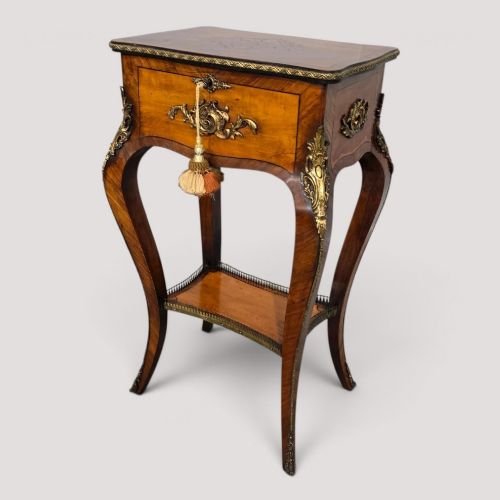
Cabinet makers utilised dense hardwoods including mahogany, kingwood, and satinwood, frequently applying fine veneer and intricate inlay work to the surfaces. Brass and ormolu mounts accentuate the structural lines, while velvet and fabric line the interior compartments.
Glazing forms a central element of the construction, utilising bevelled or flat glass panels to enclose the display space. Ormolu and gilt-bronze mounts secure the corners and frame the glass, demanding precise metalworking alongside traditional cabinet making.
French Jewellery Cabinet Retail Price Guide 2026
Typical asking prices for french jewellery cabinet among the pieces listed under this phrase on Sellingantiques today, from the lower quarter to the upper quarter. They describe what is for sale here now, not the wider market.
Recorded periods span from the nineteenth century through the Edwardian era into the mid twentieth century.
Assessment of quality
Quality rests in the crispness of the brass or ormolu mounts and the precision of the timber veneers. Finer examples display meticulous marquetry and tightly fitted glass panels that align smoothly with the wooden framework.
The sophistication of the internal lining and the weight of the timber carcase distinguish superior pieces from standard production. Well-executed revival work employs traditional joinery methods that ensure the longevity of the hinged lids and glazed doors.
François Linke·Maria
The French Jewellery Cabinet Glossary
- Bijouterie table
- A glass-topped display table specifically constructed for small ornaments and jewellery. These pieces usually feature a hinged glazed lid.
- Vitrine
- An enclosed glass display cabinet designed to show decorative objects from multiple angles. They appear as freestanding or tabletop units.
- Ormolu
- Gilded bronze mounts applied to furniture for decorative effect. This technique was widely utilised in French cabinet making during the nineteenth century.
- Marquetry
- Decorative woodwork where pieces of veneer are fitted together to form geometric or floral patterns. Craftsmen apply these designs to mahogany and kingwood carcases.
French Jewellery Cabinet: Frequently Asked Questions
How were French jewellery cabinets used?
These cabinets served to store and display rings, brooches, and small precious items within domestic drawing rooms and boudoirs. The glazed surfaces allowed owners to view their collections without exposing them to dust.
Many designs doubled as occasional tables or small writing desks, combining functional workspace with integrated display compartments.
How do I care for the velvet interior lining?
Gentle surface dusting with a soft brush preserves the fabric without damaging the delicate fibres. Avoid using liquid cleaners on the textile or surrounding wood.
Keep the cabinet away from direct sunlight to prevent the velvet and timber veneers from fading over time.
Are these cabinets suitable for modern homes?
The compact proportions of these tables and small cabinets allow them to fit easily beside seating or against hallway walls. Their glass panels provide a light visual presence in contemporary rooms.
They offer practical tabletop space alongside secure storage for modern collections of small accessories.