







French Interior Oil Painting
A french interior oil painting captures domestic rooms, grand salons and quiet tea hours through the brush of artists working across the nineteenth and twentieth centuries.
French Interior Oil Painting
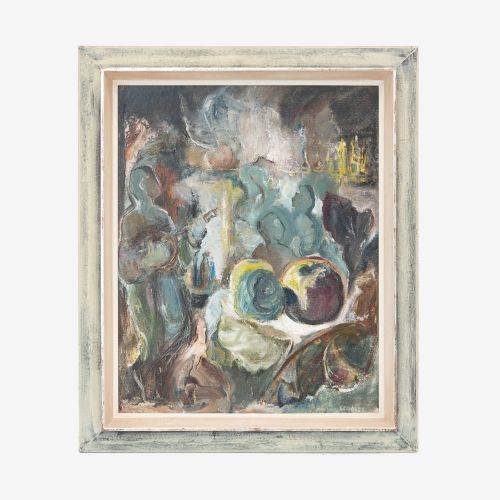
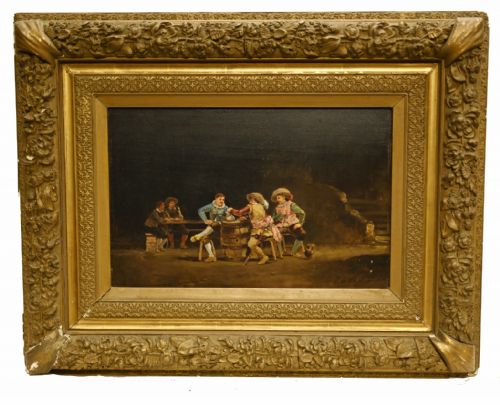
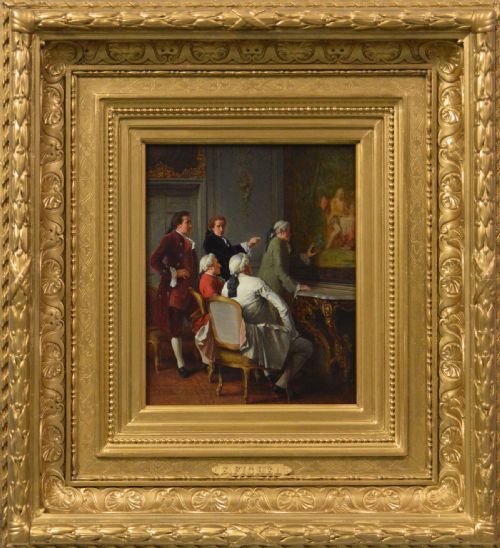
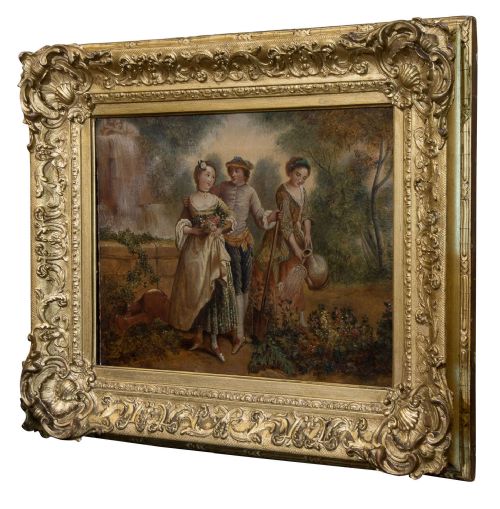
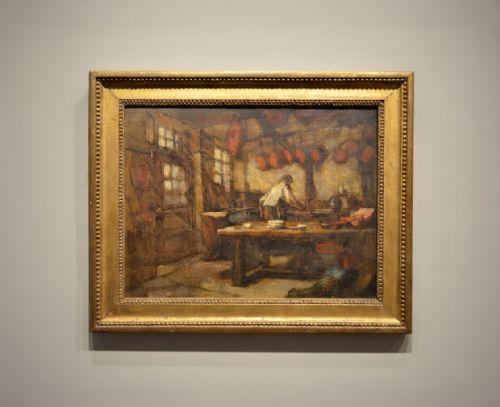
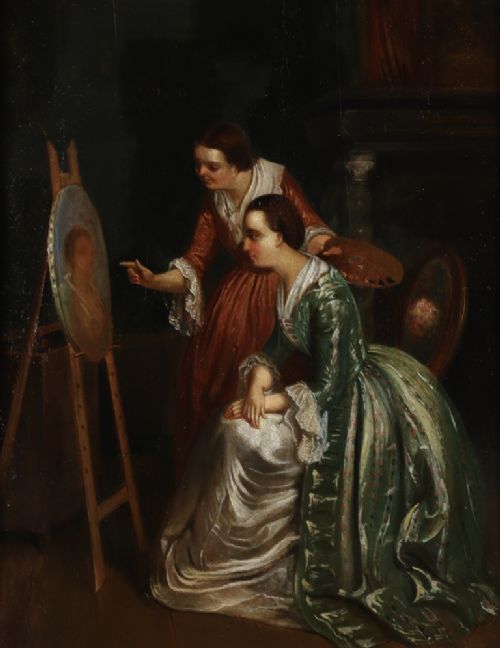
A french interior oil painting portrays domestic rooms, studies and palace salons, capturing figures engaged in everyday domestic life or historical genre scenes. These works range from intimate studies of tea hours and card games to grand depictions of ballroom scenes and courtly gatherings.
The pieces on this page emerge from several distinct periods, most notably the nineteenth century alongside later twentieth-century interpretations. Buyers encounter academic realists, romantic school works, post-impressionist canvases and mid-century modernist compositions.
Subjects stretch from solitary figures in quiet domestic interiors to groups of gentlemen, courtiers and children with animals. Many compositions focus tightly on the play of light across furnishings, textiles and architectural details within domestic or institutional rooms.
How they were made
These works rely primarily upon oil paint applied to canvas, panel, board or paper as recorded in the evidence. Artists utilised oil medium to build rich textures and tonal depth across diverse supports.
Frames frequently incorporate wood, giltwood and gold leaf, matching the traditional presentation methods of the periods represented. These materials support the visual weight of the painted surfaces and protect the edges of the canvas or panel.
French Interior Oil Painting Retail Price Guide 2026
Typical asking prices for french interior oil painting among the pieces listed under this phrase on Sellingantiques today, from the lower quarter to the upper quarter. They describe what is for sale here now, not the wider market.
Represented artistic movements include Rococo Revival, Post-Impressionism, French Romanticism and Mid-Century Expressionism.
What varies in quality
Quality separates through the handling of light, shadow and chiaroscuro, distinguishing atmospheric compositions from flatter decorative works. Skilled brushwork brings depth to interior architecture, fabrics and facial expressions.
The execution of perspective and spatial depth within rooms marks the difference between proficient academic or modernist studies and more static renderings. Mastery of colour harmony elevates works inspired by impressionist and post-impressionist traditions.
Benjamin Eugene Fichel·Théophile Emmanuel Duverger·Marcel Brunery·Pierre-Louis Bouchard·Henriette Desportes
The French Interior Oil Painting Glossary
- Chiaroscuro
- Strong contrasts between light and dark to give a three-dimensional volume to figures and interior spaces. This technique defines dramatic interior scenes.
- Genre painting
- Depictions of everyday life, domestic activities and human figures within interior settings. These scenes form a major category in the available selection.
- Pointillism
- A technique of painting using tiny dots of pure colour applied to the canvas to blend optically. Works of this type appear in floral still lifes and interior views.
- Giltwood
- Wood carved and covered with gold leaf or metal gilt for framing or decorative effect. Many antique frames utilise this material.
- Intimist
- A style focusing on intimate, private domestic interior scenes often associated with post-impressionist circles. These paintings capture quiet personal moments.
French Interior Oil Painting: Frequently Asked Questions
What subjects appear in french interior oil paintings?
Subjects include domestic tea hours, card games, courtly gatherings in palace salons and quiet contemplative moments in private rooms. Figures range from musketeers and courtiers to children and women engaged in daily tasks.
Still lifes featuring florals within interior settings also feature among the selection. The focus remains on human activity and atmospheric spaces.
How do nineteenth-century works differ from twentieth-century pieces?
Nineteenth-century works often reflect academic realism, romanticism or detailed historical genre scenes with meticulous attention to costume and narrative. They frequently employ traditional chiaroscuro and polished brushwork.
Twentieth-century pieces tend toward post-impressionism, luminism and French modernism, prioritising colour harmonies, loose brushwork and expressive interior atmospheres.
What surfaces support these oil paintings?
Artists painted on stretched canvas, wooden panels, thick board and paper supports. Each support influences the texture and preservation of the paint layer.
Canvas remains the most common surface for larger compositions, while smaller studies often utilise board or paper.