
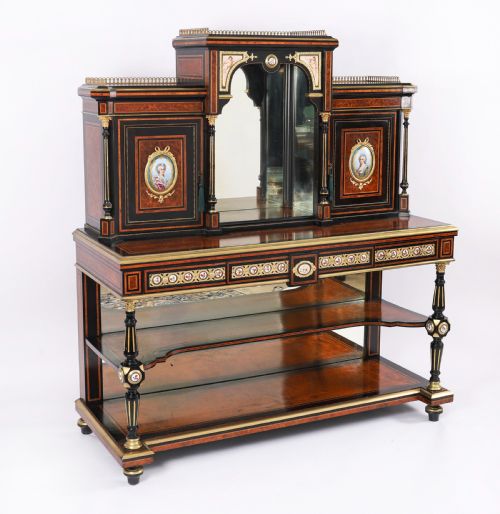


French Inlaid Bureau Cabinet
These french inlaid bureau cabinet designs combine refined writing surfaces with concealed compartments, offering timeless elegance and practical workspaces for the home.
French Inlaid Bureau Cabinet
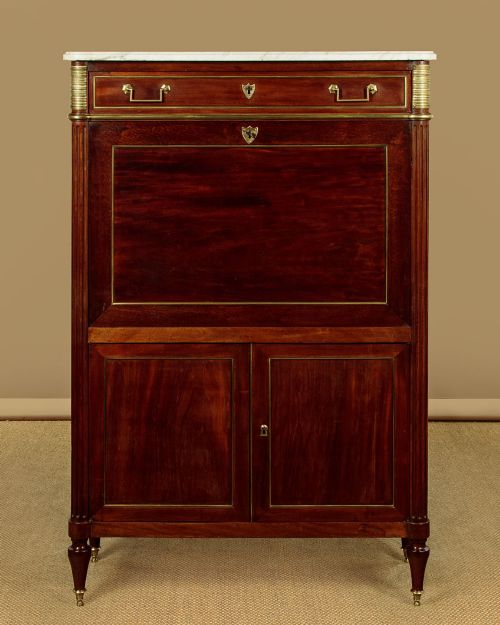
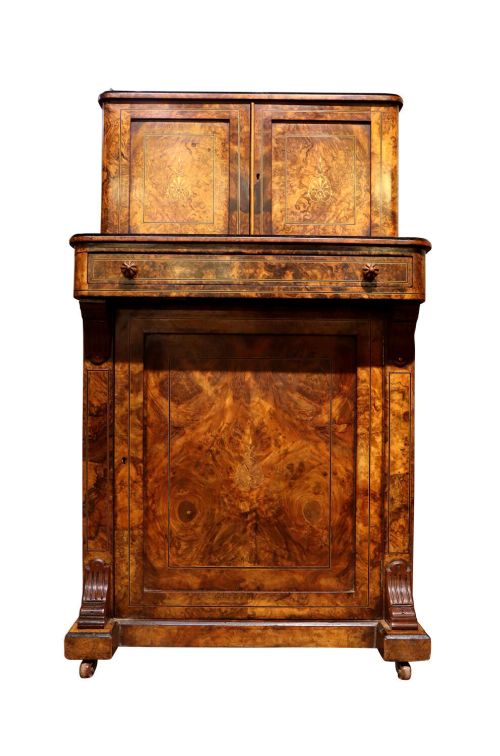
A french inlaid bureau cabinet unites the function of a writing desk with the enclosed storage of a cabinet, taking forms such as the bonheur du jour, secrétaire abattant, and escritoire. These pieces originate predominantly from the nineteenth century, drawing heavily upon revival styles including French Louis XV, Louis XVI, and Rococo.
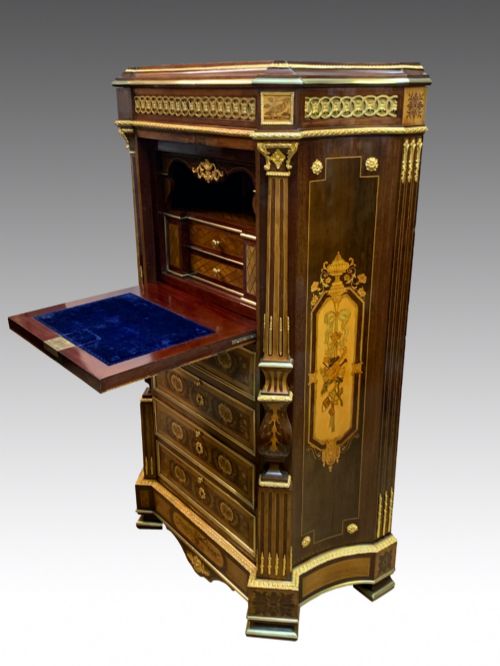
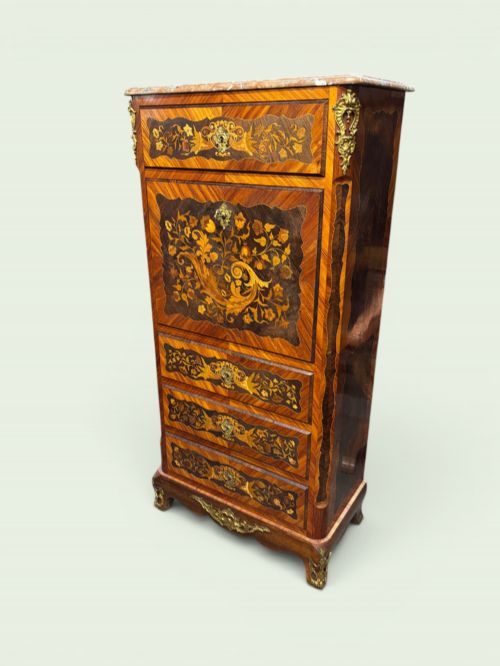
The version most commonly encountered on this page is the bonheur du jour, a light ladies writing desk usually featuring a small superstructure of drawers and shelves above the writing surface. Alongside these, tall secretaire abattants with drop-down writing flaps appear frequently, constructed in woods like walnut, rosewood, kingwood, and mahogany.
Makers and workshops of the period utilised intricate marquetry and parquetry patterns to adorn these writing cabinets, often integrating gilt bronze mounts. The scale ranges from compact writing tables suitable for a boudoir to substantial architectural cabinets designed for formal reception rooms.
How They Were Made
Cabinetmakers constructed the carcase using solid foundational timbers such as mahogany or walnut, subsequently applying decorative veneers of kingwood, rosewood, and burr walnut to the exterior surfaces. Marquetry designs were painstakingly assembled from various tinted woods and botanical specimens, creating pictorial or geometric motifs across the panels.
Metal ornamentation played a central role in the construction, with cast ormolu mounts fitted to protect corners, frame panels, and accentuate the structural lines of the cabinet. Additionally, polished marble slabs were frequently fitted to the upper surfaces of secretaire abattants to provide a durable and luxurious finish.
Several desks manage to hide secret compartments behind miniature trompe-l'œil book spines.
What Varies in Quality
The caliber of a french inlaid bureau cabinet rests primarily on the depth and precision of the marquetry and the execution of the cabinetwork. Superior examples display exceptionally fine, tightly fitted wood veneers with intricate floral or geometric shading, whereas lesser pieces rely on simpler, stamped, or repetitive patterns.
Hardware and mounts also dictate the standing of a piece, distinguishing workshop-produced items from mass-manufactured alternatives. Finely chased ormolu mounts with crisp detailing and heavy gauge brass inlay elevate a cabinet, reflecting the standards upheld by notable makers recorded in the archive.
Maison Krieger·Edwards and Roberts·Paul Sormani
The French Inlaid Bureau Cabinet Glossary
- Bonheur du jour
- A small ladies writing desk featuring a light superstructure of drawers and pigeonholes above the main writing surface. This form gained immense popularity during the nineteenth century in France and England.
- Secretaire abattant
- A tall upright cabinet with a hinged fall-front writing flap that conceals a fitted interior of small drawers and compartments. It provides a generous vertical storage footprint while occupying minimal floor space.
- Marquetry
- The art of applying decorative pieces of veneer to a structural structure to form intricate pictures or patterns. Cabinetmakers used various exotic and domestic woods to achieve tonal contrast.
- Ormolu
- Gilt bronze ornamentation applied to the mounts, handles, and feet of fine furniture. The technique involves treating brass or bronze with a gold amalgam to achieve a rich metallic lustre.
French Inlaid Bureau Cabinet: Frequently Asked Questions
What is a bonheur du jour?
A bonheur du jour is a light ladies writing desk featuring a small set of drawers or a cabinet superstructure positioned above the main writing surface. These pieces emerged as fashionable furniture for private chambers during the nineteenth century.
They were typically used for correspondence and letter writing, offering convenient desktop space alongside tidy compartments for stationery and personal items.
How do I identify a secretaire abattant?
A secretaire abattant is a tall, upright cabinet characterised by a hinged drop-front flap that opens to reveal a fitted interior of small drawers and pigeonholes. When closed, the piece presents a clean architectural facade.
This design allows the user to conceal writing materials and paperwork entirely, making it suitable for both formal drawing rooms and private studies.
What woods are typical for these cabinets?
These cabinets frequently feature exotic and native veneers applied over sturdy carcase timbers like mahogany and walnut. Commonly seen woods include kingwood, rosewood, amboyna, and burr walnut.
Cabinetmakers selected these materials for their rich grain patterns and natural colour variations, which lent themselves perfectly to geometric parquetry and pictorial marquetry designs.
How do I care for inlaid wood?
Inlaid wood furniture requires a stable indoor environment away from direct sunlight and dramatic temperature fluctuations. Excessive heat or dry air can cause the delicate veneers and brass stringing to lift from the carcase.
Regularly dusting with a soft, dry cloth and occasionally applying a conservative amount of traditional beeswax helps maintain the lustre of the polished timber surfaces.