








French Inkwell Set
A French inkwell set brings the weight of nineteenth-century writing desks into domestic spaces through cast bronze, marble and glass.
French Inkwell Set
A French inkwell set gathers writing accessories like inkpots, sanders and pen trays upon a shared base of marble, wood or metal. These desk pieces originate chiefly across the nineteenth century, spanning the French Empire, Napoleon III and Art Nouveau styles.
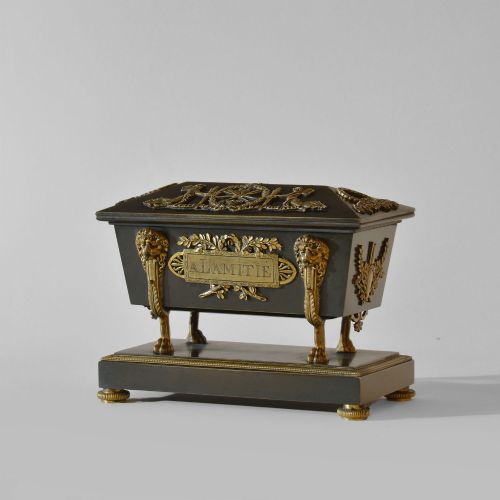
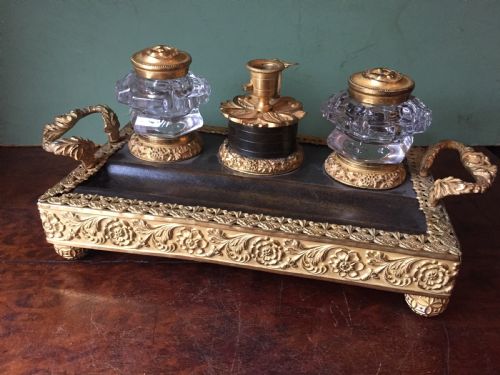
Most examples combine a heavy stone or gilt metal plinth with one or two lidded inkwells, frequently accompanied by matching candlestands, letter holders or clock inserts. The forms range from simple brass and marble trays to figural bronzes depicting animals, clowns or singing boys.
Materials and construction
Foundry casting forms the primary structure of these desk sets, utilising gilt bronze, ormolu and brass to create intricate mounts and figural groups. Artisans chased and gilded these metal elements by hand to achieve varied surface textures.
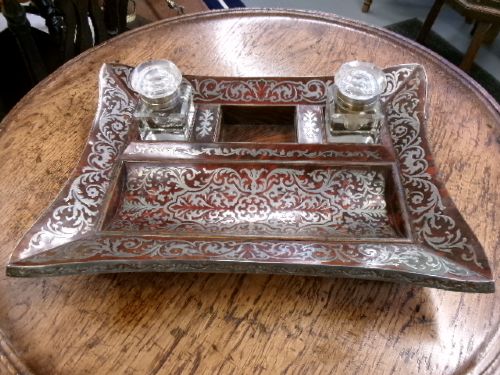
Stonemasons shaped bases from Sienna, vert and onyx marbles, while cabinetmakers applied Boulle work, tortoiseshell and mahogany to wooden stands. Glaziers and potters produced inserted inkwell inserts in porcelain, faïence and glass.
French Inkwell Set Retail Price Guide 2026
Typical asking prices for french inkwell set among the pieces listed under this phrase on Sellingantiques today, from the lower quarter to the upper quarter. They describe what is for sale here now, not the wider market.
Listings feature materials spanning gilt bronze, ormolu, brass, marble, glass, porcelain and enamel across the nineteenth and early twentieth centuries.
Standards of execution
The precision of the metal chasing separates superior cast-bronze mounts from simpler commercial production, as sharp chisel work defines feathers, drapery and floral motifs without softening. Heavier stone plinths and thicker layers of fire-gilding indicate higher workshop standards.
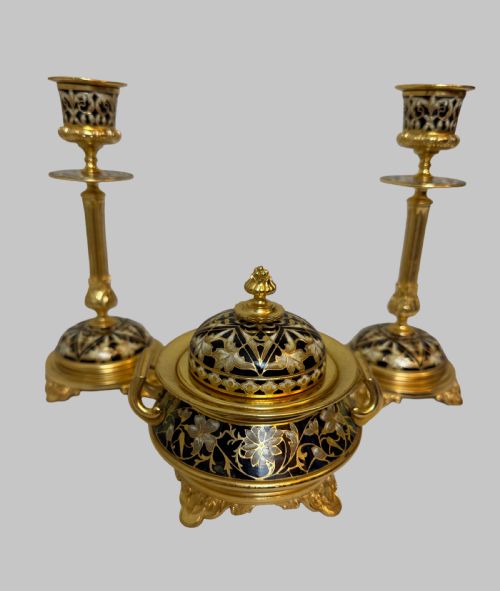
Integrated design sets, such as matching candlestand and inkstand combinations or pieces bearing identifiable foundry signatures, command greater technical ambition than standard modular desk accessories.
Edmé Samson·Lefebvre of Belgium·Albert Marionnet·Jules Dalou·Moser
The French Inkwell Set Glossary
- Ormolu
- Gilt bronze produced by applying a mixture of gold and mercury to a bronze base and heating it until the mercury vaporised. This technique creates a durable golden finish seen on nineteenth-century mounts.
- Encrier
- The French term for an inkstand or inkwell set. It denotes the complete desk accessory holding writing fluids.
- Boulle work
- Marquetry technique utilising brass and tortoiseshell inlaid into wood furniture and desk stands. Developed in France, it creates elaborate patterned surfaces.
- Champlevé
- Enamelling method where troughs are gouged into a metal surface and filled with vitreous enamel paste before firing. The resulting design sits flush with the surrounding metal.
French Inkwell Set: Frequently Asked Questions
How were French inkwell sets used?
These sets sat upon writing desks to hold liquid ink, blotting sand and pens for daily correspondence.
Matching components like candlestands provided illumination for evening letter writing.
What materials make up these desk sets?
Foundries used bronze, ormolu, brass and cast iron for structural mounts and figural sculptures.
Bases combined marbles such as Sienna and onyx with inlaid wood and tortoiseshell.
How do I identify Napoleon III style?
This eclectic nineteenth-century style revives earlier court aesthetics with heavy ornamentation and gilt bronze mounts.
Pieces often integrate Boulle work and dark woods alongside classical proportions.
Where should I place an inkwell set?
Desk sets suit home libraries, studies or writing tables where their proportions can anchor a surface.
They function as display objects that retain their historic utility.