



French Hearth Fire Surround
A French hearth fire surround brings refined metalwork and classic continental style to a room.
French Hearth Fire Surround
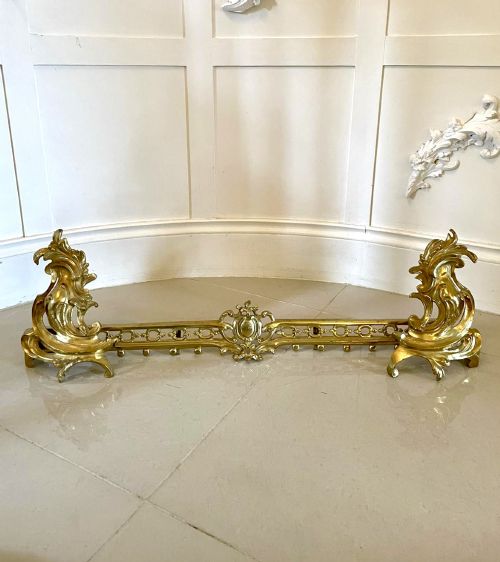
When you search for a French hearth fire surround, you are looking at metal hearth furniture designed to frame and protect an open fireplace. These pieces include adjustable extendable fenders, decorative chenets, andirons, and complete marble surrounds.
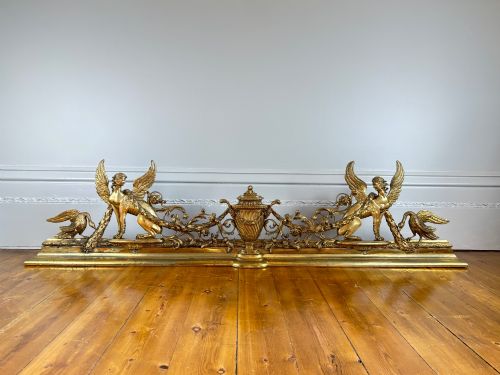
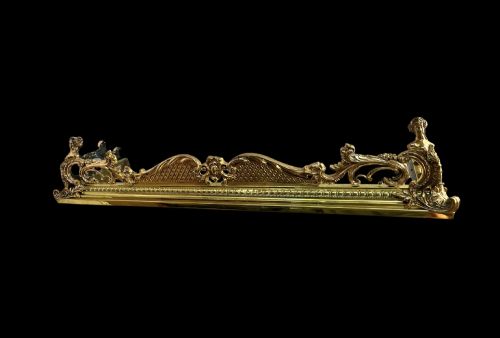
The versions you are most likely to meet on this page date from the nineteenth century, spanning Victorian and Edwardian periods. They appear in styles ranging from elaborate French Rococo and Louis XV to Neoclassical Revival and French Empire.
Makers and workshops utilised metals such as gilt bronze, ormolu, brass, cast iron, and polished steel to create these fireplace furnishings. Alongside metalwork, marble fire surrounds appear built in distinct period styles like the Louis fourteenth aesthetic.
How they were made
Casting and chasing form the basis of these metal pieces, particularly for gilt bronze, ormolu, and cast iron. Artisans poured molten metal into moulds before refining surface details by hand.
Gilding was applied to brass and bronze surfaces to achieve a rich gold finish, while steel elements were polished to a bright shine. Many fenders were constructed with adjustable mechanisms to fit varying hearth widths.
What varies in quality
The crispness of the casting separates standard examples from exceptional ones, particularly in the rendering of scrolls, cherubs, and acanthus leaves. Heavy gauge metals and deeply chased ornamentation indicate superior craftsmanship.
The quality of the mercury gilding or ormolu finish dictates how well the piece retains its lustre over time. Original adjustable mechanisms that operate smoothly also distinguish better-made pieces.
E F Caldwell New York
The French Hearth Fire Surround Glossary
- Fender
- A low metal guard placed in front of an open fireplace to contain rolling embers. These items often feature adjustable widths.
- Chenet
- A French term for an andiron used to support logs in a hearth, frequently matched with a companion fender. They often display sculptural figures like cherubs.
- Ormolu
- Gilded bronze produced by applying a mercury and gold amalgam to a bronze object and heating it. This technique creates a durable golden finish seen on nineteenth-century pieces.
- Rococo
- A decorative style characterised by asymmetrical scrolls, shell motifs, and natural curves. It heavily influences French fireplace accessories from the nineteenth century.
- Neoclassical
- A revival style drawing inspiration from classical antiquity, featuring symmetrical lines and architectural details. It appears across nineteenth-century fenders and surrounds.
French Hearth Fire Surround: Frequently Asked Questions
How do I measure for a fender?
Measure the width of your fireplace opening and the hearth space available to ensure the piece fits properly. Many nineteenth-century examples feature adjustable frames to accommodate different hearth sizes.
Take note of the depth as well so the guard sits safely on the hearth stone without protruding too far into the room.
What is the difference between brass and ormolu?
Brass is an alloy of copper and zinc with a natural yellow metallic colour that polishes brightly. Ormolu specifically refers to a high-status gilded bronze finish applied through a mercury process.
Ormolu displays a deeper, richer golden tone and finer chased detail compared to standard cast brass.
How do I clean gilt bronze metalwork?
Dust gently with a soft, dry cloth to remove surface particles without disturbing the delicate metallic finish. Avoid harsh chemical cleaners or abrasive polishes that can strip away original gilding.
Professional conservation is recommended if deeper cleaning is required on antique ormolu or gilt surfaces.
Are these fenders adjustable in width?
Many nineteenth-century examples are constructed with sliding sections that allow the width to be adjusted. This mechanism was designed to fit varying hearth dimensions in period homes.
Fixed-width models also appear frequently, requiring precise measurement of your fireplace opening before purchase.