

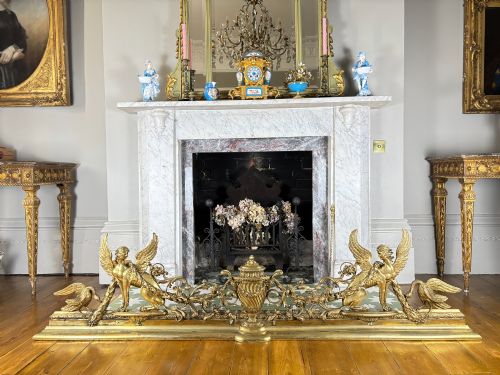
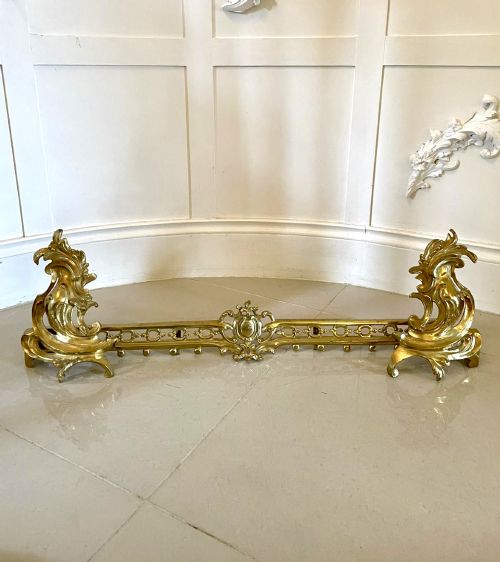

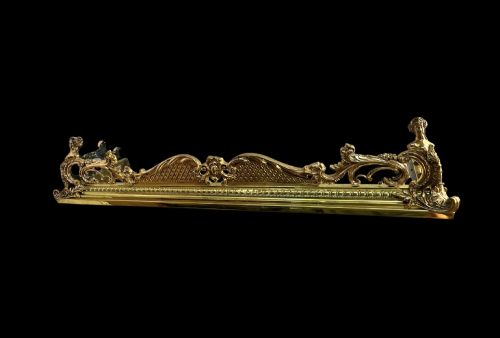


French Hearth Fender
These pieces known as french hearth fender items are heavy metal hearth surrounds that frame a fireplace hearth with continental refinement.
French Hearth Fender
A french hearth fender sits upon the floor directly before an open fireplace to contain embers and frame the hearth opening. Most examples seen here date from the nineteenth century and adopt classic continental idioms.
The inventory includes extendable frames, rigid brass designs, and paired chenets with matching guards. Makers worked within established historical revivals such as Louis XV, Louis XVI, and Rococo.
These guards bring weight and a distinct decorative presence to a chimney breast. They range from simple brass structures to elaborate gilt bronze castings.
How they were made
Foundry workers shaped these objects using brass, cast iron, bronze, and ormolu. Artisans applied fire gilding or parcel gilt treatments to bronze and brass bases to achieve a rich metallic lustre.
Many items feature adjustable mechanisms that allowed nineteenth century households to fit the metal guard securely to varying fireplace widths. Cast ornamentation was chased by hand to sharpen floral scrolls and classical motifs.
French Hearth Fender Retail Price Guide 2026
Typical asking prices for french hearth fender among the pieces listed under this phrase on Sellingantiques today, from the lower quarter to the upper quarter. They describe what is for sale here now, not the wider market.
Listings span the nineteenth century, including Victorian pieces alongside items dated 1850, 1860, 1880, 1890, and 1900.
What varies in quality
Quality depends upon the crispness of the metal chasing and the depth of the original gilding. Finer pieces display substantial bronze casting weight and articulate detail in scrolls, cherubs, and acanthus leaves.
Simpler workshop output relies on lighter stamped brass and basic assembly without hand finishing. The smoothness of any extension mechanism also marks the grade of the maker's workshop.
E F Caldwell New York
The French Hearth Fender Glossary
- Ormolu
- Gilded bronze produced by applying a mercury and gold amalgam to a bronze base and heating it. This technique creates a durable golden surface seen on high status nineteenth century hearth furniture.
- Chenet
- A metal andiron or fire dog placed inside the hearth, sometimes accompanying a fender surround. These decorative supports often share the cast stylistic vocabulary of the main fender.
- Rococo Revival
- A nineteenth century decorative style reviving the asymmetrical scrolls, shell motifs, and natural curves of the early eighteenth century French court. It appears frequently on these fireplace guards.
- Cast Brass
- Metal formed by pouring molten alloy into a mould to create rigid structural or decorative components. It offers durability and takes a bright polish.
- Neoclassical
- A revival style drawing on classical Greek and Roman architecture and ornament, characterised by symmetry, straight lines, and urn or leaf motifs.
French Hearth Fender: Frequently Asked Questions
What is a french hearth fender used for?
These metal surrounds sit in front of an open fireplace to stop rolling embers from touching the carpet or floorboards. They also establish a formal boundary around the hearth.
Beyond safety, they frame the fireplace opening and anchor the decorative scheme of the room. Many incorporate adjustable bars to fit different hearth widths.
How do I measure for a fender?
Measure the width of your fireplace opening and the hearth stone where the metal guard will rest. Allow clearance for any side furniture or matching andirons.
Many nineteenth century examples feature sliding or extending mechanisms. Check whether the listed dimensions represent the minimum or maximum extended length.
How do I clean brass and bronze?
Dust the metal gently with a soft dry cloth to remove surface grit. Avoid harsh commercial brass cleaners that can strip historic patination or gilding.
Original fire gilding and ormolu require particular care. Warm soapy water on a damp cloth is usually enough for routine maintenance.
What styles are most common?
Nineteenth century makers favoured French Rococo, Louis XV, and Louis XVI Neoclassical revivals. These styles bring sweeping scrolls, floral asymmetry, and formal classical symmetry to the hearth.
Victorian interpretations often blend cast iron structure with brass or bronze mounts. The decorative language mimics earlier continental royal workshops.