





French Hardware
French hardware brings architectural detailing to interiors through functional brass fittings, ormolu tie-backs and decorative cabinet furniture.
French Hardware
French hardware encompasses a diverse selection of architectural and decorative metalwork spanning from the seventeenth century through to the art deco period. Buyers investigating french hardware often encounter practical fixtures alongside ornamental accents designed for domestic interiors.
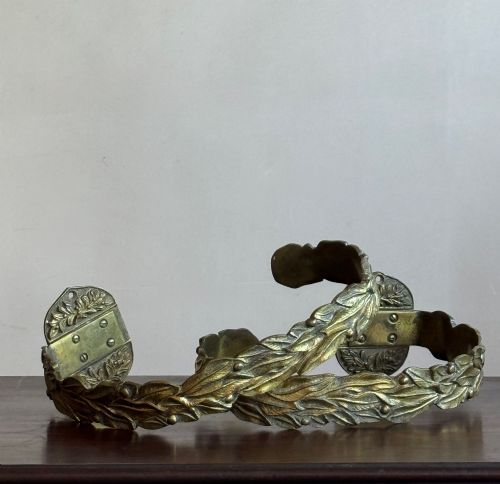
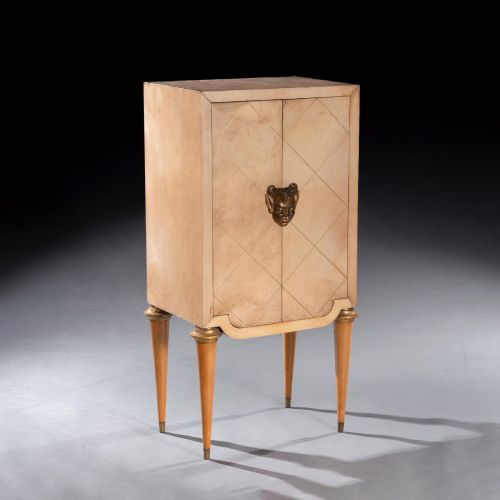
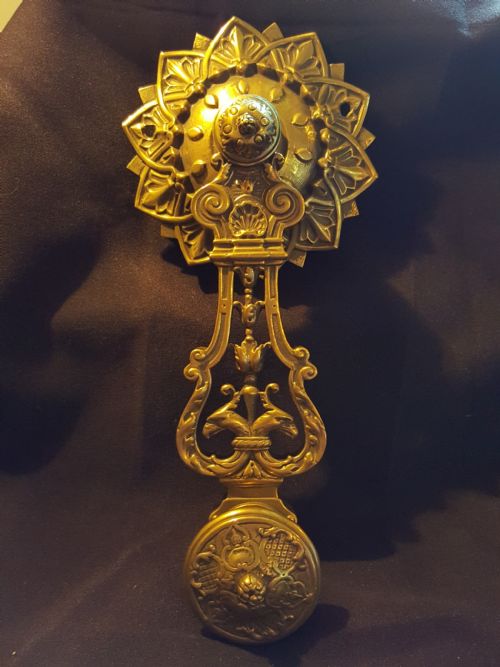
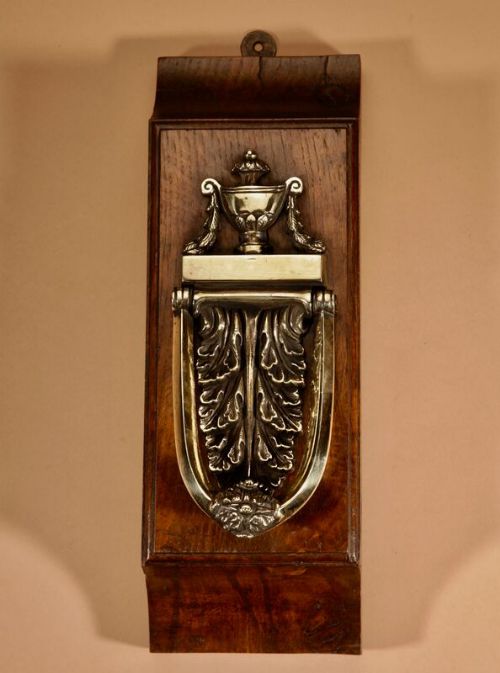
The objects listed range from sturdy ironmongers' drawers and heavy padlocks to ornate ormolu curtain tie-backs and crystal door handles. Door furniture, cabinet fittings and pelmets feature prominently across the collection.
Periods represented stretch from the seventeenth century, with twin spring bolt latches, to twentieth-century art deco pieces by makers such as Maurice Jallot. Nineteenth-century examples, particularly gilt brass and ormolu curtain tie-backs, appear frequently.
Materials and construction
Metalwork dominates the selection, utilising brass, gilt brass, gilded brass, ormolu, bronze, gilt bronze, iron and polished steel. Casting and fire-gilding techniques define the finer ormolu and bronze elements.
Makers integrated mixed media, combining cast brass and ormolu with lead crystal, enamel, china, wood, parchment inlay and iron. This variety reflects the changing decorative tastes from rococo revival and neoclassical styles to industrial and art deco.
French Hardware Retail Price Guide 2026
Typical asking prices for french hardware among the pieces listed under this phrase on Sellingantiques today, from the lower quarter to the upper quarter. They describe what is for sale here now, not the wider market.
Listings feature brass, ormolu, bronze, and gilt brass alongside wood and enamel across the nineteenth and twentieth centuries.
Distinctions in craftsmanship
The refinement of the casting and chasing distinguishes the better examples of ormolu and bronze metalwork. Sharper detail in decorative motifs such as laurel wreaths or rococo scrolls indicates superior workshop execution.
The integration of secondary materials like hand-painted enamel, cut lead crystal and parchment inlay separates standard utility fixtures from high-style decorative pieces.
Maurice Jallot·Henri Picard
The French Hardware Glossary
- Ormolu
- Gilt bronze produced by applying a mercury and gold amalgam to a bronze base, commonly found on nineteenth-century curtain tie-backs. This technique creates a rich, durable golden surface.
- Pelmet
- A framework placed above a window to conceal curtain fixtures, sometimes executed in gilt brass. It frames the window drapery in formal interior schemes.
- Push plate
- A protective metal plate affixed to a door surface to prevent wear from hands, often produced in decorative enamel or brass. These plates combine utility with aesthetic ornamentation.
- Tie-back
- A decorative fixture mounted beside a window to hold curtains open, frequently styled in gilt brass or ormolu. Pairs of these fixtures coordinate with window drapery.
- Commode
- A decorative chest of drawers dating from periods such as the eighteenth century, sometimes featuring serpentine fronts or wood construction. These storage pieces serve as focal points in period rooms.
French Hardware: Frequently Asked Questions
How do I clean antique brass hardware?
Clean brass hardware gently using a soft cloth to preserve any historic surface patination and gilding. Avoid harsh chemical polishes that strip away the aged finish.
For pieces with enamel or crystal components, keep moisture away from joints and mountings during cleaning. Regular dusting is usually sufficient for maintaining decorative metalwork.
Can antique door handles still be installed?
Many antique door handles and pulls can be fitted to standard modern doors with minor adaptations to the spindle or mechanism. Professional installation ensures that historic brass and crystal components are not strained.
Locks and latches require assessment by a specialist to match nineteenth-century or earlier dimensions with contemporary door thicknesses.
What is the difference between ormolu and brass?
Ormolu consists of a bronze base treated with a gold amalgam layer, yielding a deep, warm metallic lustre characteristic of fine French decorative objects. Brass is an alloy of copper and zinc with a yellower tone.
Items described as gilt brass feature a gold-plated surface applied over a brass core rather than a bronze foundation.
How are curtain tie-backs mounted securely?
Curtain tie-backs require firm anchorage into wall studs or appropriate wall plugs due to the weight of cast brass and ormolu. Positioning them at the correct height ensures the fabric drapes cleanly.
Matching screws should be selected carefully to fit the original fixing holes without damaging the metalwork.